| 금시세(금값) 상승 박상진 기자 jhc@kjdaily.com |
| 2026년 07월 18일(토) 09:42 |
|
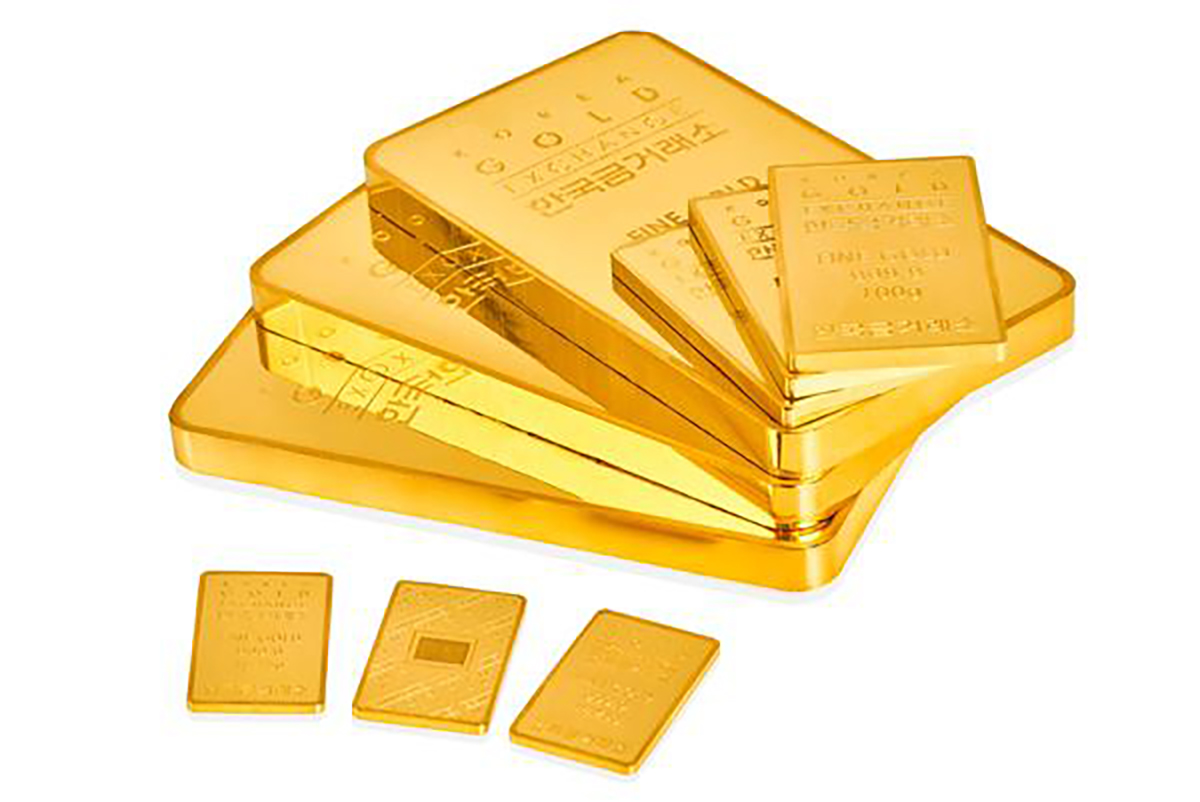
-오늘의 금시세(한국금거래소 순금 1.07%↑)
-저가 매수·숏커버링 유입…달러·국채금리는 부담
-유가 급등에 인플레이션 우려…9월 금리 인상 가능성 58%
-전문가들 “4,000달러 지지 여부가 단기 방향 가를 것”
국내 금값이 18일 상승했다. 한국금거래소에서 순금과 은, 백금 가격이 일제히 올랐다. 국제 금값도 미국 현지시간 17일 저가 매수와 숏커버링에 힘입어 온스당 4,000달러선을 회복했다.
다만 금시장을 둘러싼 불확실성은 여전하다. 미국과 이란의 군사적 충돌로 국제유가가 급등하면서 인플레이션 우려와 미국의 추가 금리 인상 가능성이 동시에 커지고 있다. 달러와 미국 국채 수익률도 높은 수준을 유지해 금값의 추가 상승을 제한하고 있다.
지정학적 긴장은 통상 금의 안전자산 수요를 높이는 요인이다. 그러나 이번에는 유가 상승이 물가 불안을 자극하고 미국의 고금리 장기화 가능성을 키우면서 안전자산 선호 효과를 상당 부분 상쇄하는 모습이다.
18일 오전 9시40분 기준 한국금거래소에 따르면 순금 1돈(24K·3.75g)을 살 때 가격은 84만3천원으로 전날 마감가보다 9천원(1.07%) 올랐다.
순금을 팔 때 가격도 70만8천원으로 8천원(1.13%) 상승했다.
18K를 팔 때 가격은 52만400원으로 5천900원(1.13%) 올랐고, 14K를 팔 때 가격도 40만3천600원으로 4천600원(1.14%) 상승했다. 18K와 14K를 살 때는 제품 시세가 적용된다.
백금도 강세를 나타냈다. 백금을 살 때 가격은 33만3천원으로 전날 마감가보다 3천원(0.90%) 올랐고, 팔 때 가격은 27만원으로 3천원(1.11%) 상승했다.
은 1돈을 살 때 가격은 1만1천30원으로 160원(1.45%) 올랐다. 은을 팔 때 가격도 9천360원으로 140원(1.52%) 상승했다.
국제 금시장에서도 전날 급락에 따른 반발 매수세가 유입됐다.
미국 현지시간 17일 금 현물 가격은 온스당 4,011~4,017달러대에서 거래되며 하루 전보다 약 1% 상승했다. 장중에는 3,959달러대까지 밀렸지만 저가 매수와 숏커버링이 유입되며 4,000달러선을 되찾았다.
금 현물은 장중 온스당 3,959.80달러에서 4,023.83달러 사이에서 움직였다. 장 초반 심리적 지지선인 4,000달러 아래로 내려갔지만 매수세가 유입되면서 낙폭을 만회했다.
뉴욕상품거래소(COMEX)에서 거래된 8월 인도분 금 선물은 온스당 4,018.80달러로 0.7% 상승 마감했다.
은 현물 가격도 온스당 55.90달러 안팎으로 약 0.7~1% 올랐다. 은 역시 최근 저점까지 하락한 뒤 숏커버링이 유입되면서 반등했지만 본격적인 추세 전환을 확인할 수준에는 이르지 못했다는 평가가 나온다.
이날 금값 반등은 미국 통화정책 전망이 완화된 결과라기보다 앞선 하락에 따른 기술적 반등 성격이 강한 것으로 분석됐다.
미국의 6월 소비자물가지수(CPI)와 생산자물가지수(PPI)는 물가 상승 압력이 둔화하고 있음을 보여줬다. 미시간대학교가 발표한 소비자심리지수도 49.5에서 54.4로 상승했고 향후 1년 기대 인플레이션은 4.6%에서 4.2%로 낮아졌다.
물가 지표만 보면 연방준비제도(Fed)의 추가 금리 인상 우려가 낮아질 수 있는 환경이 조성된 셈이다. 그러나 이후 발표된 경기지표는 다른 방향을 가리켰다.
미국 6월 소매판매는 전월보다 0.2% 증가했고 신규 실업수당 청구건수는 20만8천건으로 감소했다. 필라델피아 연방준비은행이 발표한 경제지표도 경기 활동과 노동시장 여건이 예상보다 견조하다는 점을 보여줬다.
물가는 둔화했지만 미국 경제가 금리 인상에도 버틸 수 있다는 인식이 확산하면서 연준이 긴축 기조를 서둘러 거두지 않을 것이라는 전망에 다시 힘이 실렸다.
CME 페드워치에 따르면 시장은 9월 연방공개시장위원회(FOMC)에서 미국 기준금리가 인상될 가능성을 약 58%로 반영했다.
필립 제퍼슨 연준 부의장도 단기적으로 인플레이션이 개선되지 않을 경우 금리 인상을 고려할 수 있다는 취지의 발언을 내놨다.
금은 이자를 지급하지 않는 자산이다. 미국의 기준금리와 국채 수익률이 오르면 채권과 예금의 상대적인 매력이 높아져 금 수요에는 부담이 된다.
미국 국채 2년물 금리는 4.17%를 웃돌았고 10년물 금리도 4.53% 부근에서 움직였다. 달러지수는 100.73 안팎으로 강세를 유지했다.
달러 가치가 오르면 달러 이외 통화를 사용하는 투자자의 금 매입 비용이 높아진다. 국채 수익률과 달러가 동시에 강세를 나타내면 국제 금값에는 이중 부담으로 작용한다.
이에 따라 금요일 반등도 달러와 금리 환경이 근본적으로 바뀐 결과라기보다 급락 이후의 숏커버링과 저가 매수에 가깝다는 분석이 나온다.
금값의 방향을 흔드는 또 다른 핵심 변수는 중동 정세와 국제유가다.
미국과 이란의 군사적 충돌이 다시 확대되면서 미국은 이란의 교량과 공항 등을 공격했고, 이란도 중동 내 미군 기지를 타격하며 보복에 나섰다.
호르무즈 해협의 선박 통행은 계속되고 있지만 정상적인 해상 운송 환경과는 거리가 있다는 평가다. 군사적 압박과 공급 차질 우려가 지속되면서 원유시장에는 높은 전쟁 위험 프리미엄이 반영되고 있다.
서부텍사스산원유(WTI)는 배럴당 81달러를 넘어섰고 브렌트유는 86.70달러 부근에서 거래됐다. 브렌트유는 한 주 동안 약 16% 급등했다.
유가 상승은 금시장에 상반된 영향을 준다. 군사 충돌과 원유 공급 불안은 안전자산 수요를 높이지만 에너지 가격 급등은 소비자물가와 기업 비용을 끌어올릴 수 있다.
인플레이션 압력이 커지면 연준은 금리를 장기간 높은 수준에서 유지하거나 추가 인상에 나설 가능성이 있다. 이 경우 달러와 국채 수익률이 강세를 보이며 금값의 상승 폭을 제한하게 된다.
에버뱅크의 세계시장 부문 사장인 크리스 개프니는 최근 금값 약세의 주요 배경으로 달러 강세와 세계적인 인플레이션 우려, 이에 따른 금리 인상 가능성을 꼽았다.
그는 유가가 크게 오르지 않는다면 미국의 물가가 점차 개선돼 금리 인상 기대를 낮출 수 있지만, 에너지 가격 급등이 이어질 경우 연준이 더욱 매파적인 태도를 보일 수 있다고 분석했다.
브리타니아 글로벌 마켓츠의 금속 부문 책임자인 닐 웰시도 현재 금값의 향방이 유가와 밀접하게 연결돼 있다고 진단했다.
에너지 가격 상승세가 지속되면 인플레이션 압력으로 인해 연준이 고금리 기조를 장기간 유지할 수밖에 없다는 설명이다. 그는 금값의 하락세가 바뀌려면 미국 경제지표의 의미 있는 변화나 중앙은행의 긴축 종료가 임박했다는 분명한 신호가 필요하다고 봤다.
시장에서는 온스당 4,000달러가 단기 금값의 향방을 가를 핵심 가격대로 꼽힌다.
금 현물 가격은 최근 4주 동안 네 차례 4,000달러 아래로 밀렸지만 그때마다 매수세가 유입되며 반등했다.
개프니는 4,000달러가 개인 투자자들에게 중요한 심리적 지지선이라며 이 가격대를 확실하게 하향 돌파할 경우 단기 낙폭이 커질 수 있다고 진단했다.
FXTM의 수석 시장 분석가인 루크만 오투누가는 4,000달러가 유지되면 금값이 4,100달러까지 반등할 수 있지만, 지지선이 무너지면 3,950달러와 3,900달러까지 추가로 내려갈 가능성이 있다고 분석했다.
XS닷컴의 사이먼-피터 마사브니는 3,950~3,940달러 구간을 전략적인 지지선으로 제시했다. 시장에 부정적인 소식이 상당 부분 반영된 만큼 4,000달러가 무너지더라도 하락 폭은 제한될 수 있다는 설명이다.
독립 귀금속 분석가인 제시 콜롬보도 3,980~3,960달러 구간에서 반복적으로 매수세가 유입되고 있다고 평가했다.
그는 최근 금값 차트에 삼각형 패턴이 형성된 가운데 가격 변동 폭이 줄어들고 있다며 조만간 변동성이 다시 크게 확대될 가능성이 있다고 내다봤다.
금값이 4,000달러 위에 안착하면 반등세가 이어질 수 있지만, 이 가격대를 다시 확실하게 이탈하면 추가 하락 위험이 커질 수 있다는 분석이다.
단기 전망을 바라보는 시장의 시선은 대체로 부정적이다.
키트코뉴스가 전문가 14명을 대상으로 실시한 주간 설문에서 다음 주 금값 상승을 예상한 응답자는 1명으로 7%에 그쳤다.
11명인 79%는 하락을 전망했고 나머지 2명인 14%는 횡보를 예상했다.
개인 투자자의 전망은 상대적으로 엇갈렸다. 온라인 설문 참여자 169명 가운데 68명인 40%는 상승을 예상했고, 61명인 36%는 하락을 전망했다. 나머지 40명인 24%는 보합을 내다봤다.
코메르츠방크의 외환·상품 연구 책임자인 투 란 응우옌은 중동 분쟁과 에너지 가격 급등 위험이 이어지는 한 금리 인상 기대도 당분간 유지될 가능성이 크다고 분석했다. 이에 따라 금값의 단기 상승 여력도 제한될 수 있다고 봤다.
반면 금값이 이미 과매도 구간에 가까워졌다는 의견도 나온다.
스프로트의 매니징 파트너이자 시장 전략가인 폴 웡은 여러 기술적 지표가 마이너스 2~3 표준편차 수준의 과매도 신호를 나타내고 있다고 분석했다.
이는 당장 저점이 확인됐다는 의미는 아니지만, 금값을 추가로 끌어내릴 매도 압력이 점차 약해지고 있음을 보여준다는 설명이다.
상품거래자문(CTA) 자금의 금 포지션은 중립 수준으로 돌아왔고, 미국 상품선물거래위원회(CFTC) 통계에 나타난 금 선물 순매수 포지션도 2018년 수준까지 감소한 것으로 분석됐다.
금 상장지수펀드(ETF) 보유량은 일부 줄었지만 중국 시장의 ETF 수요가 유럽과 북미에서 빠져나간 물량을 상당 부분 흡수하고 있다는 평가도 나왔다.
웡은 금값이 본격적으로 반등하려면 새로운 촉매가 필요하다고 진단했다. 다만 금은 계절적으로 여름철, 특히 8월 전후에 바닥을 형성한 사례가 많다며 잭슨홀 회의나 중동 정세, 채권시장 변화가 반등 계기가 될 수 있다고 내다봤다.
장기 전망은 단기 흐름과 다소 다르다.
골드만삭스는 개인 투자자의 포트폴리오에서 금이 차지하는 비중이 아직 낮은 수준이라며 지정학적 불안이 지속될 경우 금 투자 수요가 중앙은행 중심에서 개인 투자자까지 확산할 수 있다고 분석했다.
세계 각국 중앙은행의 금 매입도 금값의 대표적인 구조적 지지 요인이다. 중앙은행들은 외환보유액을 다변화하고 달러 중심 금융체계에 대한 의존도를 낮추기 위해 금 보유량을 꾸준히 늘리고 있다.
마사브니는 중앙은행의 지속적인 금 매입과 지정학적 불확실성, 국가 신용 위험, 장기 인플레이션에 대한 헤지 수요가 금의 장기 상승 논리를 뒷받침하고 있다고 평가했다.
금값이 연초 고점에서 큰 폭으로 조정받은 만큼 상당수 악재가 이미 가격에 반영됐다는 분석도 나온다. 다만 유가와 미국 금리, 달러 강세가 이어지는 동안에는 단기 반등 폭이 제한될 가능성이 있다.
다음 주는 주요 경제지표 발표가 많지 않아 금시장이 중동 관련 뉴스와 국제유가 움직임에 더욱 민감하게 반응할 것으로 예상된다.
시장에서는 유럽중앙은행(ECB)의 통화정책 결정과 크리스틴 라가르드 ECB 총재의 기자회견, 미국 주간 신규 실업수당 청구건수에 주목하고 있다.
이어 7월 S&P 글로벌 구매관리자지수(PMI) 속보치와 미국 6월 신규주택 판매 지표도 향후 금리 전망을 가를 변수로 꼽힌다.
국내 금가격은 국제 금값과 원·달러 환율의 영향을 동시에 받는다. 국제 금값이 오르더라도 원화가 강세를 보이면 국내 금가격의 상승 폭은 제한될 수 있다. 반대로 국제 금값이 하락해도 원·달러 환율이 오르면 국내 가격의 낙폭은 줄어들 수 있다.
한국금거래소의 소매 시세와 한국거래소(KRX) 금시장 현물 가격은 산정 방식과 거래 구조가 다른 만큼 등락률이 반드시 일치하는 것은 아니다.
단기적으로는 국제유가와 미국 금리, 달러지수, 온스당 4,000달러 지지 여부를 함께 살펴볼 필요가 있다. 중장기적으로는 중앙은행의 금 매입과 개인 투자자 자금의 유입 여부가 금시장의 방향을 좌우할 주요 변수로 꼽힌다.
실시간 금값시세는 한국금거래소와 한국거래소(KRX) 금시장에서 확인할 수 있다.
/박상진 기자 jhc@kjdaily.com
다음은 위 기사를 번역한 전문이다. 번역에 오류가 있을 수 있다.
- International Gold Prices Rebound 1%... Recovers $4,000 Per Ounce
- Today's Gold Prices (Korea Gold Exchange Pure Gold Up 1.07%)
- Inflow of Bargain Buying and Short Covering... Dollar and Treasury Yields Remain a Burden
- Inflation Concerns Amid Soaring Oil Prices... 58% Likelihood of a September Rate Hike
- Experts: "Whether the $4,000 Level Holds Support Will Determine Short-term Direction"
Domestic gold prices rose on the 18th. Prices for pure gold, silver, and platinum all increased at the Korea Gold Exchange. International gold prices also recovered the $4,000 per ounce mark on the 17th (US local time), driven by bargain buying and short covering.
However, uncertainty surrounding the gold market persists. As international oil prices surge due to the military conflict between the U.S. and Iran, concerns over inflation and the possibility of further U.S. interest rate hikes are growing simultaneously. The dollar and U.S. Treasury yields remain at high levels, limiting further increases in gold prices.
Geopolitical tensions are typically a factor that increases demand for gold as a safe-haven asset. However, this time, rising oil prices appear to be largely offsetting the preference for safe-haven assets by stimulating inflationary anxiety and raising the possibility of prolonged high interest rates in the U.S.
According to the Korea Gold Exchange as of 9:40 a.m. on the 18th, the purchase price of one don (24K, 3.75g) of pure gold was 843,000 won, up 9,000 won (1.07%) from the previous day's closing price.
The selling price of pure gold also rose by 8,000 won (1.13%) to 708,000 won.
The selling price of 18K gold increased by 5,900 won (1.13%) to 520,400 won, while the selling price of 14K gold rose by 4,600 won (1.14%) to 403,600 won. When buying 18K and 14K gold, the market price applies.
Platinum also showed strength. The buying price for platinum was 333,000 won, up 3,000 won (0.90%) from the previous day's closing price, while the selling price rose 3,000 won (1.11%) to 270,000 won.
The buying price for one don of silver rose 160 won (1.45%) to 11,030 won. The selling price of silver also increased by 140 won (1.52%) to 9,360 won.
In the international gold market as well, bargain buying followed the previous day's sharp decline.
On the 17th (US local time), spot gold prices traded in the range of $4,011 to $4,017 per ounce, rising about 1% from the previous day. Although prices fell to the $3,959 range during the session, they recovered the $4,000 mark as bargain buying and short covering flowed in.
Spot gold fluctuated between $3,959.80 and $4,023.83 per ounce during the session. Gold prices fell below the psychological support level of $4,000 early in the session, but recovered some of the losses as buying pressure flowed in.
Gold futures for August delivery traded on the New York Commodity Exchange (COMEX) closed 0.7% higher at $4,018.80 per ounce.
Spot silver prices also rose by approximately 0.7% to around $55.90 per ounce. Silver also rebounded following short covering after falling to recent lows, but assessments suggest it has not yet reached a level confirming a full-fledged trend reversal.
The rebound in gold prices on this day was analyzed as being more of a technical rebound following the earlier decline than a result of the easing outlook for U.S. monetary policy.
The U.S. Consumer Price Index (CPI) and Producer Price Index (PPI) for June indicated that inflationary pressures are slowing. The University of Michigan’s consumer sentiment index also rose from 49.5 to 54.4, while expectations for inflation over the next year fell from 4.6% to 4.2%.
Looking solely at price indicators, it appears that an environment has been created where concerns regarding further interest rate hikes by the Federal Reserve (Fed) could be reduced. However, subsequent economic indicators pointed in a different direction.
U.S. retail sales in June increased by 0.2% from the previous month, and initial jobless claims fell to 208,000. Economic indicators released by the Federal Reserve Bank of Philadelphia also showed that economic activity and labor market conditions were more robust than expected.
As the perception spread that the U.S. economy can withstand interest rate hikes despite the slowdown in inflation, the outlook that the Fed will not rush to reverse its tightening stance has gained renewed traction.
According to CME FedWatch, the market has priced in a probability of approximately 58% that the U.S. benchmark interest rate will be raised at the September Federal Open Market Committee (FOMC) meeting. Federal Reserve Vice Chair Philip Jefferson also made remarks suggesting that interest rate hikes could be considered if inflation does not improve in the short term.
Gold is an asset that does not pay interest. When U.S. benchmark interest rates and Treasury yields rise, the relative attractiveness of bonds and deposits increases, placing pressure on gold demand.
The yield on 2-year U.S. Treasuries exceeded 4.17%, while the 10-year yield hovered around 4.53%. The dollar index maintained its strength around 100.73.
When the value of the dollar rises, the cost of purchasing gold increases for investors using currencies other than the dollar. When both Treasury yields and the dollar strengthen simultaneously, it acts as a double burden on international gold prices.
Accordingly, analysts suggest that Friday's rebound is closer to short covering and bargain buying following a sharp decline, rather than a result of a fundamental shift in the dollar and interest rate environment.
Another key variable influencing the direction of gold prices is the situation in the Middle East and international oil prices.
As military tensions between the U.S. and Iran escalate again, the U.S. attacked Iranian bridges and airports, while Iran retaliated by striking U.S. military bases in the Middle East.
Although ship traffic through the Strait of Hormuz continues, it is assessed that the conditions are far from normal for maritime transport. With ongoing military pressure and concerns over supply disruptions, a high war risk premium is being reflected in the crude oil market.
West Texas Intermediate (WTI) surpassed $81 per barrel, while Brent crude traded around $86.70. Brent crude surged approximately 16% over the past week.
Rising oil prices have a conflicting impact on the gold market. While military conflict and oil supply instability increase demand for safe-haven assets, soaring energy prices could drive up consumer prices and corporate costs.
If inflationary pressures intensify, the Federal Reserve is likely to maintain interest rates at high levels for an extended period or proceed with further hikes. In this scenario, the dollar and Treasury yields would strengthen, limiting the extent of the rise in gold prices.
Chris Gaffney, President of Global Markets at Everbank, cited the strong dollar, global inflation concerns, and the resulting possibility of interest rate hikes as the primary factors behind the recent weakness in gold prices.
He analyzed that if oil prices do not rise significantly, U.S. inflation could gradually improve and lower expectations for interest rate hikes; however, he noted that if energy prices continue to surge, the Federal Reserve could adopt a more hawkish stance.
Neil Welsh, Head of Metals at Britannia Global Markets, also assessed that the current direction of gold prices is closely linked to oil prices.
He explained that if the upward trend in energy prices persists, inflationary pressure will force the Fed to maintain a high-interest rate policy for an extended period. He believed that for the downward trend in gold prices to reverse, significant changes in U.S. economic indicators or clear signals indicating that the central bank's tightening is imminent are needed.
In the market, $4,000 per ounce is considered a key price level that will determine the short-term direction of gold prices.
Spot gold prices have fallen below $4,000 four times over the past four weeks, but rebounded each time as buying pressure surged in.
Gaffney assessed that $4,000 is a crucial psychological support level for retail investors, warning that a decisive downward breakout of this price level could lead to a significant short-term decline.
Lukman Otunuga, Chief Market Analyst at FXTM, analyzed that if the $4,000 level is maintained, gold prices could rebound to $4,100, but if the support line breaks, there is a possibility of further declines to $3,950 and $3,900.
Simon-Peter Masavny of XS.com suggested the $3,950–$3,940 range as a strategic support level. He explained that since negative news has largely been priced into the market, the extent of the decline could be limited even if the $4,000 level is breached. Independent precious metals analyst Jesse Colombo also assessed that buying pressure is repeatedly flowing into the $3,980–$3,960 range.
He noted that while a triangle pattern has recently formed on the gold chart and price fluctuations are narrowing, there is a possibility that volatility will significantly expand again soon.
The analysis suggests that if gold settles above $4,000, the rebound could continue, but if it clearly breaks below this level again, the risk of further decline could increase.
The market's view on the short-term outlook is generally negative.
In a weekly survey of 14 experts conducted by Kitco News, only one respondent (7%) predicted a rise in gold prices next week.
79% (11 respondents) predicted a decline, while the remaining 14% (2 respondents) predicted sideways movement.
The outlook among individual investors was relatively mixed. Among the 169 participants in the online survey, 68 (40%) predicted a rise, while 61 (36%) forecast a decline. The remaining 40 (24%) predicted a flat rate.
Thu Lan Nguyen, Head of FX and Commodities Research at Commerzbank, analyzed that expectations for interest rate hikes are likely to persist for the time being as long as the Middle East conflict and the risk of soaring energy prices continue. Consequently, he suggested that the short-term upside potential for gold prices may be limited.
On the other hand, there are also opinions that gold prices have already approached an oversold zone.
Paul Wong, Managing Partner and Market Strategist at Sprott, analyzed that various technical indicators are showing oversold signals at the level of minus 2 to 3 standard deviations.
He explained that while this does not mean an immediate bottom has been confirmed, it indicates that the selling pressure that could further drag down gold prices is gradually weakening. Gold positions held by Commodity Trading Advisors (CTAs) have returned to a neutral level, and analysis indicates that net long positions in gold futures, as shown in U.S. Commodity Futures Trading Commission (CFTC) statistics, have decreased to 2018 levels.
Although holdings of gold exchange-traded funds (ETFs) have decreased slightly, it is assessed that demand for ETFs in the Chinese market is absorbing a significant portion of the volume released from Europe and North America.
Wong diagnosed that a new catalyst is needed for gold prices to rebound in earnest. However, noting that gold has often formed bottoms during the summer, particularly around August, he predicted that the Jackson Hole meeting, the situation in the Middle East, or changes in the bond market could serve as triggers for a rebound.
The long-term outlook differs somewhat from the short-term trend.
Goldman Sachs analyzed that the weight of gold in retail investors' portfolios remains low, and that if geopolitical instability persists, demand for gold investment could spread from central banks to retail investors.
Gold purchases by central banks around the world are also a key structural support factor for gold prices. Central banks are steadily increasing their gold reserves to diversify their foreign exchange reserves and reduce their dependence on the dollar-centric financial system.
Masavni assessed that the continuous gold purchases by central banks, coupled with geopolitical uncertainty, sovereign credit risk, and demand for hedging against long-term inflation, are supporting the logic for a long-term bullish trend in gold.
As gold prices have undergone a significant correction from their early-year highs, some analysts suggest that a considerable number of negative factors have already been priced in. However, there is a possibility that the extent of a short-term rebound will be limited as long as oil prices, U.S. interest rates, and the dollar remain strong.
With few major economic indicators scheduled for release next week, the gold market is expected to react more sensitively to Middle East-related news and movements in international oil prices.
The market is focusing on the European Central Bank (ECB)'s monetary policy decision, ECB President Christine Lagarde's press conference, and U.S. weekly jobless claims.
Furthermore, the preliminary July S&P Global Purchasing Managers Index (PMI) and U.S. June new home sales figures are also cited as variables that will determine future interest rate outlooks. Domestic gold prices are simultaneously influenced by international gold prices and the won-dollar exchange rate. Even if international gold prices rise, the extent of the increase in domestic gold prices may be limited if the won strengthens. Conversely, even if international gold prices fall, the drop in domestic prices may be mitigated if the won-dollar exchange rate rises.
Since the retail prices at the Korea Gold Exchange and the spot prices at the Korea Exchange (KRX) gold market differ in their calculation methods and trading structures, their rates of fluctuation do not necessarily coincide.
In the short term, it is necessary to monitor international oil prices, U.S. interest rates, the dollar index, and whether the $4,000 per ounce support level holds. In the mid-to-long term, central bank gold purchases and the inflow of funds from retail investors are considered key variables that will determine the direction of the gold market.
Real-time gold prices can be checked at the Korea Gold Exchange and the KRX gold market.
/Reporter Park Sang-jin jhc@kjdaily.com
박상진 기자 jhc@kjdaily.com