

 2026.09.02 (수) 14:18


|
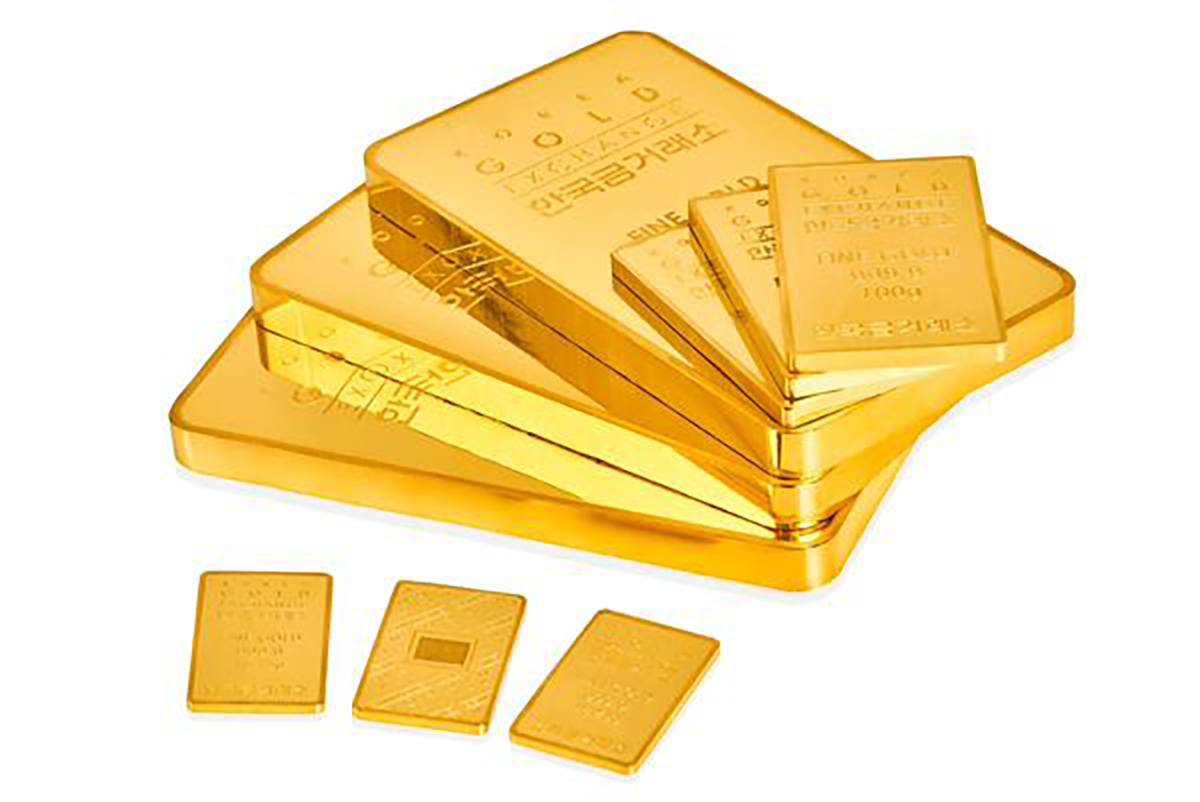
-오늘의 금시세(KRX 2.45%↓, 한국금거래소 2.48%↓)
-KRX 금 1g 19만1천480원
-한국금거래소 순금 살 때 84만6천원…2만1천원 내려
-국제 금값 2%대 급락…4천300달러 초반까지 밀려
-美 국채 수익률 상승·달러 강세·금리 인상 우려 겹쳐
-200일 이동평균선 이탈…4천311달러 1차 지지선 주목
-美 고용지표·9월 FOMC 향후 금시세 주요 변수
국내외 금시세가 동반 하락하고 있다.
국제 금가격이 2% 넘게 급락하며 2주 만에 최저 수준으로 밀리자 국내 금시세도 2일 오전 2%대 하락세를 나타냈다.
미국 국채 수익률 상승과 달러 강세가 금값을 끌어내렸다. 국제유가 급등으로 인플레이션 우려까지 커지면서 미국 연방준비제도(Fed·연준)가 이달 기준금리를 인상할 수 있다는 전망도 금시장에 부담을 주고 있다.
2일 오전 9시55분 한국거래소(KRX) 금시장에서 금 1g 가격은 19만1천480원을 기록했다.
전날 종가 19만6천280원보다 4천800원(2.45%) 떨어졌다.
이날 19만3천110원에 거래를 시작한 뒤 장중 19만1천230원까지 내려갔다. 같은 시각 거래량은 3만7천782g, 거래대금은 약 72억4천만원이다.
전날인 1일 KRX 금가격은 19만6천280원에 장을 마쳤다. 당시 하락률은 0.10%에 그쳤지만 국제 금시세 급락이 이어지면서 2일 국내 시장에서도 낙폭이 커졌다.
한국금거래소가 고시한 실물 금가격도 떨어졌다.
같은 시각 순금 3.75g을 소비자가 살 때 가격은 84만6천원으로 전일보다 2만1천원(2.48%) 하락했다.
내가 팔 때 가격은 71만5천원으로 1만3천원(1.82%) 내렸다.
18K는 팔 때 52만5천600원으로 1.81%, 14K는 40만7천600원으로 1.82% 각각 하락했다.
은가격도 약세다.
은 3.75g을 살 때 가격은 1만2천140원으로 3.54% 하락했다. 팔 때는 9천870원으로 3.65% 내렸다.
백금은 살 때 33만6천원으로 3.87%, 팔 때는 26만9천원으로 4.09% 각각 떨어졌다.
국내 금시세 하락은 국제 금시장의 급격한 조정과 맞물렸다.
로이터에 따르면 1일(현지시간) 금현물가격은 미국 동부시간 오후 2시2분 기준 온스당 4천342.20달러로 전 거래일보다 2.4% 하락했다. 약 2주 만의 최저 수준이다.
미국 금 선물도 1.9% 떨어진 온스당 4천396.40달러에 마감했다.
이후에도 하락 압력은 이어졌다.
Kitco News는 화요일 미국 오후 거래에서 현물 금가격이 온스당 4천327.70달러로 2.68% 하락했다고 전했다.
같은 시각 은 현물가격도 온스당 63.950달러로 3.71% 떨어졌다.
금가격 하락을 이끄는 주요 요인 가운데 하나는 채권시장이다.
미국 국채 수익률이 빠르게 오르면서 금 보유에 따른 기회비용이 커지고 있다.
Kitco에 따르면 미국 2년 만기 국채 수익률은 4.39%, 10년 만기 국채 수익률은 4.79% 수준까지 상승했다.
10년물 수익률은 2025년 1월 이후 가장 높은 수준까지 올라갔다.
미국에 국한된 현상도 아니다. 독일과 영국, 호주의 장기 국채 수익률도 수년 만의 최고 수준 또는 사상 최고 수준으로 오르는 등 글로벌 채권시장에서 수익률 상승세가 나타났다.
채권 수익률 상승은 일반적으로 금에 부담으로 작용한다.
금은 보유하고 있어도 이자가 발생하지 않는다.
국채 금리가 높아지면 투자자 입장에서는 이자를 받을 수 있는 채권의 상대적인 매력이 높아진다. 반대로 이자를 주지 않는 금을 보유하는 데 따른 기회비용은 커진다.
달러 강세도 금시세를 누르는 요인이다.
국제 금가격은 달러로 표시된다. 달러 가치가 상승하면 다른 통화를 사용하는 투자자 입장에서는 같은 양의 금을 사기 위해 더 많은 자금을 지불해야 한다.
로이터는 미국 국채 수익률 상승과 달러 강세가 금시장에 하방 압력을 가했다고 분석했다.
여기에 국제유가 급등이라는 변수가 더해졌다.
중동 긴장이 고조되면서 브렌트유는 1일 4.6% 상승한 배럴당 94.65달러, 서부텍사스산원유(WTI)는 5.2% 오른 90.22달러를 기록했다.
WTI가 배럴당 90달러를 넘어선 것은 한 달여 만이다.
통상 지정학적 불안이 커지면 금은 안전자산으로 주목받는다. 전쟁이나 금융시장 불안 등이 커질 때 상대적으로 안전한 자산을 찾는 투자자들의 금 수요가 늘어날 수 있기 때문이다.
하지만 이번에는 상황이 다르게 전개되고 있다.
중동 불안으로 국제유가가 급등하면서 시장의 관심이 안전자산 수요뿐 아니라 인플레이션 재확산 가능성에도 쏠렸다.
유가 상승은 운송비와 생산비 등 각종 비용을 높여 물가 상승 압력을 키울 수 있다.
인플레이션 압력이 다시 강해지면 연준이 기준금리를 높은 수준으로 유지하거나 추가로 인상할 가능성도 커진다.
결국 지정학적 위험이라는 금가격 상승 요인이 존재하는 상황에서도 ‘유가 상승→인플레이션 우려→금리 인상 가능성→국채 수익률 상승’이라는 경로가 금시장에 강한 부담으로 작용하고 있는 것이다.
Kitco도 호르무즈 해협을 둘러싼 긴장이 이번에는 안전자산 선호보다 유가와 인플레이션, 금리 상승을 통해 금시장에 영향을 미치고 있다고 분석했다.
연준의 통화정책 전망도 금시세를 압박하고 있다.
케빈 워시 연준 의장은 최근 잭슨홀 심포지엄 연설에서 인플레이션을 중앙은행 목표치인 2%로 낮추겠다는 의지를 재차 강조했다.
이후 시장에서는 9월 기준금리 인상 가능성이 높아졌다.
CME FedWatch Tool에 따르면 시장은 이달 금리 인상 가능성을 약 66%로 반영하고 있다.
금리가 실제로 인상되거나 고금리가 예상보다 오래 지속될 경우 금에는 부담이 될 수 있다. 금리가 높아지면서 채권 등 이자를 지급하는 자산과 비교해 금의 상대적인 투자 매력이 떨어질 수 있기 때문이다.
금가격의 기술적인 흐름도 약해졌다.
최근 금은 시장에서 중요한 기술적 기준 가운데 하나로 여겨지는 200일 이동평균선을 밑돌았다.
200일 이동평균선은 최근 200거래일의 가격을 평균해 연결한 지표다. 시장에서는 현재 가격이 이 선 위에 있는지 아래에 있는지를 중장기적인 가격 흐름을 판단하는 지표 가운데 하나로 활용한다.
금시세가 200일 이동평균선 아래로 떨어지면서 기술적인 매도 압력도 커진 것으로 분석된다.
로이터가 전한 아메리칸 골드 익스체인지의 시장 분석가 짐 위코프는 글로벌 채권 수익률 상승과 함께 200일 이동평균선 이탈을 중요한 기술적 신호로 평가했다.
금가격은 지난달 28일 200일 이동평균선 아래로 내려갔다. 현재 200일 이동평균선은 온스당 약 4천528~4천530달러 수준으로 제시되고 있다.
단기적으로는 4천300달러 초반이 중요한 가격대로 떠올랐다.
세계금협회(WGC)는 온스당 4천311달러를 첫 번째 지지선으로 제시했다.
지지선은 가격이 하락할 때 매수세가 유입되면서 추가 하락을 막을 가능성이 있는 가격대를 의미한다.
국제 금값시세가 4천311달러 아래로 내려갈 경우에는 상승하고 있는 55일 이동평균선 부근인 온스당 4천215달러가 다음 주요 지지선으로 거론된다.
반대로 금가격이 반등할 경우에는 4천474달러가 첫 번째 저항선으로 제시됐다. 이후 200일 이동평균선이 위치한 약 4천530달러를 다시 넘어서는지가 단기적인 추세 변화의 중요한 기준이 될 수 있다는 분석이다.
WGC는 최근 단기 상승 모멘텀이 약해진 데다 글로벌 채권 수익률이 계속 오르고 있다는 점을 하방 위험 요인으로 지목했다.
블루 라인 퓨처스의 필 스트라이블도 4천350달러를 중요한 분기점으로 제시했다.
그는 앞서 금값시세가 4천350달러 아래에서 마감할 경우 기존 전망을 재검토할 수 있다고 밝혔다.
금가격은 이후 장중 온스당 4천325.50달러까지 떨어지며 해당 가격대를 밑돌기도 했다.
다만 스트라이블은 장중 가격보다 종가를 중요하게 본다는 입장이다.
최근의 급락만으로 장기적인 금가격 상승 흐름이 끝났다고 단정하지도 않았다.
그는 금시세가 앞서 큰 폭으로 상승한 만큼 최근 하락을 아직 조정 과정으로 바라보고 있다. 하루 사이 큰 폭으로 밀렸지만 앞선 상승폭을 감안할 필요가 있다는 분석이다.
삭소뱅크의 상품 전략 책임자인 올레 한센 역시 단기적인 금시장 부담과 장기적인 가격 지지 요인을 구분했다.
한센은 인플레이션 우려가 다시 커지면서 단기 금리 인상 기대와 실질·명목 수익률 상승, 달러 강세가 금과 은 가격에 악재로 작용하고 있다고 분석했다.
특히 최근 인플레이션 우려는 유가뿐 아니라 농산물 등 다른 원자재 가격 상승과도 맞물리고 있다.
하지만 한센은 최근 금시세 하락이 장기적인 강세 논리 자체를 훼손한 것으로 보지는 않았다.
정부 부채 증가와 대규모 국채 발행, 재정 건전성에 대한 우려가 장기간 이어질 경우 통화가치에 대한 불안이 다시 커질 수 있기 때문이다.
국가의 부채가 늘어나고 부채 상환 비용이 계속 높아지면 정책 당국에도 부담이 커진다. 장기적으로 이런 상황이 통화에 대한 신뢰 문제로 연결될 경우 금의 투자 매력이 다시 부각될 수 있다는 설명이다.
각국 중앙은행의 금 수요와 외환보유액 다변화 움직임도 장기적으로 금가격을 지지할 수 있는 요인으로 거론된다.
한센은 중앙은행의 정책이 수요를 억제할 수는 있지만 원유나 천연가스 등 공급 자체를 늘릴 수는 없다는 점도 지적했다.
필 스트라이블 역시 현재 인플레이션의 성격에 주목했다.
그는 유가와 곡물 가격 상승, 관세 등의 영향을 공급 측면의 충격으로 보고 있다.
금리 인상은 소비와 투자 등 수요를 억제할 수 있지만 원유나 곡물의 생산량을 직접 늘릴 수는 없다.
이에 따라 연준이 공급 측면에서 발생한 인플레이션에 대응하기 위해 금리를 올릴 경우 경제에 또 다른 부담을 줄 수 있다는 게 그의 주장이다.
연준이 실제 금리 인상에 나설지 여부는 향후 경제지표에 따라 달라질 전망이다.
시장에서는 이번 주 발표되는 미국 노동시장 지표에 주목하고 있다.
2일(현지시간) ADP 민간고용 보고서를 시작으로 실업수당 청구 건수와 공급관리협회(ISM) 서비스업 지표가 예정돼 있다.
가장 큰 관심은 금요일 발표될 미국의 8월 비농업부문 고용지표에 쏠린다.
고용시장이 예상보다 견조한 것으로 나타나면 연준의 금리 인상 전망에 힘이 실릴 가능성이 있다. 이 경우 국채 수익률과 달러 움직임이 국제 금시세에 추가적인 변수가 될 수 있다.
반대로 고용이 시장 예상보다 크게 둔화하면 금리 인상 기대가 약해질 가능성이 있다. 이에 따른 국채 수익률과 달러 움직임 역시 금시장이 주목할 부분이다.
미국 소비자물가지수(CPI)도 향후 통화정책을 가늠할 주요 지표다.
연준은 오는 15~16일 연방공개시장위원회(FOMC)를 열고 통화정책을 결정할 예정이다.
국내 금시세는 국제 금가격뿐 아니라 원·달러 환율도 함께 살펴야 한다.
2일 오전 원·달러 환율은 1천370.90원 수준이다.
국제 금가격이 달러로 결정되는 만큼 국내 금시세는 국제 시세를 원화로 환산하는 과정에서 환율의 영향을 받는다.
국제 금값이 떨어지더라도 원화 가치가 크게 약해지면 국내 금가격의 하락폭이 상대적으로 제한될 수 있다. 반대로 국제 금시세 하락과 원화 강세가 동시에 나타나면 국내 금가격의 하락 압력이 커질 수 있다.
실제 이날 오전 KRX 금 1g 가격은 전날보다 2.45% 떨어진 19만1천480원까지 내려왔다. 한국금거래소에서 소비자가 순금 3.75g을 살 때 가격도 2.48% 내린 84만6천원을 나타냈다.
국제 금가격 역시 4천300달러 초반까지 밀리면서 국내외 금시장이 동시에 조정을 받고 있다.
향후 금시세의 단기 방향은 미국 고용지표와 국채 수익률, 달러 움직임에 영향을 받을 전망이다.
기술적으로는 국제 금시세가 4천311달러선에서 지지력을 확보할지가 관심이다. 이 선이 무너지면 WGC가 제시한 55일 이동평균선인 4천215달러가 다음 주요 지지선으로 거론된다.
반면 단기적인 금리 부담에도 정부 부채와 재정 건전성, 중앙은행의 금 수요 등 장기적인 지지 요인은 여전히 남아 있다는 분석도 나온다.
금시장이 단기적인 금리 상승 압력과 장기적인 구조적 수요 사이에서 어느 방향으로 움직일지 주목된다.
실시간 금값시세는 한국금거래소와 한국거래소(KRX) 금시장에서 확인할 수 있다.
/박상진 기자 jhc@kjdaily.com
다음은 위 기사를 번역한 전문이다. 번역에 오류가 있을 수 있다.
- Today's Gold Price (KRX 2.45%↓, Korea Gold Exchange 2.48%↓)
- KRX Gold 1g: 191,480 won
- Korea Gold Exchange Pure Gold Buying Price: 846,000 won… Down 21,000 won
- International Gold Price Plunges by Over 2%… Pushed Down to the Low $4,300s
- Concerns Over Rising US Treasury Yields, Strong Dollar, and Interest Rate Hikes Overlap
- Breaks Below 200-Day Moving Average… Attention Focused on $4,311 First Support Level
- US Employment Data and September FOMC Meeting Key Variables for Future Gold Prices
Domestic and international gold prices are falling in tandem.
As international gold prices plummeted by over 2% to their lowest level in two weeks, domestic gold prices also showed a downward trend in the 2% range on the morning of the 2nd.
Rising US Treasury yields and a strong dollar dragged down gold prices. With inflation concerns growing due to the surge in international oil prices, the prospect that the U.S. Federal Reserve (Fed) may raise benchmark interest rates this month is also weighing on the gold market.
At 9:55 a.m. on the 2nd, the price of 1 gram of gold on the Korea Exchange (KRX) gold market was recorded at 191,480 won.
This is a drop of 4,800 won (2.45%) from the previous day's closing price of 196,280 won.
The price opened at 193,110 won and fell to 191,230 won during the session. At the same time, the trading volume was 37,782 grams, and the trading value was approximately 7.24 billion won.
On the previous day, the 1st, the KRX gold price closed at 196,280 won. Although the decline at that time was limited to 0.10%, the drop widened in the domestic market on the 2nd as the sharp decline in international gold prices continued.
The price of physical gold announced by the Korea Gold Exchange also fell.
At the same time, the purchase price for 3.75g of pure gold was 846,000 won, down 21,000 won (2.48%) from the previous day.
The selling price was 715,000 won, down 13,000 won (1.82%).
The selling price for 18K gold fell by 1.81% to 525,600 won, while 14K gold fell by 1.82% to 407,600 won.
Silver prices are also weak.
The purchase price for 3.75g of silver fell by 3.54% to 12,140 won. The selling price dropped by 3.65% to 9,870 won.
Platinum fell by 3.87% to 336,000 won when buying and by 4.09% to 269,000 won when selling. The decline in domestic gold prices coincided with a sharp correction in the international gold market.
According to Reuters, spot gold prices fell 2.4% from the previous trading day to $4,342.20 per ounce as of 2:02 p.m. Eastern Time on the 1st (local time). This marks the lowest level in about two weeks.
U.S. gold futures also closed down 1.9% at $4,396.40 per ounce.
Downward pressure continued thereafter.
Kitco News reported that spot gold prices fell 2.68% to $4,327.70 per ounce in U.S. afternoon trading on Tuesday.
At the same time, spot silver prices also dropped 3.71% to $63.950 per ounce.
One of the major factors driving the decline in gold prices is the bond market.
As U.S. Treasury yields rise rapidly, the opportunity cost of holding gold is increasing.
According to Kitco, the yield on U.S. 2-year Treasuries rose to 4.39%, while the yield on 10-year Treasuries reached 4.79%.
The 10-year yield climbed to its highest level since January 2025.
This phenomenon is not limited to the United States. A rising trend in yields was observed across global bond markets, with long-term government bond yields in Germany, the United Kingdom, and Australia also rising to their highest levels in years or all-time highs.
Rising bond yields generally put pressure on gold.
Gold does not generate interest when held.
When government bond yields rise, the relative attractiveness of interest-bearing bonds increases for investors. Conversely, the opportunity cost of holding non-interest-paying gold increases.
The strong dollar is also a factor suppressing gold prices.
International gold prices are denominated in dollars. If the value of the dollar rises, investors using other currencies must pay more capital to purchase the same amount of gold.
Reuters analyzed that rising U.S. Treasury yields and a strong dollar exerted downward pressure on the gold market.
Adding to this, the variable of soaring international oil prices was added.
As tensions in the Middle East escalated, Brent crude rose 4.6% on the 1st to $94.65 per barrel, while West Texas Intermediate (WTI) recorded a 5.2% increase to $90.22.
This marks the first time in about a month that WTI has surpassed $90 per barrel.
Typically, when geopolitical instability increases, gold draws attention as a safe haven asset. This is because demand for gold can rise among investors seeking relatively safe assets when war or financial market instability intensifies.
However, the situation is unfolding differently this time.
As international oil prices surged due to instability in the Middle East, market attention has shifted not only to the demand for safe haven assets but also to the possibility of a resurgence of inflation.
Rising oil prices can increase various costs, such as transportation and production expenses, thereby amplifying inflationary pressure. If inflationary pressures intensify again, the likelihood of the Federal Reserve maintaining the benchmark interest rate at a high level or raising it further increases.
Ultimately, even amidst the existence of geopolitical risks that act as a factor driving gold prices, the path of "rising oil prices → inflation concerns → possibility of interest rate hikes → rising Treasury yields" is acting as a strong burden on the gold market.
Kitco also analyzed that tensions surrounding the Strait of Hormuz are impacting the gold market this time not through a preference for safe assets, but through rising oil prices, inflation, and interest rates.
The outlook for the Federal Reserve's monetary policy is also putting pressure on gold prices.
In a recent speech at the Jackson Hole Symposium, Federal Reserve Chairman Kevin Warsh reiterated his determination to lower inflation to the central bank's target of 2%.
Since then, the market has seen an increased likelihood of a benchmark interest rate hike in September.
According to the CME FedWatch Tool, the market is reflecting a probability of approximately 66% for a rate hike this month.
If interest rates are actually raised or if high interest rates persist longer than expected, it could put pressure on gold. This is because rising interest rates may reduce the relative investment appeal of gold compared to interest-paying assets such as bonds.
The technical trend of gold prices has also weakened.
Recently, gold fell below the 200-day moving average, which is considered one of the key technical benchmarks in the market.
The 200-day moving average is an indicator that connects the average prices of the past 200 trading days. The market uses whether the current price is above or below this line as one of the indicators to judge medium- to long-term price trends.
As gold prices fell below the 200-day moving average, technical selling pressure is analyzed to have increased.
Jim Wyckoff, a market analyst at American Gold Exchange reported by Reuters, assessed the breakout below the 200-day moving average, along with rising global bond yields, as a significant technical signal.
Gold prices fell below the 200-day moving average on the 28th of last month. Currently, the 200-day moving average is indicated at the level of approximately $4,528 to $4,530 per ounce.
In the short term, the low $4,300 range has emerged as a key price level.
The World Gold Council (WGC) has identified $4,311 per ounce as the first support level.
A support level refers to a price range where buying pressure may intervene to prevent further declines when prices fall.
If the international gold price falls below $4,311, $4,215 per ounce—near the rising 55-day moving average—is cited as the next major support level.
Conversely, if the gold price rebounds, $4,474 has been identified as the first resistance level. Analysis suggests that whether the price subsequently surpasses the approximately $4,530 mark, where the 200-day moving average is located, could serve as a crucial criterion for a short-term trend shift. The World Gold Council (WGC) identified the recent weakening of short-term upward momentum and the continued rise in global bond yields as downside risk factors.
Phil Streible of Blue Line Futures also suggested $4,350 as a critical turning point.
He previously stated that he could re-evaluate his existing outlook if gold prices closed below $4,350.
Gold prices subsequently fell to as low as $4,325.50 per ounce during the trading session, dropping below that level.
However, Streible maintains that he places more importance on the closing price than the intraday price.
He did not conclude that the long-term upward trend in gold prices has ended solely due to the recent sharp decline.
Given the significant rise in gold prices prior to that, he views the recent decline as still being a correction phase. His analysis suggests that while prices fell sharply within a single day, the magnitude of previous gains must be taken into account.
Ole Hansen, Head of Product Strategy at Saxo Bank, also distinguished between short-term pressures on the gold market and long-term price support factors.
The WGC identified the weakening of short-term upward momentum and the continued rise in global bond yields as downside risk factors. Hansen analyzed that as inflation concerns resurface, expectations of short-term interest rate hikes, rising real and nominal yields, and a strong dollar are acting as negative factors for gold and silver prices.
In particular, recent inflation concerns are intertwined with the rise in prices of other raw materials, such as agricultural products, as well as oil prices.
However, Hansen did not view the recent decline in gold prices as undermining the long-term bullish logic itself.
This is because instability regarding currency value could re-escalate if concerns about increasing government debt, large-scale government bond issuance, and fiscal soundness persist for an extended period.
As national debt grows and debt repayment costs continue to rise, the burden on policy authorities increases. The explanation is that if this situation leads to a lack of confidence in the currency in the long term, the investment appeal of gold could be highlighted again.
Movements by central banks around the world to diversify their gold demand and foreign exchange reserves are also cited as factors that could support gold prices in the long term.
Hansen also pointed out that while central bank policies can curb demand, they cannot increase the supply itself, such as crude oil or natural gas.
Phil Streibble also noted the nature of current inflation.
He views the impact of rising oil and grain prices, as well as tariffs, as a supply-side shock.
While raising interest rates can curb demand—such as consumption and investment—it cannot directly increase the production of crude oil or grain.
Accordingly, he argues that if the Fed raises rates to respond to inflation caused by the supply side, it could impose another burden on the economy.
Whether the Fed will actually proceed with an interest rate hike is expected to depend on future economic indicators.
The market is paying close attention to U.S. labor market indicators to be released this week.
Starting with the ADP Private Employment Report on the 2nd (local time), jobless claims and the Institute for Supply Management (ISM) services index are scheduled.
The greatest interest is focused on the U.S. August non-farm payrolls data to be released on Friday.
If the labor market appears more robust than expected, it could strengthen the prospect of a Fed interest rate hike. In this scenario, government bond yields and dollar movements could become additional variables affecting international gold prices.
Conversely, if employment slows significantly more than market expectations, expectations for interest rate hikes may weaken. Consequently, the gold market should also pay close attention to the movements in government bond yields and the dollar.
The U.S. Consumer Price Index (CPI) is also a key indicator for gauging future monetary policy.
The Federal Reserve is scheduled to hold a Federal Open Market Committee (FOMC) meeting on the 15th and 16th to decide on monetary policy.
Domestic gold prices must be monitored not only by international gold prices but also by the won-dollar exchange rate.
As of the morning of the 2nd, the won-dollar exchange rate stands at around 1,370.90 won.
Since international gold prices are determined in dollars, domestic gold prices are influenced by the exchange rate during the process of converting international prices into won.
Even if international gold prices fall, the decline in domestic gold prices may be relatively limited if the value of the won weakens significantly. Conversely, if international gold prices fall and the Korean won strengthens simultaneously, downward pressure on domestic gold prices could increase.
In fact, the KRX gold price fell to 191,480 won this morning, down 2.45% from the previous day. The price for consumers to purchase 3.75g of pure gold at the Korea Gold Exchange also fell by 2.48% to 846,000 won.
International gold prices also dropped to the low $4,300 range, indicating that both domestic and international gold markets are undergoing a simultaneous correction.
The short-term direction of gold prices is expected to be influenced by U.S. employment indicators, Treasury yields, and dollar movements.
Technically, the focus is on whether international gold prices will secure support at the $4,311 level. If this level is breached, the 55-day moving average of $4,215 suggested by the World Gold Council (WGC) is cited as the next major support level.
On the other hand, some analysts suggest that despite short-term interest rate burdens, long-term support factors such as government debt, fiscal soundness, and central bank demand for gold still remain. Attention is focused on which direction the gold market will move between short-term upward pressure on interest rates and long-term structural demand.
Real-time gold prices can be checked at the Korea Gold Exchange and the Korea Exchange (KRX) gold market.
/Reporter Park Sang-jin jhc@kjdaily.com
박상진 기자 jhc@kjdaily.com
▶ 디지털 뉴스 콘텐츠 이용규칙보기


