

 2026.10.13 (화) 11:21


|
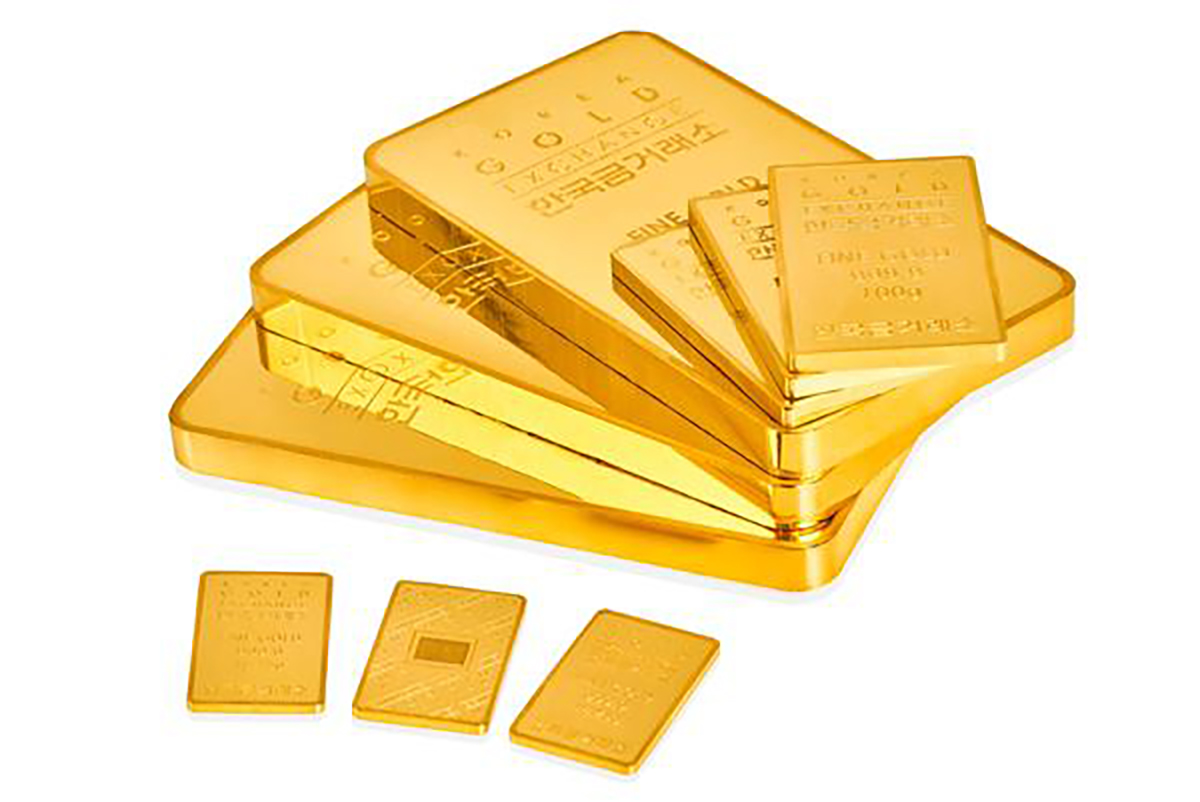
-한국금거래소 순금 한 돈 살 때 78만6천원…4천원 내려
-국제 금 현물 4천169달러대…달러 강세·유가 급등에 상승분 반납
-미국 14일 CPI·15일 PPI 발표…금리 전망과 금값 향방 주목
국내 금값이 13일 오전 약세를 보였다.
한국거래소(KRX) 금시장 가격이 전날보다 하락했고, 한국금거래소가 고시한 순금 한 돈을 살 때 가격도 내려갔다.
국제 금가격 역시 미국 현지시간 12일 하락했다.
장 초반 일주일여 만의 최고 수준에 올랐지만 달러 강세와 국제유가 상승에 밀려 상승분을 반납했다.
미국의 주요 물가지표 발표를 앞두고 연방준비제도(Fed·연준)의 추가 금리 인상 가능성이 다시 부각된 영향이다.
중동의 군사적 긴장이 안전자산 수요를 자극하는 가운데, 고유가가 물가와 금리 전망을 통해 금값에 부담을 주는 복합적인 흐름이 이어지고 있다.
◇ KRX 금 1g 17만9천30원…전날보다 0.52% 하락
13일 오전 10시 한국거래소 금시장 시황에 따르면 금 1g 가격은 17만9천30원으로 집계됐다.
전날 종가인 17만9천970원보다 940원(0.52%) 낮은 수준이다.
이날 시가는 17만9천970원이었다.
장중 고가는 17만9천970원, 저가는 17만8천870원을 기록했다.
같은 시각 거래량은 1만6천211g, 거래대금은 29억601만640원이었다.
다만 오전 10시 집계인 만큼 이날 전체 거래량이나 최종 종가를 뜻하지 않는다.
12일에는 금 1g이 17만9천970원에 거래를 마쳤다.
직전 거래일인 8일 종가 17만7천480원보다 2천490원(1.40%) 상승한 가격이었다.
12일 장중에는 18만1천500원까지 올랐지만 종가는 18만원 아래에서 형성됐다.
13일 오전에는 전날 반등분의 일부를 되돌리는 모습이다.
◇ 순금 한 돈 살 때 78만6천원…팔 때는 보합
한국금거래소가 13일 오전 10시 고시한 순금 24K 한 돈(3.75g) 가격은 소비자가 살 때 78만6천원이다.
전날 마지막 고시가격 79만원보다 4천원(0.51%) 하락했다.
소비자가 순금을 팔 때 받는 가격은 67만7천원으로 전날과 같았다.
18K를 팔 때 가격은 49만7천600원, 14K는 38만5천900원으로 각각 보합을 기록했다.
12일에는 고시가격이 장중 변경됐다.
당일 오전 순금 살 때 가격은 79만4천원이었지만 이후 79만원으로 낮아졌다.
13일 가격을 비교할 때는 12일 오전 첫 고시가 아닌 최종 고시를 기준으로 삼아야 한다.
순금 살 때 가격은 10일 79만5천원에서 12일 최종 79만원, 13일 오전 78만6천원으로 내려왔다.
10일과 비교하면 한 돈당 9천원 낮아졌다.
백금과 은 가격도 약세를 나타냈다.
백금 한 돈은 살 때 31만4천원, 팔 때 25만5천원으로 각각 전날보다 3천원과 2천원 내렸다.
은 한 돈은 살 때 1만840원, 팔 때 9천20원으로 각각 140원과 120원 하락했다.
한국금거래소 고시가격과 KRX 금시장 거래가격은 같은 금을 대상으로 하더라도 산정 방식이 다르다.
한국금거래소의 순금 살 때 가격에는 부가가치세가 포함돼 있으며, 팔 때 가격은 별도로 고시된다.
KRX 시황은 거래소 시장에서 형성된 1g당 거래가격을 나타낸다.
두 가격을 단순 환산해 어느 쪽이 더 비싸거나 저렴하다고 단정하기보다는 각각의 가격 변동과 거래 조건을 구분해 살펴볼 필요가 있다.
이날 제시된 원·달러 환율은 달러당 1천337원이다.
국내 금시세는 국제 금가격뿐 아니라 환율과 국내 수급, 판매 조건의 영향도 받는다.
다만 환율의 전일 대비 변동폭이 제공되지 않은 만큼 이날 국내 금값 하락을 환율 변화 때문이라고 단정할 근거는 없다.
◇ 국제 금값, 일주일여 만의 고점 찍고 하락
국제 금시장은 지난주 말 반등 분위기를 이어가지 못했다.
미국 현지시간 12일 오후 1시45분 기준 금 현물 가격은 온스당 4천169.10달러로 전 거래일보다 0.6% 하락했다.
장 초반에는 지난 2일 이후 가장 높은 수준까지 올랐다.
그러나 달러가 강세를 보이자 상승세가 꺾였다.
미국 12월 인도분 금선물도 온스당 4천190.60달러로 0.6% 하락 마감했다.
장 마감 후 금 현물 가격도 온스당 약 4천168.90달러로 0.59% 하락했다.
은 현물도 온스당 60달러 초반으로 떨어졌다.
은은 60.22달러로 1.0%, 백금은 1천684.20달러로 0.2%, 팔라듐은 1천141.90달러로 0.5% 각각 하락했다.
지난 9일 국제 금 현물은 온스당 4천194.36달러까지 오르며 1.5% 상승한 바 있다.
당시 12월물 금선물은 4천216.30달러에 마감했다.
12일 현물 가격은 9일의 반등 이후 다시 4천200달러 아래로 밀려난 셈이다.
금값이 단기간에 방향을 바꾸는 배경에는 달러와 금리 전망, 중동 정세가 동시에 자리하고 있다.
◇ 달러 18개월 만의 최고 수준…금가격에 부담
12일 뉴욕 외환시장에서 주요 6개 통화 대비 달러 가치를 나타내는 달러인덱스는 102.599를 기록했다.
전 거래일보다 0.362% 상승한 수치로, 약 18개월 만의 높은 수준이다.
달러 가치는 2거래일 연속 올랐다.
달러·엔 환율은 158.662엔으로 상승했고, 유로·달러 환율은 1.11538달러로 하락했다.
달러로 거래되는 국제 금은 달러 가치가 높아질수록 다른 통화를 사용하는 투자자의 구매 부담이 커질 수 있다.
달러 자체가 안전자산으로 선호되면 금으로 향할 수요가 분산되는 효과도 나타난다.
최근 금값은 중동의 불확실성보다 달러 강세와 연준의 긴축 가능성에 더 민감하게 반응하는 모습이다.
다만 달러와 금이 언제나 반대 방향으로 움직이는 것은 아니다.
전쟁이나 금융 불안이 심해질 때는 두 자산이 함께 강세를 보일 수도 있다.
이번 시장에서 중요한 것은 어떤 위험이 투자자의 판단에 더 크게 반영되고 있느냐다.
12일은 미국 콜럼버스의 날로 채권시장이 휴장했다.
따라서 이날 미국 국채금리가 실시간으로 급등해 금값을 끌어내렸다는 식의 설명은 적절하지 않다.
직전 거래일인 9일 미국 10년 만기 국채금리는 5.24% 안팎, 30년물은 5.60% 수준이었다.
높은 금리 수준 자체가 이자를 지급하지 않는 금을 보유하는 데 따른 기회비용을 높이는 요인이다.
◇ 중동 충돌에 유가 3거래일 상승…물가 불안 확대
국제유가의 상승세도 금시장의 주요 변수로 떠올랐다.
12일 뉴욕상업거래소에서 11월 인도분 서부텍사스산원유(WTI)는 배럴당 93.74달러로 마감했다.
전 거래일보다 1.89달러(2.06%) 상승했다.
12월물 브렌트유는 1.93달러(1.84%) 오른 배럴당 106.65달러를 기록했다.
두 유종 모두 8일부터 3거래일 연속 상승했다.
사우디아라비아와 예멘의 친이란 후티 반군 간 충돌이 격화하면서 원유 공급에 대한 우려가 커졌다.
후티 반군은 사우디 수도 리야드의 국제공항을 겨냥한 미사일 공격을 주장했다.
사우디 측은 해당 미사일을 요격했다고 밝혔다.
호르무즈 해협을 둘러싼 미국과 이란의 갈등도 해소되지 않았다.
해상 원유 수송에 대한 불확실성이 이어지면서 에너지 공급 차질에 대한 경계감이 유지되고 있다.
도널드 트럼프 미국 대통령이 러시아산 경유 공급 확대와 러시아·우크라이나 간 에너지 휴전 관련 움직임을 언급했지만 유가 상승을 진정시키기에는 역부족이었다.
유가 상승은 금가격에 상반된 영향을 미친다.
중동 갈등이 확대되면 안전자산을 찾는 수요가 늘어 금값을 지지할 수 있다.
그러나 고유가가 소비자물가를 끌어올리면 연준의 추가 긴축 가능성이 커지고 달러와 시장금리가 강세를 보일 수 있다.
이 경우 금은 오히려 하락 압력을 받는다.
12일에는 안전자산 선호보다 인플레이션과 금리 인상 우려가 시장에 더 강하게 반영됐다는 분석이 나온다.
◇ 14일 CPI·15일 PPI…이번 주 최대 분수령
시장의 시선은 이번 주 미국 경제지표로 옮겨가고 있다.
미국은 현지시간 14일 9월 소비자물가지수(CPI)를 발표할 예정이다.
15일에는 생산자물가지수(PPI)와 소매판매 지표가 공개된다.
이들 지표는 인플레이션의 지속 여부와 미국 소비의 강도를 함께 보여준다.
물가 상승률이 시장 예상보다 높게 나오면 연준이 높은 금리를 더 오래 유지하거나 추가 인상에 나설 것이라는 전망이 강화될 수 있다.
반대로 물가 압력이 완화된 것으로 확인되면 달러와 금리의 상승 부담이 줄어 금값 반등에 유리한 환경이 만들어질 수 있다.
다만 물가가 둔화하더라도 유가가 계속 오르거나 연준 관계자들이 강경한 발언을 이어가면 금시장의 반응은 제한될 수 있다.
12일 시카고상품거래소(CME) 페드워치 기준 10월 기준금리 동결 확률은 78.4%였다.
전날 82.3%에서 낮아졌지만 동결 전망이 여전히 우세했다.
로이터는 12월까지 최소 한 차례 금리 인상이 이뤄질 가능성을 87.7% 수준으로 전했다.
이는 시장 참여자의 가격에 반영된 확률이지 실제 금리 결정이 확정됐다는 뜻은 아니다.
베스 해맥 클리블랜드 연방준비은행 총재도 물가 목표를 달성하려면 제약적인 통화정책이 필요하다는 견해를 밝혔다.
금값시세의 단기 방향은 물가지표 자체뿐 아니라 발표 직후 달러와 금리 인상 기대가 어떻게 달라지는지에 따라 좌우될 가능성이 크다.
◇ 뉴욕증시 혼조…위험자산 움직임도 엇갈려
12일 뉴욕증시는 미국 공휴일을 맞아 거래가 비교적 한산한 가운데 혼조로 마감했다.
다우존스30산업평균지수는 5만1천850.55로 0.38% 상승했다.
스탠더드앤드푸어스(S&P)500지수는 7천807.24로 0.06%, 나스닥지수는 2만7천245.90으로 0.44% 각각 하락했다.
기술주 약세와 에너지 관련 업종의 강세가 동시에 나타났다.
중국 메모리 반도체 기업의 기술 진전 소식으로 반도체주에 매도세가 집중됐다.
그러나 주식시장의 혼조를 국제 금값 하락의 직접적인 원인으로 해석하기는 어렵다.
오히려 유가와 달러가 상승하는 가운데 자산별로 위험을 평가하는 기준이 달라지고 있다는 점에 주목할 필요가 있다.
인플레이션 위험이 커지면서 통화정책이 긴축적으로 유지될 것이라는 전망이 강해지면 주식과 금이 동시에 압박받을 수도 있다.
◇ 고금리에도 금 투자 수요 유지…4분기 변동성 경계
국제 금값이 높은 금리와 달러 강세에 압박받고 있지만 중장기 수요 기반은 유지되고 있다는 분석이 나온다.
중앙은행의 금 매입과 금 기반 상장지수상품(ETP)에 대한 투자자들의 관심이 대표적인 지지 요인으로 꼽힌다.
글로벌 자산운용사 인베스코는 최근 4분기 전망에서 이러한 수요가 금가격의 하락 압력을 완화할 수 있다고 평가했다.
실제 국제 금값은 미국 장기 국채금리 상승에도 3분기 동안 3.7% 올랐다.
9월 말 가격은 온스당 약 4천157달러를 기록했다.
인베스코는 이 같은 흐름을 과거와 달라진 금시장의 특징으로 분석했다.
일반적으로 금리가 오르면 이자를 지급하지 않는 금의 투자 매력은 떨어진다.
그러나 최근에는 중앙은행의 외환보유고 다변화 움직임이 금 수요를 뒷받침하면서 실질금리와 금값 사이의 전통적인 관계가 약해졌다는 설명이다.
투자상품 시장에서도 변화가 나타났다.
인베스코에 따르면 글로벌 실물 금 기반 ETP 보유량은 3분기 들어 회복세를 보였다.
9월 말에는 최근 12개월 중 가장 높은 수준에 도달했다.
다만 이러한 수요가 금값의 지속적인 상승을 보장하는 것은 아니다.
높은 국채금리와 인플레이션 부담이 이어지는 가운데 금융시장의 변동성도 확대될 수 있기 때문이다.
시장 불안이 심해지면 투자자들이 다른 자산의 손실을 보전하기 위해 보유 금을 처분할 가능성도 있다.
인베스코는 중앙은행과 투자상품 수요를 긍정적으로 평가하면서도 4분기 금가격의 변동성이 이어질 수 있다고 전망했다.
◇ BofA는 신중…“ETF 강세만으로 실물 수요 부진 상쇄 어려워”
뱅크오브아메리카(BofA)는 금시장 전망에 더 신중한 입장을 보였다.
BofA는 최근 귀금속 보고서에서 높은 에너지 가격과 달러 강세, 실물 금 수요 둔화를 단기 위험 요인으로 제시했다.
특히 중국과 인도, 중앙은행 등 주요 수요처의 금 매입 속도가 느려지고 있다는 점을 지적했다.
최근 두 달 동안 금 ETF로 투자자금이 유입됐지만 실물시장의 약세를 모두 상쇄하기는 어렵다는 분석이다.
BofA가 제시한 2026년 4분기 평균 금가격 전망치는 온스당 4천달러다.
2027년 평균 전망치는 4천813달러로 제시했다.
앞선 보고서에서는 4분기 중 온스당 3천750달러까지 하락할 가능성도 언급했다.
4천달러와 4천813달러는 해당 기간의 평균 전망치이고, 3천750달러는 잠재적인 하락 수준이다.
서로 성격이 다른 수치를 같은 목표가격으로 비교해서는 안 된다.
BofA는 금값이 지속적으로 반등하려면 연준의 긴축 종료에 대한 신호가 분명해지고 달러 강세가 진정돼야 한다고 분석했다.
미국의 재정적자 확대도 금값에 일방적으로 긍정적인 재료는 아니라는 견해다.
재정 위험으로 국채금리가 오르면 금의 투자 매력이 약해질 수 있지만, 통화 가치 하락에 대한 우려가 커지면 금을 찾는 수요가 다시 늘어날 수 있다는 것이다.
두 기관의 전망은 서로 다르지만 공통으로 금리와 달러, 투자 수요의 변화가 향후 금가격을 결정할 핵심 변수라는 점을 강조하고 있다.
◇ 국제 금값과 국내 고시가격, 왜 차이가 날까
국내에서 금가격을 확인할 때 가장 혼동하기 쉬운 부분은 거래 단위와 실제 매매 조건이다.
국제시장의 금 현물 가격은 일반적으로 트로이온스당 미국 달러로 표시된다.
트로이온스 1개는 약 31.1035g으로, 국내에서 흔히 사용하는 한 돈 3.75g과 단위가 다르다.
따라서 국제 금 현물의 온스당 가격을 국내 순금 한 돈 가격과 숫자만 놓고 비교하는 것은 의미가 없다.
우선 단위를 통일해야 하고, 달러 표시 가격을 원화로 바꾸려면 적용 시점의 환율도 반영해야 한다.
그렇게 계산한 값 역시 소비자가 실제로 금을 구매할 때 지급하는 최종 가격과는 다를 수 있다.
금 제품을 구입할 때는 부가가치세와 유통 과정에서 발생하는 비용, 제품 형태에 따른 추가 금액이 적용될 수 있기 때문이다.
반대로 보유한 금을 팔 때 받는 금액은 판매가격과 다르게 고시된다.
13일 한국금거래소의 순금 한 돈 살 때 가격 78만6천원과 팔 때 가격 67만7천원 사이에는 10만9천원의 차이가 있다.
이 차이를 하루 동안 금값이 떨어진 금액으로 해석해서는 안 된다.
서로 다른 거래 방향에 적용되는 두 가격의 차이이기 때문이다.
18K와 14K 역시 순금과 금 함량이 달라 같은 기준으로 가격을 단순 비교하기 어렵다.
한국금거래소 화면에서 18K·14K의 살 때 가격을 일률적인 금액으로 표시하지 않는 것도 제품별 가격 조건이 다르기 때문이다.
금값시세를 살펴보는 소비자라면 국제 현물, 거래소 금시장, 실물 제품 매매가격 중 어떤 수치를 보고 있는지 먼저 확인해야 한다.
또 같은 날 발표된 수치라도 오전 장중 시황과 오후 최종 고시를 비교하면 실제 흐름을 잘못 읽을 수 있다.
이날 KRX와 한국금거래소의 가격을 오전 10시로 맞춰 살펴본 이유도 두 시장의 방향을 가능한 한 같은 시각에 확인하기 위해서다.
◇ 고유가와 고금리 사이…안전자산의 역설
중동 충돌이 확대되면 금값이 오른다는 설명은 일반적인 안전자산 선호 현상을 보여주지만, 이번 시장의 움직임을 모두 설명하지는 못한다.
원유 수송 차질 우려로 국제유가가 급등하면 에너지와 운송비용이 상승하고 물가를 다시 밀어 올릴 수 있다.
물가가 쉽게 잡히지 않을 것으로 예상되면 중앙은행은 경기 부담이 있더라도 금리를 높은 수준으로 유지할 유인이 커진다.
그 결과 투자자는 금을 보유하는 대신 이자를 받을 수 있는 채권이나 달러 자산을 선택할 수 있다.
금은 보유 자체로 이자나 배당을 지급하지 않기 때문에 이러한 비교에 민감하다.
하지만 금융시장의 불안이 더 심해져 통화와 국채에 대한 신뢰까지 흔들린다면 금의 역할은 달라질 수 있다.
일부 투자자는 높은 금리에도 불구하고 구매력 보존과 자산 분산을 위해 금을 선택한다.
중앙은행도 외환보유고를 특정 통화나 채권에 집중하지 않으려는 목적에서 금을 매입할 수 있다.
이처럼 동일한 중동 위험이라도 유가와 물가에 대한 우려가 앞서느냐, 금융자산의 안전성에 대한 우려가 앞서느냐에 따라 금가격에 미치는 영향이 달라진다.
현재는 달러와 원유가 함께 상승하는 가운데 금이 밀리고 있어 인플레이션에 따른 긴축 우려가 상대적으로 두드러진 국면으로 해석할 수 있다.
◇ 물가지표 결과별로 달라질 시장의 계산
이번 주 미국 CPI가 발표되면 투자자들은 전체 물가 상승률뿐 아니라 에너지와 식품을 제외한 근원물가의 움직임도 함께 확인할 것으로 보인다.
최근 유가 상승이 물가 전반으로 얼마나 번질 수 있는지 판단하기 위해서다.
근원물가가 예상보다 높다면 에너지 가격을 제외하더라도 물가 압력이 넓게 퍼져 있다는 해석이 가능하다.
반면 전체 물가가 높더라도 근원물가가 둔화한다면 연준의 판단은 보다 복잡해질 수 있다.
다음 날 발표되는 PPI는 기업이 생산 단계에서 부담하는 가격 압력을 보여준다는 점에서 의미가 있다.
소매판매는 높은 금리와 물가 속에서도 미국 소비가 얼마나 버티고 있는지 가늠할 수 있는 지표다.
소비가 예상보다 강하면 경기의 회복력을 확인할 수 있지만, 동시에 연준이 긴축 기조를 유지할 여력이 있다는 평가로 이어질 수 있다.
반대로 소비 둔화가 두드러지면 추가 금리 인상에 대한 경계감이 낮아질 여지가 있다.
결국 물가와 소비의 조합이 중요하다.
높은 물가와 견조한 소비가 함께 확인되면 금값에 불리한 금리 전망이 강화될 수 있다.
물가가 둔화하고 소비도 식는다면 금리 부담이 완화되면서 금가격이 반등할 여지가 생긴다.
다만 경기 급랭 우려가 커지는 경우에는 안전자산 수요가 늘면서도 현금 확보를 위한 매도가 동시에 나타날 수 있다.
따라서 지표 발표 직후의 순간적인 가격 변동과 이후 시장의 방향을 구분해 살펴봐야 한다.
◇ 4천200달러 회복 여부 주목…하락 위험도 열려
국제 금값의 기술적 가격대에 대한 관심도 높아지고 있다.
키코뉴스가 소개한 시장 분석에서는 온스당 4천220~4천227달러 부근이 단기 저항 구간으로 제시됐다.
이 구간을 뚫고 상승 흐름이 이어질 경우 4천270달러대와 4천310달러대가 다음 관찰 대상으로 거론됐다.
반면 하락이 계속되면 4천155달러 안팎과 4천142달러 부근이 추가로 주목받을 수 있는 가격대로 제시됐다.
일부 분석가는 온스당 4천달러 부근을 중기적으로 중요한 심리적 지지선으로 보고 있다.
이 수치들은 특정 시점의 기술적 분석에 따른 관찰 가격대일 뿐 향후 가격이 반드시 그 수준에 도달한다는 예측은 아니다.
특히 12일 금 현물 가격이 이미 4천175달러 아래에서 형성된 만큼 과거에 제시된 4천175달러를 현재의 지지선처럼 소개하는 것은 적절하지 않다.
금값이 4천200달러를 회복하더라도 달러 강세와 물가 우려가 유지된다면 상승세가 오래 이어질지는 불확실하다.
반대로 물가지표가 예상보다 낮게 나오고 금리 인상 전망이 약해지면 단기 매수세가 유입될 가능성도 있다.
국내 금값시세는 이러한 국제 가격 변화에 원·달러 환율과 국내 거래 조건이 더해져 형성된다.
따라서 국제 금값이 오르거나 내렸다는 사실만으로 국내 순금 한 돈 가격이 같은 비율로 움직일 것이라고 예상하기는 어렵다.
13일 오전 국내 금시장은 KRX 거래가격과 한국금거래소의 순금 살 때 가격이 함께 하락했다.
국제시장도 전날 달러 강세와 유가 상승으로 약세를 나타냈다.
이번 주 금시세의 다음 방향은 14일 미국 소비자물가지수와 15일 생산자물가지수·소매판매 결과, 중동 정세에 따른 유가 흐름에 달려 있다.
단기적으로는 긴축 우려가 금가격을 압박하고 있지만, 중앙은행의 수요와 투자자금 유입이 어느 정도 하단을 지지할지는 여전히 중요한 관전 요소다.
/박상진 기자 jhc@kjdaily.com
다음은 위 기사를 번역한 전문이다. 번역에 오류가 있을 수 있다.
- KRX gold (1g) at 179,030 won at 10 a.m. on the 13th... down 940 won from the previous day's closing price
- Purchase price for one *don* (3.75g) of pure gold at Korea Gold Exchange: 786,000 won... down 4,000 won
- International spot gold prices around $4,169... gains erased due to a strong dollar and surging oil prices
- U.S. CPI (14th) and PPI (15th) announcements ahead... focus on interest rate outlook and gold price trends
Domestic gold prices showed weakness on the morning of the 13th.
Prices in the Korea Exchange (KRX) gold market fell compared to the previous day, and the purchase price for one *don* (3.75g) of pure gold, as posted by the Korea Gold Exchange, also declined.
International gold prices also fell on the 12th (U.S. local time).
Although prices rose to a one-week high in early trading, they gave up those gains under pressure from a strengthening dollar and rising international oil prices.
This movement was driven by renewed speculation regarding potential additional interest rate hikes by the Federal Reserve (Fed) ahead of the release of key U.S. inflation indicators.
A complex dynamic is unfolding: while military tensions in the Middle East are fueling demand for safe-haven assets, high oil prices are weighing on gold prices by influencing the outlook for inflation and interest rates.
◇ KRX gold (1g) at 179,030 won... down 0.52% from the previous day
According to market data from the Korea Exchange (KRX) at 10 a.m. on the 13th, the price of 1g of gold was recorded at 179,030 won.
This is 940 won (0.52%) lower than the previous day's closing price of 179,970 won.
The opening price for the day was 179,970 won. During the trading session, the price reached a high of 179,970 won and a low of 178,870 won.
At that time, the trading volume stood at 16,211g, with a total trading value of 2.906 billion won.
However, as these figures reflect data compiled at 10:00 AM, they do not represent the total daily trading volume or the final closing price.
On the 12th, the price of 1g of gold closed at 179,970 won.
This marked an increase of 2,490 won (1.40%) from the closing price of 177,480 won on the 8th, the previous trading day.
Although the price climbed as high as 181,500 won during the session on the 12th, it ultimately closed below the 180,000 won mark.
On the morning of the 13th, the price showed signs of retracing some of the gains made the previous day.
◇ Price to Buy One *Don* of Pure Gold: 786,000 Won... Selling Price Remains Unchanged
As of 10:00 AM on the 13th, the price for one *don* (3.75g) of 24K pure gold posted by the Korea Gold Exchange was 786,000 won for consumers to purchase.
This represents a decrease of 4,000 won (0.51%) from the final posted price of 790,000 won the previous day.
The price consumers receive when selling pure gold remained unchanged from the previous day at 677,000 won.
Selling prices for 18K and 14K gold also remained flat at 497,600 won and 385,900 won, respectively.
Posted prices were adjusted during the trading session on the 12th.
The purchase price for pure gold was 794,000 won that morning but was subsequently lowered to 790,000 won.
When comparing prices for the 13th, the final posted price from the 12th—rather than the initial morning quote—should be used as the reference point. The purchase price for pure gold fell from 795,000 won on the 10th to a final 790,000 won on the 12th, and further down to 786,000 won on the morning of the 13th.
Compared to the 10th, the price dropped by 9,000 won per *don* (a traditional Korean unit of weight equivalent to 3.75g).
Prices for platinum and silver also showed a downward trend.
The purchase price for platinum was 314,000 won per *don*, and the selling price was 255,000 won—decreases of 3,000 won and 2,000 won, respectively, from the previous day.
For silver, the purchase price was 10,840 won and the selling price was 9,020 won per *don*, marking drops of 140 won and 120 won, respectively.
Although both refer to the same commodity, the posted prices from the Korea Gold Exchange and the trading prices on the KRX Gold Market are calculated using different methods.
The Korea Gold Exchange’s purchase price for pure gold includes value-added tax (VAT), while the selling price is posted separately.
KRX market data reflects the trading price per gram established within the exchange's market.
Rather than simply converting the two figures to conclude which is more expensive or cheaper, it is necessary to examine their respective price fluctuations and trading conditions separately.
The won-dollar exchange rate quoted for the day was 1,337 won per dollar.
Domestic gold prices are influenced not only by international gold prices but also by exchange rates, domestic supply and demand, and sales conditions.
However, as the day-to-day fluctuation in the exchange rate was not provided, there is no basis to conclude that the drop in domestic gold prices was caused by changes in the exchange rate.
◇ International Gold Prices Fall After Hitting a High in Over a Week
The international gold market failed to sustain the rebound momentum seen late last week. As of 1:45 PM local time in the U.S. on the 12th, the spot gold price stood at $4,169.10 per ounce, down 0.6% from the previous trading day.
Earlier in the session, the price had climbed to its highest level since the 2nd.
However, the upward momentum stalled as the dollar strengthened.
Gold futures for December delivery also closed 0.6% lower at $4,190.60 per ounce.
After the market closed, the spot gold price settled at approximately $4,168.90 per ounce, a decline of 0.59%.
Spot silver prices also fell to the low $60-per-ounce range.
Silver dropped 1.0% to $60.22, platinum fell 0.2% to $1,684.20, and palladium declined 0.5% to $1,141.90.
On the 9th, international spot gold had risen 1.5%, reaching $4,194.36 per ounce.
At that time, December gold futures closed at $4,216.30.
The spot price on the 12th thus slipped back below the $4,200 mark following the rebound seen on the 9th.
The dollar, interest rate outlooks, and the situation in the Middle East are all simultaneously influencing these short-term fluctuations in gold prices.
◇ Dollar Hits 18-Month High... Weighing on Gold Prices
On the 12th, the Dollar Index—which measures the value of the dollar against six major currencies—recorded 102.599 in the New York foreign exchange market. This figure represents a 0.362% increase from the previous trading day, marking a high not seen in approximately 18 months.
The value of the dollar rose for two consecutive trading days.
The dollar-yen exchange rate climbed to 158.662 yen, while the euro-dollar exchange rate fell to 1.11538 dollars.
For international gold traded in dollars, a stronger dollar can increase the purchasing burden for investors using other currencies.
Furthermore, when the dollar itself is favored as a safe-haven asset, demand that might otherwise flow into gold can be diverted elsewhere.
Recently, gold prices have appeared more sensitive to the strengthening dollar and the possibility of monetary tightening by the Federal Reserve than to uncertainties in the Middle East.
However, the dollar and gold do not always move in opposite directions.
Both assets can strengthen simultaneously during times of war or heightened financial instability.
The key factor in the current market is which risks are weighing most heavily on investors' decisions.
The U.S. bond market was closed on the 12th in observance of Columbus Day.
Therefore, it would be inaccurate to attribute the drop in gold prices to a real-time surge in U.S. Treasury yields on that day.
On the 9th—the previous trading day—the yield on the 10-year U.S. Treasury note stood at around 5.24%, while the 30-year bond yield was at approximately 5.60%.
High interest rates themselves increase the opportunity cost of holding gold, an asset that does not pay interest.
◇ Oil Prices Rise for Three Consecutive Sessions Amid Middle East Conflict; Inflation Concerns Mount
The upward trend in international oil prices has emerged as a key variable for the gold market.
On the 12th, West Texas Intermediate (WTI) crude oil for November delivery closed at $93.74 per barrel on the New York Mercantile Exchange.
This marked a rise of $1.89 (2.06%) from the previous trading session.
Brent crude for December delivery rose by $1.93 (1.84%) to settle at $106.65 per barrel.
Both benchmarks have risen for three consecutive trading days since the 8th.
Concerns regarding crude oil supplies have intensified as the conflict between Saudi Arabia and the pro-Iran Houthi rebels in Yemen escalates.
The Houthi rebels claimed responsibility for a missile attack targeting the international airport in Riyadh, the Saudi capital.
Saudi authorities stated that they had intercepted the missile.
Tensions between the United States and Iran surrounding the Strait of Hormuz also remain unresolved.
With uncertainty persisting over maritime oil transport, markets remain wary of potential disruptions to energy supplies.
Although U.S. President Donald Trump mentioned moves to increase Russian diesel supplies and a potential energy truce between Russia and Ukraine, these remarks were insufficient to cool the rise in oil prices.
Rising oil prices have conflicting effects on the price of gold.
An escalation of the Middle East conflict could boost demand for safe-haven assets, thereby supporting gold prices.
However, if high oil prices drive up consumer prices, the likelihood of further monetary tightening by the Federal Reserve increases, potentially strengthening the dollar and market interest rates.
In such a scenario, gold would face downward pressure. Analysts suggest that on the 12th, market sentiment was driven more by concerns over inflation and interest rate hikes than by a preference for safe-haven assets.
◇ CPI on the 14th, PPI on the 15th... A Critical Turning Point This Week
Market attention is shifting toward U.S. economic indicators scheduled for release this week.
The U.S. is set to announce the Consumer Price Index (CPI) for September on the 14th (local time).
The Producer Price Index (PPI) and retail sales figures will be released on the 15th.
These indicators provide insight into the persistence of inflation and the strength of U.S. consumer spending.
If inflation figures exceed market expectations, it could reinforce the view that the Federal Reserve will maintain high interest rates for longer or implement further hikes.
Conversely, if data confirms easing inflationary pressure, the upward pressure on the dollar and interest rates would diminish, potentially creating a favorable environment for a rebound in gold prices.
However, even if inflation slows, the gold market's reaction could be limited if oil prices continue to rise or Fed officials maintain a hawkish stance.
As of the 12th, the probability of the Fed holding interest rates steady in October stood at 78.4%, according to the CME FedWatch Tool.
Although this was down from 82.3% the previous day, the expectation of a rate freeze remained dominant.
Reuters reported an 87.7% probability of at least one interest rate hike occurring by December.
These figures reflect probabilities priced in by market participants and do not indicate a finalized policy decision.
Beth Hammack, President of the Federal Reserve Bank of Cleveland, also expressed the view that restrictive monetary policy is necessary to achieve inflation targets. The short-term direction of gold prices is likely to depend not only on the inflation data itself but also on how expectations regarding the dollar and interest rate hikes shift immediately following the announcement.
◇ Mixed Results in New York Markets… Divergent Movements in Risk Assets
On the 12th, New York stock markets closed with mixed results amidst relatively light trading due to a U.S. public holiday.
The Dow Jones Industrial Average rose 0.38% to 51,850.55.
The S&P 500 index fell 0.06% to 7,807.24, while the Nasdaq index dropped 0.44% to 27,245.90.
Weakness in technology stocks coincided with strength in the energy sector.
Semiconductor stocks faced concentrated selling pressure following news of technological advancements by a Chinese memory chip manufacturer.
However, it is difficult to attribute the decline in international gold prices directly to the mixed performance of the stock market.
Instead, attention should be paid to the shifting criteria for assessing risk across different asset classes amidst rising oil prices and a strengthening dollar.
If inflation risks escalate and expectations solidify that monetary policy will remain restrictive, both stocks and gold could face simultaneous downward pressure.
◇ Gold Investment Demand Remains Resilient Despite High Rates… Caution Advised Regarding Q4 Volatility
Analysts suggest that while international gold prices are under pressure from high interest rates and a strong dollar, the foundation for medium- to long-term demand remains intact.
Key supporting factors include gold purchases by central banks and continued investor interest in gold-backed exchange-traded products (ETPs). In its recent fourth-quarter outlook, global asset manager Invesco assessed that this demand could alleviate downward pressure on gold prices.
In fact, international gold prices rose by 3.7% during the third quarter, despite the rise in U.S. long-term Treasury yields.
By the end of September, the price stood at approximately $4,157 per ounce.
Invesco identified this trend as a characteristic distinguishing the current gold market from the past.
Generally, rising interest rates diminish the investment appeal of gold, an asset that does not pay interest.
However, the firm explained that the traditional relationship between real interest rates and gold prices has weakened recently, as moves by central banks to diversify their foreign exchange reserves have bolstered demand for gold.
Changes have also emerged in the investment product market.
According to Invesco, holdings of global physical gold-backed ETPs (Exchange-Traded Products) showed signs of recovery in the third quarter.
By the end of September, these holdings had reached their highest level in the past 12 months.
However, this demand does not guarantee a sustained rise in gold prices.
This is because financial market volatility could increase amidst persistent high Treasury yields and inflationary pressures.
If market instability intensifies, investors might sell off their gold holdings to offset losses in other assets.
While viewing demand from central banks and investment products positively, Invesco projected that gold price volatility could persist into the fourth quarter.
◇ BofA Takes a Cautious Stance... "ETF Strength Alone Unlikely to Offset Weak Physical Demand"
Bank of America (BofA) adopted a more cautious stance regarding the outlook for the gold market. In a recent report on precious metals, BofA identified high energy prices, a strong dollar, and slowing demand for physical gold as short-term risk factors.
It specifically highlighted the decelerating pace of gold purchases by key buyers, including China, India, and central banks.
While investor capital has flowed into gold ETFs over the past two months, the analysis suggests this is unlikely to fully offset the weakness in the physical market.
BofA projects an average gold price of $4,000 per ounce for the fourth quarter of 2026.
It forecasts an average price of $4,813 per ounce for 2027.
An earlier report also mentioned the possibility of the price dropping to $3,750 per ounce during the fourth quarter.
The figures of $4,000 and $4,813 represent projected averages for those periods, whereas $3,750 represents a potential downside level.
These figures, which differ in nature, should not be compared as if they were the same type of target price.
BofA analyzed that for gold prices to stage a sustained rebound, there must be clear signals that the Federal Reserve is ending its monetary tightening, and the dollar's strength must subside.
It also holds the view that a widening U.S. fiscal deficit is not a unilaterally positive factor for gold prices.
While rising Treasury yields driven by fiscal risks could diminish gold's investment appeal, growing concerns over currency devaluation could reignite demand for the metal.
Although the two institutions offer differing forecasts, they both emphasize that changes in interest rates, the dollar, and investment demand are the key variables that will determine future gold prices. ◇ Why Do International Gold Prices Differ from Domestic Posted Prices?
When checking gold prices in Korea, the most common sources of confusion are the trading units and the actual terms of sale.
International spot gold prices are generally quoted in US dollars per troy ounce.
One troy ounce is approximately 31.1035 grams, a unit distinct from the *don* (3.75 grams) commonly used in Korea.
Therefore, it is meaningless to simply compare the international spot price per ounce with the domestic price for one *don* of pure gold based solely on the numbers.
First, units must be standardized, and the exchange rate at the time of the transaction must be factored in when converting dollar-denominated prices into Korean won.
Even after such calculations, the resulting figure may differ from the final price a consumer actually pays when purchasing gold.
This is because the purchase of gold products may involve value-added tax (VAT), distribution costs, and additional charges based on the product's form.
Conversely, the amount received when selling gold one owns is quoted differently from the purchase price.
For instance, on the 13th, the Korea Gold Exchange quoted the buying price for one *don* of pure gold at 786,000 won and the selling price at 677,000 won—a difference of 109,000 won.
This gap should not be interpreted as a drop in the gold price over the course of the day.
Rather, it represents the difference between the two prices applied to opposite directions of trade.
It is also difficult to directly compare the prices of 18K and 14K gold with pure gold using the same standard, as their gold content differs.
The reason the Korea Gold Exchange does not display a uniform buying price for 18K and 14K gold is that pricing conditions vary by product.
Consumers tracking gold market trends should first clarify which figure they are looking at: the international spot price, the exchange-traded gold market price, or the retail price for physical gold products. Furthermore, even with figures released on the same day, comparing mid-morning market conditions with the final afternoon posted rates can lead to a misinterpretation of actual trends.
The reason for aligning the prices from the KRX and the Korea Gold Exchange to the 10:00 AM mark on this day was to verify the direction of both markets at the same time as much as possible.
◇ Caught Between High Oil Prices and High Interest Rates: The Paradox of Safe-Haven Assets
While the rise in gold prices amid escalating Middle East tensions reflects the typical preference for safe-haven assets, this alone does not fully explain current market movements.
A surge in global oil prices—driven by concerns over disruptions to crude oil transport—can drive up energy and transportation costs, thereby pushing inflation back up.
If inflation proves stubborn, central banks face a greater incentive to maintain high interest rates, even at the risk of burdening the economy.
Consequently, investors might opt for bonds or dollar-denominated assets that yield interest, rather than holding gold.
Gold is particularly sensitive to such comparisons because holding it generates neither interest nor dividends.
However, if financial market instability intensifies to the point where confidence in currencies and government bonds wavers, the role of gold could shift.
Some investors choose gold to preserve purchasing power and diversify their assets, despite the high-interest-rate environment.
Central banks may also purchase gold to avoid concentrating their foreign exchange reserves in specific currencies or bonds.
Thus, the impact of Middle East risks on gold prices depends on whether concerns regarding oil prices and inflation take precedence, or if worries about the safety of financial assets do.
Currently, with both the dollar and oil prices rising while gold prices retreat, the market appears to be prioritizing concerns over monetary tightening driven by inflation.
◇ Market Calculations to Shift Based on Inflation Data
With the U.S. Consumer Price Index (CPI) set for release this week, investors are expected to scrutinize not only the headline inflation rate but also core inflation—which excludes energy and food prices.
This analysis aims to gauge the extent to which the recent rise in oil prices might spill over into broader inflation. If core inflation is higher than expected, it suggests that inflationary pressures are widespread, even when excluding energy prices.
Conversely, if headline inflation remains high but core inflation slows, the Federal Reserve’s assessment could become more complex.
The Producer Price Index (PPI), set to be released the following day, is significant as it reflects the price pressures businesses face at the production stage.
Retail sales serve as an indicator of how resilient U.S. consumer spending remains amidst high interest rates and inflation.
Stronger-than-expected consumption confirms economic resilience but could also lead to the view that the Federal Reserve has room to maintain its monetary tightening stance.
Conversely, a marked slowdown in consumption could reduce concerns regarding further interest rate hikes.
Ultimately, the interplay between inflation and consumption is crucial.
If high inflation coincides with robust consumption, expectations for interest rates—which are unfavorable for gold prices—could intensify.
If both inflation and consumption cool, the burden of interest rates would ease, potentially allowing gold prices to rebound.
However, if fears of a sharp economic downturn escalate, demand for safe-haven assets might rise alongside selling pressure driven by the need to secure cash.
Therefore, it is important to distinguish between immediate price fluctuations following the data release and the market's subsequent direction.
◇ Focus on whether the price recovers to $4,200... downside risk remains
Attention is also mounting regarding the technical price levels for international gold.
Market analysis cited by Kitco News identified the $4,220–$4,227 per ounce range as a short-term resistance zone.
If the price breaks through this range and the upward trend continues, the $4,270 and $4,310 levels are cited as the next key points to watch. On the other hand, if the decline continues, price levels around $4,155 and $4,142 have been identified as key points to watch.
Some analysts view the $4,000-per-ounce mark as a significant psychological support level in the medium term.
These figures represent price levels observed through technical analysis at a specific point in time; they are not predictions that prices will necessarily reach those levels.
In particular, since the spot gold price had already fallen below $4,175 by the 12th, it is inappropriate to cite the previously mentioned $4,175 level as a current support level.
Even if the gold price recovers to $4,200, it remains uncertain whether the upward trend would be sustained given the ongoing strength of the dollar and concerns over inflation.
Conversely, if inflation data comes in lower than expected and expectations for interest rate hikes weaken, there is a possibility that short-term buying interest could emerge.
Domestic gold prices are determined by combining these international price fluctuations with the won-dollar exchange rate and local trading conditions.
Therefore, one cannot simply assume that the domestic price of pure gold (per *don*) will move in exact proportion to rises or falls in international gold prices.
On the morning of the 13th, domestic gold market prices—specifically the KRX trading price and the purchase price for pure gold at the Korea Gold Exchange—both declined.
International markets also showed weakness, driven by the strengthening dollar and rising oil prices from the previous day.
The future direction of gold prices this week hinges on the U.S. Consumer Price Index (CPI) release on the 14th, the Producer Price Index (PPI) and retail sales data on the 15th, and oil price trends influenced by the situation in the Middle East. While concerns over monetary tightening are weighing on gold prices in the short term, the extent to which central bank demand and inflows of investment capital provide a floor remains a key factor to watch.
/Reporter Park Sang-jin jhc@kjdaily.com
박상진 기자 jhc@kjdaily.com
▶ 디지털 뉴스 콘텐츠 이용규칙보기


