

 2026.10.20 (화) 11:51


|
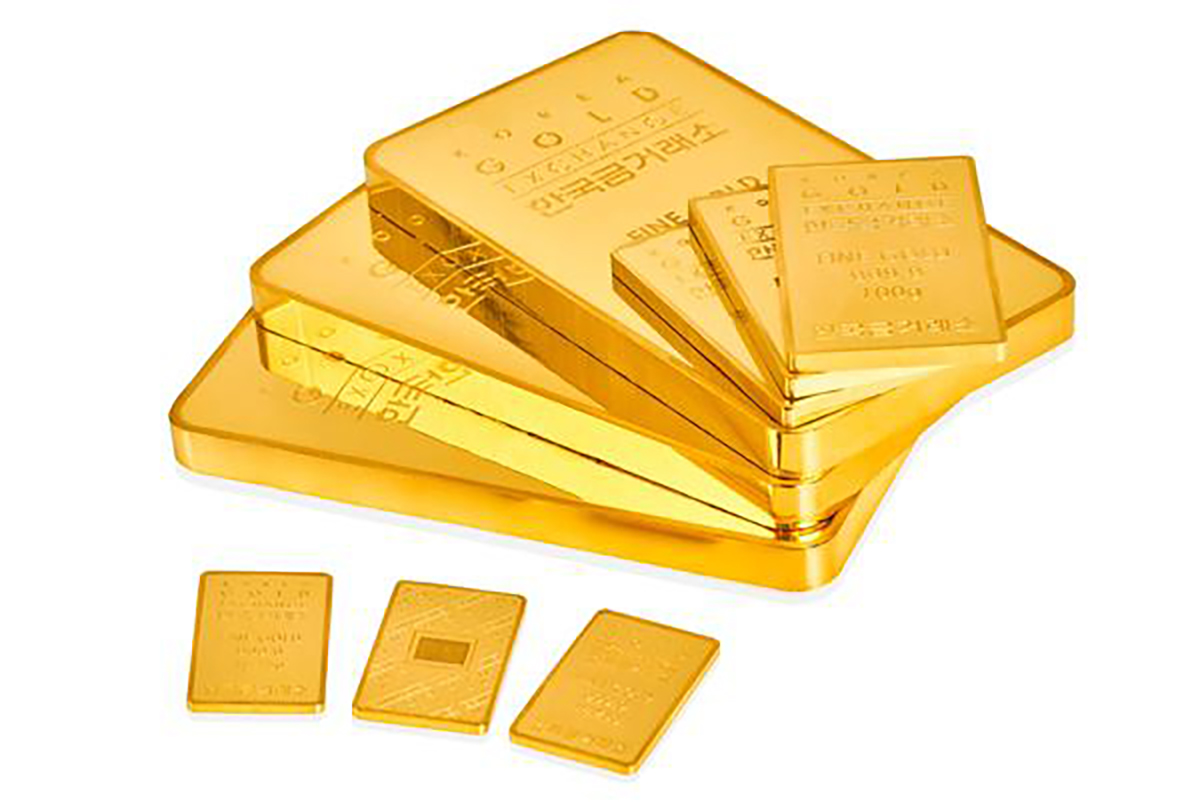
-팔 때 66만7천원…KRX 금시장 1g당 17만6천670원, 1.28% 내려
-국제 현물 금 온스당 4천140달러대…미국 금 선물도 0.5% 하락
-달러 강세·미 국채금리 상승 부담…연준 금리 결정에 관심
-중앙은행 매입·재정 불안은 중장기 지지 요인…금값 전망 엇갈려
국내외 금값이 20일 나란히 약세를 보였다. 국내 금시세는 순금 한 돈을 살 때 77만5천원으로 내려왔고, 한국거래소(KRX) 금시장에서도 1g당 가격이 전날보다 1% 넘게 떨어졌다. 국제 금가격 역시 미국 달러 강세와 국채금리 상승에 눌렸다. 투자자들은 미국 연방준비제도(Fed·연준)의 다음 통화정책 결정과 물가 지표에 시선을 돌리고 있다.
◇[국내 금시세] 순금·은 하락
20일 한국금거래소가 고시한 순금 24K 한 돈(3.75g)의 구매 가격은 부가가치세를 포함해 77만5천원이다. 전날 고시된 78만9천원보다 1만4천원(1.81%) 내렸다. 순금을 팔 때 적용되는 가격도 67만4천원에서 66만7천원으로 7천원(1.05%) 하락했다. 살 때와 팔 때 가격이 모두 떨어진 것이다.
순금 한 돈의 구매·판매 가격 차이는 10만8천원이다. 같은 날 같은 중량을 산 뒤 곧바로 판다고 가정할 때 단순 가격 차이만 이만큼 발생한다는 의미다. 구매 가격에는 부가가치세가 포함돼 있고 판매 가격은 별도의 기준으로 고시되기 때문에 두 가격을 동일한 시장의 매수·매도 호가처럼 해석해서는 안 된다. 실제 거래에서는 제품 형태와 수수료, 감정 조건 등에 따라 적용 금액이 달라질 수 있다.
금 함량이 낮은 제품의 판매 기준 가격도 하락했다. 18K 한 돈을 팔 때 가격은 49만300원으로 전날 첫 고시 가격인 49만5천400원보다 5천100원(1.04%) 내렸다. 14K 한 돈의 판매 가격은 38만200원으로 38만4천200원에서 4천원(1.05%) 떨어졌다. 18K와 14K의 구매 가격은 한국금거래소가 제품 시세를 적용하도록 안내하고 있어 정해진 금액으로 표시되지 않았다.
전날인 19일에는 순금 판매 가격이 고시 시점에 따라 67만5천원과 67만4천원으로 각각 표시됐다. 이번 비교는 한국금거래소의 20일 시세 화면에 제시된 전일 대비 증감액과 전날 첫 고시 내역을 기준으로 했다. 따라서 서로 다른 시점의 고시 가격을 혼합해 하루 변동 폭을 계산하지 않았다. 금값시세를 확인할 때는 날짜뿐 아니라 같은 날 가격이 변경됐는지도 함께 살펴야 한다.
순금 구매가격은 전날보다 1만4천원 내려 판매가격 하락분 7천원의 두 배였다. 이에 따라 순금 한 돈의 구매·판매 고시가격 차이는 전날 11만5천원에서 10만8천원으로 7천원 좁혀졌다. 다만 이 차이는 각각의 고시 기준을 적용한 단순 계산값으로, 소비자의 실제 거래 비용 전체를 뜻하지는 않는다.
백금과 은도 동반 약세였다. 백금 한 돈을 살 때 가격은 30만4천원으로 3천원(0.99%) 내렸고, 팔 때 가격은 24만7천원으로 2천원(0.81%) 하락했다. 은 한 돈은 살 때 1만190원으로 160원(1.57%) 떨어졌다. 팔 때 가격도 8천480원으로 130원(1.53%) 내렸다. 백금과 은의 판매 가격은 각각 자사 백금바와 자사 실버바 기준이다.
실물 귀금속의 가격은 금속 자체의 시세만으로 결정되지 않는다. 순도와 중량 외에도 세금, 가공비, 유통 비용, 거래업체의 매입 기준 등이 반영된다. 같은 날 국제 금값이나 거래소 금가격이 일정 폭 움직이더라도 소비자가 실제로 지불하는 순금 한 돈의 금액과 하락률이 정확히 일치하지 않는 이유다. 장신구 제품은 디자인과 제작 비용이 추가될 수 있어 고시된 순금 가격을 그대로 적용하기 어렵다.
◇[KRX 금시장] 1g당 17만6천원대
한국거래소 금시장에서도 하락세가 확인됐다. 20일 오전 10시 조회한 KRX 금시장 화면에서 1g당 가격은 17만6천670원으로 전날 종가 17만8천960원보다 2천290원(1.28%) 낮았다. 이 화면은 20분 지연 정보를 제공하므로 해당 수치는 오전 10시의 실시간 체결가격이 아니라 조회 당시 표시된 지연 시세다. 장이 끝난 뒤 확정되는 이날 종가와도 구분해야 한다.
이날 KRX 금시장 가격은 17만8천240원에 출발해 같은 수준을 장중 고점으로 기록했다. 이후 17만6천370원까지 밀렸다가 조회 화면에서는 17만6천670원을 나타냈다. 시가와 비교하면 1천570원 낮은 수준이다. 전날에는 17만9천500원에 거래를 시작해 장중 17만9천950원까지 올랐지만, 17만8천500원까지 내려간 끝에 17만8천960원으로 마감했다.
이날 시가는 전날 종가보다 720원 낮았고, 조회 시점의 가격은 시가에서 다시 1천570원 떨어졌다. 장중 저가인 17만6천370원과 비교하면 300원 높은 수준이지만, 전날 종가와의 격차는 여전히 2천290원에 달했다. 장 초반 하락 흐름이 이어진 가운데 저점에서는 낙폭을 일부 줄인 셈이다.
거래량은 조회 시점까지 3만7천117g, 거래대금은 65억5천922만5천330원으로 집계됐다. 전날 하루 거래량은 11만2천783g, 거래대금은 201억9천838만8천200원이었다. 다만 20일 수치는 장중 누적치이고 19일 수치는 하루 전체 실적이다. 두 수치를 단순 비교해 거래가 급감했다고 판단하기는 어렵다. 거래량과 거래대금은 장이 진행되는 동안 계속 바뀔 수 있다.
KRX 금시장 가격을 한 돈 기준으로 단순 환산하면 66만2천512.5원이다. 1g당 17만6천670원에 3.75를 곱한 값이다. 이는 한국금거래소의 순금 한 돈 구매 가격 77만5천원보다 낮지만 두 가격의 차액을 곧바로 거래 차익으로 볼 수는 없다. KRX 금시장은 계좌를 통한 금 현물 거래이고, 민간 금거래소의 실물 구매 가격에는 부가가치세와 유통 관련 비용 등이 포함돼 있다.
한국거래소는 국내 금가격이 국제 금시세와 원·달러 환율, 국내 수급에 영향을 받는다고 설명한다. 이날 기사에 적용한 원·달러 환율은 1달러당 1천326.90원이다. 국제 금은 달러와 트로이온스 단위로 거래되는 반면 국내 금값은 원화와 그램 또는 한 돈을 기준으로 표시된다. 따라서 해외 금가격이 내려도 환율이 상승하면 원화 기준 하락 폭이 줄어들 수 있고, 반대의 경우에는 국내 가격의 내림세가 더 크게 나타날 수 있다.
◇[국제 금값] 달러·금리 부담
국제 금시장도 약세였다. 로이터에 따르면 19일(현지시간) 미국 금 선물 12월 인도분은 온스당 4천160.10달러로 거래를 마쳤다. 전 거래일보다 0.5% 하락한 수준이다. 현물 금도 온스당 4천140달러대에서 거래되며 하락세를 나타냈다. 현물 가격은 집계 시각에 따라 달라지므로 선물의 최종 정산가격과 같은 시점의 확정 종가로 비교해서는 안 된다.
국제 금가격을 압박한 주요 변수는 달러화 가치와 미국 국채 수익률이었다. 금은 국제시장에서 주로 달러로 거래된다. 달러 가치가 높아지면 유로화나 엔화 등 다른 통화를 사용하는 투자자는 같은 양의 금을 사는 데 더 많은 자국 통화를 지불해야 한다. 이러한 환율 효과는 금 수요에 부담을 줄 수 있다. 달러 강세가 모든 시점에서 금값 하락을 뜻하는 것은 아니지만 이날 시장에서는 약세 요인으로 작용했다.
채권시장 움직임도 중요했다. 19일 뉴욕 채권시장에서 미국 10년 만기 국채금리는 전 거래일보다 3.90bp 오른 연 5.1360%를 나타냈다. 2년물 금리는 2.50bp 상승한 연 4.7610%, 30년물 금리는 3.50bp 높아진 연 5.4720%였다. 1bp는 0.01%포인트다. 국채금리가 오르면 기존 채권 가격은 내려가며, 이자를 지급하는 채권의 수익률이 높아진 만큼 금을 보유하는 기회비용도 커진다.
10년물과 2년물의 금리 차이는 전 거래일 36.10bp에서 37.50bp로 확대됐다. 단기물보다 장기물 금리가 상대적으로 더 크게 오르면서 수익률곡선이 가팔라진 것이다. 금시장에서는 금리 수준뿐 아니라 금리 상승의 배경도 살펴야 한다. 물가 불안에 따른 긴축 전망이 강화되면 금에 부담이 될 수 있지만, 재정 위험이나 금융 불안이 커지는 국면에서는 안전자산 수요가 별도로 나타날 수 있기 때문이다.
외환시장에서는 주요 6개 통화 대비 달러 가치를 나타내는 달러인덱스가 101.992로 전장보다 0.202% 올랐다. 달러·엔 환율은 158.546엔으로 0.347% 상승했고, 유로·달러 환율은 1.12114달러로 0.239% 내렸다. 달러인덱스는 3거래일 만에 상승했다. 달러 강세와 국채금리 상승이 동시에 나타나면서 금을 포함한 이자 없는 자산의 상대적 매력이 약해졌다는 평가가 나왔다.
유럽 채권시장의 불안도 미국 금리 상승에 영향을 준 배경으로 거론됐다. 프랑스에서 대규모 시위와 재정 우려가 겹치면서 프랑스 10년물 국채금리는 14.53bp 급등한 연 4.9309%를 기록했다. 독일과 이탈리아 등 다른 유럽 국가의 국채금리도 상승했다. 유럽 국채가격 하락이 미국 채권시장으로 이어진 가운데 기술주 반등에 따른 위험회피 심리 완화도 미 국채가격에 부담을 줬다는 분석이다.
뉴욕증시는 반도체와 인공지능(AI) 관련주 반등 속에 혼조세로 마감했다. 19일 다우존스30 산업평균지수는 51,966.03으로 0.07% 하락했다. 반면 스탠더드앤드푸어스(S&P)500지수는 7,690.73으로 0.41% 상승했고, 나스닥 종합지수는 26,430.89로 1.11% 올랐다. 지난주 급락했던 기술주에 저가 매수세가 유입되면서 시장의 위험회피 분위기가 일부 누그러졌다.
필라델피아 반도체지수는 1.61% 상승하며 8거래일 연속 하락을 끝냈다. 엔비디아는 1.38%, AMD는 1.76%, 마이크론테크놀로지는 2.97%, SK하이닉스 미국 주식예탁증서(ADR)는 4.67% 각각 올랐다. 다만 AI 인프라 투자 기업의 부채 부담과 수익성에 대한 의문은 여전했다. 코어위브 주가는 0.44% 하락해 기술주 전반의 반등에도 투자자들의 경계심이 완전히 사라지지 않았음을 보여줬다.
이러한 증시 흐름을 금값 하락의 단일 원인으로 단정하기는 어렵다. 기술주가 오르면서 위험자산 선호가 일부 살아났지만, 금가격에는 달러와 금리, 물가 전망이 함께 영향을 미쳤다. 특히 주식시장의 단기 반등과 중앙은행의 금 매입, 장기적인 재정 불안은 서로 다른 시간 범위에서 작용하는 변수다. 하루의 주가 상승만으로 금에 대한 안전자산 수요가 구조적으로 줄었다고 해석할 수는 없다.
◇[연준·유가] 물가 변수
시장의 관심은 다음 주 예정된 연준의 통화정책 결정으로 옮겨가고 있다. 연준은 지난 9월 기준금리를 0.25%포인트 인상하며 올해 첫 인상에 나섰다. 최근 미국 소비자물가와 생산자물가가 예상보다 높게 나오면서 물가를 안정시키기 위한 추가 긴축 가능성이 다시 부각됐다. 금리가 높은 수준에 오래 머무를수록 이자 수익이 없는 금의 단기 투자 매력은 상대적으로 낮아질 수 있다.
시카고상품거래소(CME) 페드워치에 반영된 19일 시장 전망에서는 이달 기준금리 동결 확률이 82.8%로 나타났다. 12월까지 추가 인상이 있을 가능성은 약 90%로 평가됐다. 이 수치는 금리 선물 가격에서 추정한 당시의 확률로, 연준의 공식 방침이나 확정된 정책 경로는 아니다. 새로운 경제지표와 연준 관계자의 발언에 따라 전망치는 수시로 달라질 수 있다.
이번 회의에서 금리를 실제로 조정하는지 못지않게 향후 정책 방향을 어떻게 설명하는지도 중요하다. 연준이 물가 상승 압력을 강하게 경계하고 추가 인상 가능성을 열어두면 달러와 채권금리에 상승 압력이 이어질 수 있다. 반대로 긴축 강도가 예상보다 약하다는 신호가 나오면 금시세에 대한 부담이 완화될 여지도 있다. 다만 금리 전망만으로 단기 금값의 방향을 확정할 수는 없다.
투자자들은 연준이 중시하는 미국 개인소비지출(PCE) 물가지표 발표도 기다리고 있다. PCE는 가계 소비와 관련된 물가 흐름을 보여주는 지표로, 연준이 인플레이션을 판단할 때 참고한다. 시장 예상보다 물가 압력이 강하게 나타나면 금리 인상 전망이 강화될 수 있다. 반대로 물가 상승 속도가 둔화하면 긴축 부담이 줄어들 수 있어 발표 결과와 세부 항목에 관심이 쏠린다.
국제유가도 금가격을 둘러싼 변수다. 19일 뉴욕상업거래소에서 11월 인도분 서부텍사스산원유(WTI)는 배럴당 103.66달러로 2.22% 올랐다. 반면 브렌트유 12월물은 109.55달러로 0.28% 내렸다. 두 유종의 방향이 달랐기 때문에 국제유가가 일제히 상승하거나 하락했다고 표현하기는 어렵다. 중동 지역의 에너지 시설 공격 우려와 러시아 관련 제재·관세 정책 변화가 맞물리며 유가가 출렁였다.
에너지 가격 상승은 운송과 생산 비용을 높여 물가를 자극할 수 있다. 이는 중앙은행의 금리 인하 여력을 줄이거나 추가 인상 전망을 강화하는 방향으로 작용할 수 있다. 한편 지정학적 긴장이 높아지면 금의 안전자산 성격이 부각될 수도 있다. 같은 사건이 금값을 끌어올리는 요인과 누르는 요인을 동시에 만들 수 있다는 뜻이다. 따라서 중동 분쟁이 심화했다는 사실만으로 금가격 상승을 예단하기는 어렵다.
◇[금·은 전망] 중앙은행 매입과 재정 불안
단기 약세와 달리 중장기 전망에서는 금에 대한 수요가 유지될 것이라는 분석도 나온다. 영국 귀금속 시장조사업체 메탈스 포커스는 2027년 금의 연평균 가격을 온스당 5천330달러로 예상했다. 올해 예상 평균인 4천600달러보다 약 16% 높은 수준이다. 내년 4분기 평균 금가격은 5천600달러에 이를 것으로 내다봤다. 이는 시장조사업체의 전망이며 실제 거래가격이나 보장된 목표가격은 아니다.
메탈스 포커스는 중앙은행과 기관투자자의 금 매입, 주요국 정부 부채 증가, 재정 건전성에 대한 우려 등을 중장기 가격 지지 요인으로 꼽았다. 높은 국채금리와 주식·에너지 등 다른 자산의 투자 기회가 금으로 향하는 자금을 제한하고 있지만, 재정 불확실성에 대비하려는 분산투자 수요는 남아 있다는 판단이다. 특히 금값이 온스당 4천달러 부근으로 내려올 때 기관 수요가 유입됐다는 분석도 제시했다.
금값이 조정을 받는 동안에도 중앙은행의 외환보유액 다변화 수요와 기관투자자의 자산 배분 수요가 남아 있다는 것이 이 업체의 판단이다. 단기적으로는 채권 수익률 상승과 달러 강세가 금에 불리하지만, 정부 부채와 재정 지출에 대한 우려는 금 보유의 이유로 작용할 수 있다는 설명이다. 두 요인이 엇갈리는 만큼 단기 하락과 장기 상승 전망이 동시에 제시되고 있다.
다만 특정 가격대를 반드시 지키는 바닥으로 해석해서는 안 된다. 중앙은행 매입 규모는 해마다 달라질 수 있고, 금리와 달러 가치가 예상과 다르게 움직이면 장기 전망도 수정될 수 있다. 금을 사들이는 기관이 존재한다는 사실과 금값이 단기간에 반드시 오른다는 주장은 구분해야 한다. 시장 전망은 정책 변화와 지정학적 위험, 투자자의 자금 흐름에 따라 달라질 수 있기 때문이다.
금과 함께 거래되는 은에 대해서도 장기 상승 전망이 제시됐다. 메탈스 포커스는 은의 2027년 연평균 가격을 온스당 84.40달러로 예상해 올해 전망치 72.60달러보다 약 16% 높게 잡았다. 다만 태양광 발전 부문에서 은 사용량을 줄이는 기술 개선이 진행되면서 산업 수요는 둔화할 수 있다고 분석했다. 은은 귀금속인 동시에 산업용 원자재라는 점에서 금과 가격 결정 구조가 다르다.
메탈스 포커스는 은의 산업 수요가 올해 6억4천20만온스에서 2027년 6억1천820만온스로 감소할 것으로 예상했다. 태양광 패널 한 장에 들어가는 은의 양이 줄어드는 흐름이 설비 보급 증가 효과를 일부 상쇄할 수 있다는 설명이다. 반면 은 관련 ETF로 자금이 유입되면 투자 수요가 가격을 지지할 가능성이 있다고 봤다. 국내 은 한 돈 가격이 이날 하락했다고 해서 이러한 장기 수급 전망까지 달라졌다고 보기는 어렵다.
20일 금값은 국내 실물시장과 KRX 금시장에서 모두 하락했다. 국제시장에서는 미국 국채금리와 달러 상승이 단기 부담으로 작용한 반면, 중앙은행 매입과 재정 불확실성은 중장기 지지 요인으로 남아 있다. 향후 금가격의 방향은 연준의 금리 결정과 미국 물가 지표, 국제유가 흐름에 영향을 받을 전망이다.
/박상진 기자 jhc@kjdaily.com
다음은 위 기사를 번역한 전문이다. 번역에 오류가 있을 수 있다.
- On the 20th, the purchase price for pure gold at the Korea Gold Exchange stood at 775,000 won—down 14,000 won from the previous day.
- The selling price (the price at which one can sell gold to the exchange) was 667,000 won; on the KRX Gold Market, the price per gram fell by 1.28% to 176,670 won.
- International spot gold prices hovered in the $4,140-per-ounce range, while U.S. gold futures also declined by 0.5%.
- A stronger U.S. dollar and rising U.S. Treasury yields are weighing on the market; attention is now focused on the Federal Reserve’s upcoming interest rate decisions.
- Central bank purchases and fiscal instability serve as medium- to long-term support factors, leading to mixed outlooks for gold prices.
Gold prices, both domestically and internationally, weakened on the 20th. In the domestic market, the purchase price for one *don* (3.75g) of pure gold dropped to 775,000 won, while the price per gram on the Korea Exchange (KRX) Gold Market fell by more than 1% compared to the previous day. International gold prices were similarly pressured by a stronger U.S. dollar and rising Treasury yields. Investors are now turning their attention to the U.S. Federal Reserve’s next monetary policy decisions and upcoming inflation data.
◇ [Domestic Gold Prices] Pure Gold and Silver Decline
On the 20th, the Korea Gold Exchange posted a purchase price of 775,000 won (including value-added tax) for one *don* (3.75g) of 24K pure gold—a decrease of 14,000 won (1.81%) from the previous day’s posted price of 789,000 won. The price at which one can sell pure gold to the exchange also fell, dropping by 7,000 won (1.05%) from 674,000 won to 667,000 won. Both the purchase and selling prices have declined.
The spread between the purchase price and the selling price for one *don* of pure gold is 108,000 won. This means that if one were to purchase and immediately resell the same weight of gold on the same day, a price difference of this magnitude would arise. Because the purchase price includes value-added tax (VAT) while the selling price is determined by a separate set of criteria, these two figures should not be interpreted as the bid and ask prices of a single, unified market. In actual transactions, the final amount may vary depending on the form of the product, applicable fees, and appraisal conditions.
The benchmark selling prices for products with lower gold content also declined. The selling price for one *don* (approx. 3.75 grams) of 18K gold was 490,300 won—a decrease of 5,100 won (1.04%) from the initial posted price of 495,400 won the previous day. For 14K gold, the selling price was 380,200 won, down 4,000 won (1.05%) from 384,200 won. Purchase prices for 18K and 14K gold are not listed as fixed amounts, as the Korea Gold Exchange directs users to refer to the specific product market rates.
On the 19th—the previous day—the selling price for pure gold was posted at 675,000 won and 674,000 won, depending on the time of the posting. This comparison is based on the daily price fluctuations shown on the Korea Gold Exchange’s market rate screen for the 20th, measured against the initial posted prices from the previous day. Consequently, the daily fluctuation was not calculated by mixing prices posted at different times. When checking gold market rates, it is important to consider not only the date but also whether the price was updated at any point during that same day.
The purchase price for pure gold fell by 14,000 won from the previous day—twice the 7,000-won decline seen in the selling price. As a result, the gap between the posted purchase and selling prices for one *don* of pure gold narrowed by 7,000 won, from 115,000 won the previous day to 108,000 won. However, this difference is merely a calculated figure based on specific posted standards and does not represent the total transaction cost incurred by a consumer.
Platinum and silver also saw a decline. The purchase price for one *don* (approx. 3.75g) of platinum fell by 3,000 won (0.99%) to 304,000 won, while the selling price dropped by 2,000 won (0.81%) to 247,000 won. For one *don* of silver, the purchase price fell by 160 won (1.57%) to 10,190 won, and the selling price decreased by 130 won (1.53%) to 8,480 won. The quoted prices for platinum and silver are based on the company’s own platinum and silver bars, respectively.
The price of physical precious metals is not determined solely by the market value of the metal itself. In addition to purity and weight, factors such as taxes, fabrication costs, distribution expenses, and the specific purchasing criteria of the dealer are also taken into account. This is why, even if international gold prices or exchange-traded gold prices fluctuate by a certain margin, the actual amount a consumer pays for a *don* of pure gold—and the corresponding rate of decline—may not align perfectly with those market movements. For jewelry, the costs of design and craftsmanship are also added, making it difficult to apply the standard posted price for pure gold directly.
◇ [KRX Gold Market] Around 176,000 won per gram
A downward trend was also observed in the KRX (Korea Exchange) Gold Market. As of 10:00 a.m. on the 20th, the price per gram on the KRX Gold Market platform stood at 176,670 won—a decrease of 2,290 won (1.28%) from the previous day’s closing price of 178,960 won. Since this platform provides data with a 20-minute delay, these figures do not represent real-time transaction prices at 10:00 a.m., but rather the delayed market quotes displayed at the time of the inquiry. This should also be distinguished from the final closing price, which is determined only after the market closes.
On this day, the price on the KRX Gold Market opened at 178,240 won, which also served as the high for the session. It subsequently fell to 176,370 won before reaching 176,670 won—the price shown at the time of inquiry—which is 1,570 won lower than the opening price. The previous day, trading began at 179,500 won; the price rose to an intraday high of 179,950 won, then dipped to 178,500 won, ultimately closing at 178,960 won.
The opening price for the day was 720 won lower than the previous day’s closing price, and the price at the time of inquiry was an additional 1,570 won below that opening level. While this is 300 won higher than the intraday low of 176,370 won, it remains 2,290 won below the previous day’s closing price. In short, after an initial downward trend, the price recovered slightly from its low point.
As of the time of inquiry, the trading volume stood at 37,117 grams, with a total transaction value of 6,559,225,330 won. For comparison, the total figures for the previous day were 112,783 grams in volume and 20,198,388,200 won in transaction value. However, it is difficult to conclude that trading has plummeted based on a simple comparison between these two sets of figures, as the data for the 20th represents a cumulative total during the ongoing session, whereas the data for the 19th covers the entire day. Both trading volume and transaction value are subject to change as the market session continues. The price of gold on the KRX (Korea Exchange) gold market, when converted to a *don* (a traditional Korean unit of weight equivalent to 3.75 grams), comes to 662,512.5 won. This figure is derived by multiplying the price of 176,670 won per gram by 3.75. While this is lower than the 775,000 won price for a *don* of pure gold at the Korea Gold Exchange, the difference between the two prices cannot be simply interpreted as a potential trading profit. The KRX gold market involves spot gold trading via accounts, whereas the retail price at private gold exchanges includes value-added tax (VAT) and distribution-related costs.
The Korea Exchange explains that domestic gold prices are influenced by international gold market rates, the KRW/USD exchange rate, and local supply and demand. For the purpose of this article, the KRW/USD exchange rate used is 1,326.90 won per dollar. While international gold is traded in U.S. dollars per troy ounce, domestic gold prices are quoted in Korean won per gram or per *don*. Consequently, if international gold prices fall but the exchange rate rises, the decline in the price denominated in Korean won may be mitigated; conversely, if the exchange rate moves in the opposite direction, the drop in the domestic price could be more pronounced.
◇ [International Gold Prices] Pressured by the Dollar and Interest Rates
The international gold market also saw a decline. According to Reuters, U.S. gold futures for December delivery closed at $4,160.10 per ounce on the 19th (local time)—a 0.5% drop from the previous trading session. Spot gold also trended downward, trading in the $4,140-per-ounce range. (Note: Because spot prices are recorded at different times, they should not be directly compared to the final settlement prices of futures contracts.)
The primary factors weighing on international gold prices were the value of the U.S. dollar and U.S. Treasury yields. In the global market, gold is primarily traded in U.S. dollars. When the dollar strengthens, investors using other currencies—such as the euro or the Japanese yen—must pay more of their own currency to purchase the same amount of gold. This exchange-rate effect can dampen demand for gold. While a stronger dollar does not always lead to a decline in gold prices, it acted as a bearish factor in the market on this particular day.
Developments in the bond market were also significant. In the New York bond market on the 19th, the yield on the 10-year U.S. Treasury note rose by 3.90 basis points (bps) to 5.1360%. The yield on the 2-year note climbed 2.50 bps to 4.7610%, while the yield on the 30-year bond increased by 3.50 bps to 5.4720%. (One basis point is equivalent to 0.01 percentage points.) As Treasury yields rise, the prices of existing bonds fall; furthermore, because bonds offer interest payments, higher yields increase the opportunity cost of holding gold. The yield spread between 10-year and 2-year Treasury notes widened to 37.50 basis points (bps) from 36.10 bps the previous trading day, as long-term yields rose more sharply than short-term yields, resulting in a steeper yield curve. In the gold market, it is essential to consider not just the level of interest rates, but also the underlying reasons for their rise. While expectations of monetary tightening—driven by concerns over inflation—can weigh on gold, periods of heightened fiscal risk or financial instability may trigger a separate demand for safe-haven assets.
In the foreign exchange market, the Dollar Index—which measures the greenback’s value against six major currencies—rose 0.202% to 101.992. The USD/JPY exchange rate climbed 0.347% to 158.546 yen, while the EUR/USD pair fell 0.239% to 1.12114 dollars. The Dollar Index posted its first gain in three trading sessions. The combination of a stronger dollar and rising Treasury yields has diminished the relative appeal of non-interest-bearing assets, such as gold.
Instability in European bond markets was also cited as a factor contributing to the rise in U.S. interest rates. In France, a combination of large-scale protests and fiscal concerns pushed the yield on 10-year French government bonds up by 14.53 bps to 4.9309%. Yields on government bonds in other European nations, including Germany and Italy, also saw increases. Analysts suggest that the decline in European bond prices spilled over into the U.S. bond market, while a rebound in technology stocks—which eased risk-aversion sentiment—further pressured U.S. Treasury prices. The New York stock market closed mixed, buoyed by a rebound in semiconductor and artificial intelligence (AI)-related stocks. On the 19th, the Dow Jones Industrial Average fell 0.07% to 51,966.03. In contrast, the S&P 500 index rose 0.41% to 7,690.73, and the Nasdaq Composite index climbed 1.11% to 26,430.89. A wave of bargain hunting for technology stocks—which had plummeted the previous week—helped to partially alleviate the market's risk-averse sentiment.
The Philadelphia Semiconductor Index rose 1.61%, snapping an eight-session losing streak. Shares of Nvidia, AMD, and Micron Technology gained 1.38%, 1.76%, and 2.97%, respectively, while the U.S.-listed American Depositary Receipts (ADRs) of SK Hynix climbed 4.67%. Nevertheless, concerns regarding the debt burdens and profitability of companies investing in AI infrastructure persisted; CoreWeave’s shares fell 0.44%, signaling that investor caution remains despite the broader rebound in tech stocks.
It is difficult to attribute the decline in gold prices solely to these stock market movements. While the rise in tech stocks revived some appetite for riskier assets, gold prices are also influenced by factors such as the strength of the U.S. dollar, interest rates, and inflation expectations. Furthermore, variables like short-term stock market fluctuations, central bank gold purchases, and long-term fiscal instability operate over different time horizons. A single day’s gain in stock prices cannot be interpreted as a structural decline in the demand for gold as a safe-haven asset. ◇ [Federal Reserve & Oil Prices] The Inflation Variable
Market attention is shifting toward the Federal Reserve’s upcoming monetary policy decision. In September, the Fed raised its benchmark interest rate by 0.25 percentage points, marking its first hike of the year. Recent U.S. consumer and producer price data have come in higher than expected, reigniting the possibility of further tightening to stabilize inflation. As interest rates remain elevated for a longer period, the short-term investment appeal of gold—which yields no interest—may relatively decline.
According to the CME FedWatch tool as of the 19th, the market assigned an 82.8% probability to the Fed holding interest rates steady this month. The likelihood of at least one additional rate hike by December was estimated at approximately 90%. These figures are derived from interest rate futures prices and do not represent official Fed policy or a finalized policy path; such projections are subject to change based on new economic data and statements from Federal Reserve officials.
Beyond whether the Fed actually adjusts rates at this meeting, how it communicates its future policy direction will be equally significant. If the Fed signals a strong vigilance against inflationary pressures and leaves the door open for further hikes, it could exert upward pressure on the U.S. dollar and bond yields. Conversely, if there are signs that the intensity of monetary tightening is weaker than anticipated, the pressure on gold prices could ease. That said, interest rate outlooks alone cannot definitively determine the short-term direction of gold prices.
Investors are also awaiting the release of the Personal Consumption Expenditures (PCE) price index—a key metric closely monitored by the Fed. The PCE index tracks price trends related to household consumption and serves as a vital reference for the Federal Reserve in its assessment of inflation. If inflationary pressures prove stronger than market expectations, it could reinforce projections for interest rate hikes. Conversely, if the pace of inflation slows, the pressure for monetary tightening may ease; therefore, close attention is being paid to the specific data and the underlying components of the upcoming reports.
International oil prices are another variable affecting the price of gold. On the 19th, West Texas Intermediate (WTI) crude oil for November delivery rose 2.22% to $103.66 per barrel on the New York Mercantile Exchange. Meanwhile, Brent crude for December delivery fell 0.28% to $109.55. Given that the two benchmarks moved in different directions, it would be inaccurate to claim that international oil prices rose or fell in unison. Oil prices have been volatile, driven by a combination of concerns over potential attacks on energy infrastructure in the Middle East and shifts in sanctions and tariff policies related to Russia.
Rising energy costs can drive up transportation and production expenses, thereby fueling inflation. This could limit a central bank’s capacity to cut interest rates or, alternatively, strengthen the case for further rate hikes. At the same time, heightened geopolitical tensions may underscore gold’s appeal as a "safe-haven" asset. In other words, a single event can simultaneously create factors that both push gold prices up and exert downward pressure on them. Consequently, one cannot simply assume that an escalation in the Middle East conflict will automatically lead to a rise in gold prices.
◇ [Gold and Silver Outlook] Central Bank Purchases and Fiscal Instability
Despite short-term weakness, some analyses suggest that demand for gold will remain resilient in the medium to long term. Metals Focus, a UK-based precious metals research firm, has projected an average annual price of $5,330 per ounce for gold by 2027. This figure is approximately 16% higher than the projected average of $4,600 for this year. The firm forecasts that the average price of gold will reach $5,600 by the fourth quarter of next year. It should be noted that this is a projection from a market research firm, not an actual trading price or a guaranteed target price.
Metals Focus identifies several factors likely to support gold prices in the medium to long term, including gold purchases by central banks and institutional investors, rising government debt in major economies, and concerns regarding fiscal health. While high government bond yields and investment opportunities in other asset classes—such as stocks and energy—may limit the flow of capital into gold, there remains a demand for diversification as a hedge against fiscal uncertainty. The firm also noted that institutional demand has historically emerged when the price of gold has dipped toward the $4,000-per-ounce level.
According to the firm, even during periods of price correction, central banks continue to seek diversification for their foreign exchange reserves, and institutional investors maintain a need for asset allocation. While rising bond yields and a stronger U.S. dollar may act as headwinds for gold in the short term, concerns over government debt and fiscal spending provide a compelling rationale for holding the metal. Given these conflicting dynamics, the outlook includes both the possibility of a short-term decline and a long-term rise.
However, these projections should not be interpreted as establishing a firm "floor" or guaranteed minimum price. The scale of central bank purchases can fluctuate from year to year, and long-term forecasts may be revised if interest rates or the value of the U.S. dollar deviate from current expectations. It is important to distinguish between the existence of institutional buyers and the assumption that gold prices will inevitably rise in the short term; market outlooks are subject to change based on policy shifts, geopolitical risks, and shifts in investor capital flows.
A long-term upward outlook has also been projected for silver, which is frequently traded alongside gold. Metals Focus projects an average annual price of $84.40 per ounce for silver in 2027—approximately 16% higher than the $72.60 forecast for this year. However, the firm notes that industrial demand could soften as technological improvements lead to reduced silver usage in the solar power sector. Unlike gold, silver functions as both a precious metal and an industrial raw material, resulting in a different price-determination structure.
Metals Focus anticipates that industrial demand for silver will decline from 640.2 million ounces this year to 618.2 million ounces by 2027. This is because the trend toward using less silver per solar panel may partially offset the impact of increased solar installation capacity. On the other hand, inflows into silver-related ETFs could provide price support through investment demand. A decline in the domestic price of silver—measured in *don* (a traditional Korean unit of weight)—on any given day does not necessarily alter these long-term supply and demand projections.
On the 20th, gold prices fell in both the domestic physical market and the KRX Gold Market. In the international market, rising U.S. Treasury yields and a stronger dollar have acted as short-term headwinds, while central bank purchases and fiscal uncertainty remain supportive factors for the medium to long term. The future trajectory of gold prices will likely be influenced by the Federal Reserve’s interest rate decisions, U.S. inflation data, and trends in global oil prices.
/Reporter Park Sang-jin, jhc@kjdaily.com
박상진 기자 jhc@kjdaily.com
▶ 디지털 뉴스 콘텐츠 이용규칙보기


