

 2026.10.14 (수) 11:24


|
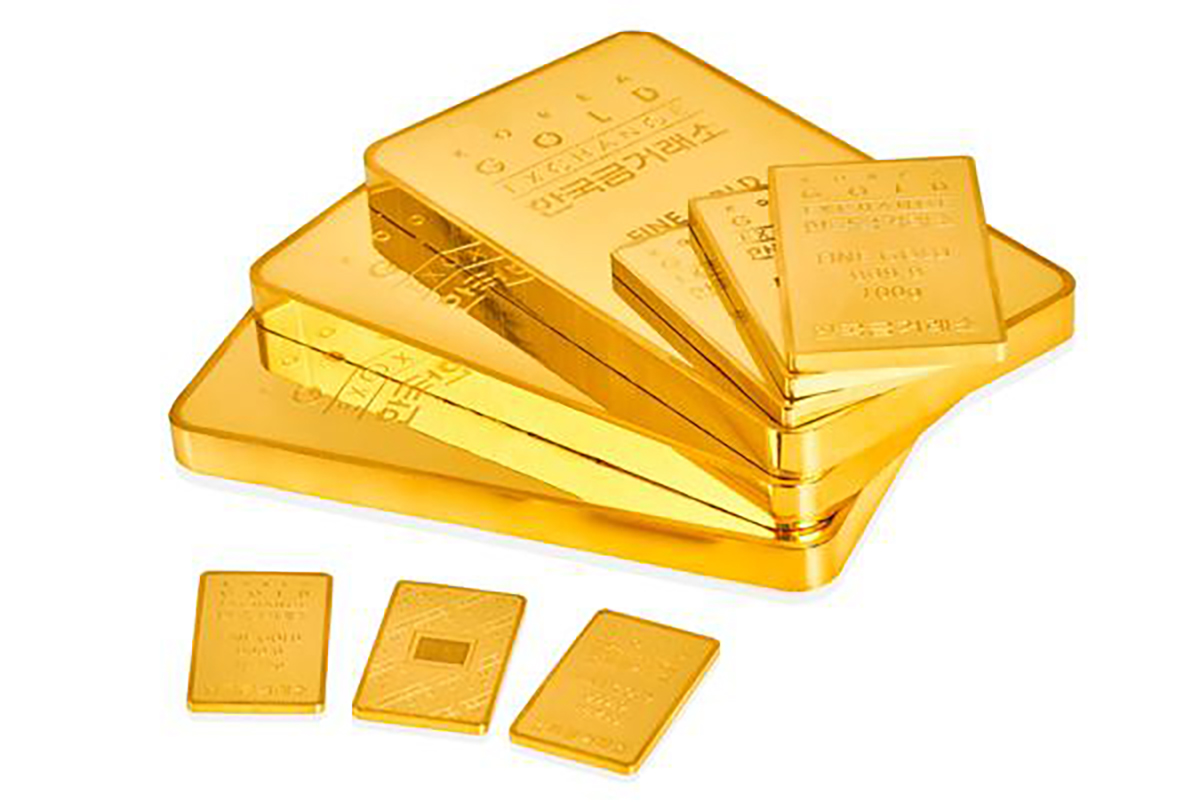
-한국금거래소 순금 살 때 78만7천원·팔 때 67만5천원
-국제 금 현물 4천157.90달러…미국 CPI 발표 앞두고 이틀째 약세
-달러·미 국채 장기금리 내려도 금값 하락…연준 정책 불확실성 지속
-카자흐스탄 중앙은행 금 비중 축소 계획…은값 변동성도 주목
국내 금값이 전날 오전 하락했다가 상승 마감한 뒤 14일 다시 약세로 돌아섰다.
한국거래소(KRX) 금시장에서는 13일 오전 10시 17만9천30원이던 금 1g 가격이 장 마감 때 18만1천100원까지 올랐지만, 14일 오전 10시에는 17만9천250원으로 내려왔다.
한국금거래소의 순금 한 돈(3.75g) 구매가격도 13일 78만6천원에서 79만4천원까지 올랐다가 이날 78만7천원으로 떨어졌다.
국제 금값이 이틀 연속 약세를 보인 가운데 미국의 9월 소비자물가지수(CPI) 발표를 앞둔 경계심이 이어지고 있다.
◇ 전날 오전 약세 딛고 반등…14일 다시 1% 하락
14일 오전 10시 기준 한국거래소 금시장에서 금 1g은 17만9천250원에 거래됐다.
전날 종가 18만1천100원보다 1천850원(1.02%) 하락한 가격이다.
13일 오전 10시 KRX 금 1g 가격은 17만9천30원으로, 12일 종가 17만9천970원보다 940원(0.52%) 낮았다.
그러나 오후 들어 낙폭을 만회해 18만1천100원에 마감했다. 전 거래일 대비 1천130원(0.63%) 상승한 가격으로, 오전 10시 시세와 비교하면 2천70원 올랐다.
14일 오전에는 다시 하락세로 돌아서 전날 상승폭을 모두 반납했다. 이날 하락액 1천850원은 전날 종가 상승액보다 720원 많았다.
두 날짜의 오전 10시 가격만 비교하면 14일이 220원 높다. 그러나 전날 오후 형성된 상승분은 다음 날 오전 대부분 사라졌다.
13일의 반등이 14일 오전까지 이어지지는 못한 것이다.
금값은 이날 18만300원에 거래를 시작했고, 장중 최고가도 시가와 같은 18만300원에 머물렀다.
오전 10시까지 최저가는 17만9천120원이었다.
오전 10시까지 거래량은 2만5천210g, 거래대금은 45억2천18만7천940원이었다.
13일 하루 전체 거래량은 13만8천155g, 거래대금은 약 248억3천865만원이었다. 집계 시간이 다르므로 14일 오전 수치와 단순 비교해 거래 위축 여부를 판단할 수는 없다.
특히 오전 시황은 장이 끝나기 전의 중간 집계다. 전날에도 오전 10시 가격과 종가의 방향이 달랐던 만큼, 오전 등락률을 하루 전체 흐름으로 확대해 해석하는 데는 주의가 필요하다.
13일 장중 가격은 17만8천660원에서 18만1천460원 사이에서 움직였다.
13일 종가는 당일 저가보다 2천440원 높았고, 고가와의 차이는 360원에 그쳤다. 장중 하락 구간을 벗어나 고가에 가까운 수준에서 거래를 마친 것이다. 반면 14일 오전 10시 가격은 시가보다 1천50원 낮았다. 이틀간의 움직임을 비교하면 전날 오후 회복했던 매수세가 다음 날 오전에는 약해졌다는 점이 드러난다.
KRX 금시장은 1g당 거래가격을, 한국금거래소는 순금 제품의 한 돈당 매매가격을 표시한다. 세금과 거래 조건이 달라 두 가격을 직접 대조할 수는 없다.
◇ 순금 한 돈 살 때 78만7천원…팔 때 67만5천원
같은 시각 한국금거래소가 고시한 순금 24K 한 돈(3.75g) 가격은 소비자가 살 때 78만7천원이었다.
13일 최종 고시가격 79만4천원보다 7천원(0.89%) 하락했다.
소비자가 순금을 팔 때 적용되는 가격은 67만5천원으로 전날 최종 고시가격 67만9천원보다 4천원(0.59%) 떨어졌다.
살 때와 팔 때 가격이 모두 내려간 가운데 두 가격의 차이는 11만2천원이다.
구매가격에는 부가가치세가 포함되고 판매가격에는 금방 매입 기준이 적용된다. 따라서 11만2천원의 차액을 금값 변동이나 유통 마진만으로 설명할 수는 없다.
13일 고시 이력에서도 반등이 확인된다. 순금 한 돈을 살 때 가격은 78만6천원에서 79만3천원, 79만4천원으로 높아졌고 팔 때 가격은 67만7천원에서 67만9천원으로 올랐다.
14일 오전 구매가격은 13일 첫 고시보다 1천원 높지만 최종 고시보다 7천원 낮다. 하루 사이의 반등과 재하락을 구분할 필요가 있는 이유다.
13일 판매가격 역시 첫 고시 67만7천원에서 최종 67만9천원으로 2천원 올랐다. 그러나 14일에는 67만5천원으로 내려가 전날 처음 제시된 가격도 밑돌았다. 구매가격과 판매가격의 변동 폭이 서로 다른 만큼 실제 금을 처분하려는 소비자는 살 때 가격보다 팔 때 고시가격을 확인해야 한다.
18K 금시세는 소비자가 팔 때 한 돈당 49만6천200원으로 전날 최종 고시가격 49만9천100원보다 2천900원(0.58%) 하락했다.
14K 금시세는 팔 때 38만4천800원으로 13일 최종 고시가격 38만7천100원보다 2천300원(0.60%) 떨어졌다.
백금 한 돈 가격은 살 때 31만1천원, 팔 때 25만2천원이었다.
각각 전일 대비 8천원(2.57%), 7천원(2.78%) 하락했다.
은 한 돈은 살 때 1만680원으로 280원(2.62%) 내렸고, 팔 때는 8천890원으로 230원(2.59%) 떨어졌다.
이날 함께 제시된 원·달러 환율은 1천340.70원이다.
원화로 표시되는 국내 금가격은 국제 금값과 환율의 영향을 함께 받는다.
국제시장에서 금값이 떨어져도 원·달러 환율이 상승하면 국내 가격 하락폭이 제한될 수 있고, 반대로 환율이 내려가면 국제 금값 하락이 원화 가격에 더 크게 반영될 수 있다.
다만 전일 환율과의 비교 수치가 없어 이날 국내 금값 하락에 환율이 얼마나 영향을 미쳤는지는 판단하기 어렵다.
국제 금은 달러로 거래되고 국내 금은 원화로 표시되기 때문에 원·달러 환율의 방향이 같더라도 두 시장의 등락률이 일치하지 않을 수 있다. 여기에 국내 거래시간과 국제시장 가격을 확인한 시간이 서로 달라 일시적으로 가격 차이가 확대되거나 축소될 가능성도 있다.
◇ 국제 금 현물 4천157달러…이틀 연속 하락
국제 금값도 약세를 이어갔다.
로이터통신에 따르면 13일(현지시간) 오후 2시15분 기준 국제 금 현물은 온스당 4천157.90달러로 0.3% 하락했다.
미국 뉴욕상품거래소의 12월 인도분 금 선물은 온스당 4천177.30달러에 거래를 마쳐 0.3% 내렸다.
현물과 선물 모두 하락했지만 가격 자체는 같지 않다. 현물은 현재 인도되는 금의 시세를, 선물은 정해진 만기에 거래할 금의 가격을 반영한다. 따라서 선물 가격이 현물보다 높다는 사실만으로 향후 금값 상승을 예고한다고 볼 수는 없다.
금 현물은 앞선 12일에도 온스당 4천169.10달러로 0.6% 떨어졌다.
이틀 연속 하락했지만 두 현물 가격은 각 보도 시점의 시세로, 공식 종가 간 비교는 아니다.
키코뉴스가 전한 13일 금 현물 가격은 온스당 약 4천160.80달러로 0.24% 하락했다.
로이터 수치와 소폭 차이가 나는 것은 시세를 확인한 시간과 가격 기준이 다르기 때문이다.
은 가격의 하락폭은 금보다 컸다.
로이터가 집계한 은 현물은 온스당 59.25달러로 1.8% 내렸고, 키코뉴스 시세도 59.09달러 안팎으로 비슷한 하락률을 나타냈다.
백금 현물은 온스당 1천661.18달러로 1.4%, 팔라듐은 1천126.95달러로 1.5% 하락했다.
◇ 달러·장기금리 하락에도 국제 금값 약세
13일 뉴욕 금융시장에서 눈에 띄는 대목은 달러 가치와 미국 장기 국채금리가 내려갔는데도 금값이 하락했다는 점이다.
연합인포맥스에 따르면 이날 뉴욕 외환시장에서 주요 6개 통화 대비 달러 가치를 나타내는 달러인덱스는 102.214로 전장보다 0.375% 하락했다.
달러는 12일 금값을 압박한 주요 요인 가운데 하나였지만 13일에는 상승세가 꺾였다.
통상 달러 약세는 다른 통화권의 금 매수 부담을 낮추지만 이날 금값은 반등하지 못했다.
미국 국채금리 역시 만기에 따라 엇갈렸다.
13일 뉴욕 오후 3시 기준 10년물 국채금리는 5.2170%로 직전 거래일 대비 2.60bp 하락했다.
30년물 금리도 5.5630%로 3.60bp 내렸다.
반면 통화정책에 민감한 2년물 금리는 4.7930%로 0.20bp 상승했다.
10년물과 2년물의 금리 차이는 45.20bp에서 42.40bp로 좁혀졌다.
미국 국채 현물시장은 12일 콜럼버스의 날을 맞아 휴장했기 때문에 이들 금리 변화는 9일 기준과 비교한 수치다.
이자가 없는 금은 국채 수익률이 높을수록 상대적인 보유 매력이 낮아질 수 있다.
13일 장기금리가 일부 하락했지만 10년물 수익률이 여전히 5.2%대에 머물렀다는 점은 금에 부담이 되는 환경이 크게 바뀌지 않았음을 보여준다.
2년물 금리가 소폭 오른 반면 10년물과 30년물은 내린 것도 눈여겨볼 대목이다. 가까운 시기의 통화정책에 민감한 단기금리와 장기 경기·물가 전망을 반영하는 장기금리가 다른 방향으로 움직였다. 이처럼 금리 신호가 엇갈리면 금시장 역시 한쪽 방향으로 움직일 뚜렷한 계기를 찾기 어려워질 수 있다.
장기금리 하락과 안전자산 선호에도 금 매수세가 두드러지지 않은 것은 물가 발표를 앞둔 관망세가 영향을 미쳤을 가능성을 보여준다.
◇ 미국 CPI 발표 대기…10월 동결 전망 우세
국제 금시장의 가장 가까운 변수는 14일 발표되는 미국의 9월 소비자물가지수다.
15일에는 생산자물가지수(PPI)가 예정돼 있다.
두 지표는 에너지 가격 상승이 물가에 얼마나 반영됐는지, 연준이 기준금리를 추가로 올릴 필요가 있는지를 가늠할 자료다.
물가 상승률이 시장 예상보다 높으면 추가 긴축 전망이 강해지면서 달러와 국채금리에 상승 압력을 줄 수 있다.
이 경우 금가격에는 부담이 될 수 있다.
반대로 물가 압력이 예상보다 약하면 금리 인상 우려가 완화되면서 금값이 반등할 여지도 생긴다.
다만 실제 시장 반응은 물가 수치뿐 아니라 이미 반영된 기대와 연준 인사들의 해석에 따라 달라진다.
시카고상품거래소(CME) 페드워치에 따르면 13일 뉴욕 장중 10월 기준금리 동결 확률은 78.4%로 반영됐다.
같은 날 오후 3시40분 무렵 추가 금리 인상 확률은 21.6%로 나타났다.
반면 12월까지 적어도 한 차례 금리가 인상될 가능성은 90%에 가까웠다.
10월 회의에서는 동결 가능성이 높지만 연말까지 긴축이 완전히 끝났다고 보기는 어렵다는 시장의 판단이 반영된 수치다.
10월 동결 확률과 12월까지의 인상 확률은 서로 다른 기간을 대상으로 한다. 이달 금리를 그대로 두더라도 연말 회의까지 추가 조정이 이뤄질 수 있다는 의미다. 확률은 선물시장 가격에서 추정한 수치로, 연준의 결정이 확정됐다는 뜻은 아니다.
존 윌리엄스 뉴욕 연방준비은행 총재는 13일 인터뷰에서 올해 한 차례 추가 금리 인상이 적절할 수 있다는 견해를 유지하면서도 내년에는 추가 인상이 필요하지 않을 수 있다고 밝혔다.
발언이 전해진 뒤 뉴욕증시는 낙폭을 줄였고 달러와 일부 국채금리에는 하락 압력이 나타났다.
크리스토퍼 월러 연준 이사는 장기 국채금리 상승이 주택과 자동차처럼 금리에 민감한 부문의 수요를 억제해 통화긴축의 역할 일부를 대신하고 있다고 평가했다.
◇ 뉴욕증시 동반 하락…금도 동반 약세
13일 뉴욕증시 3대 지수는 모두 하락했다.
다우존스30 산업평균지수는 5만1천670.10으로 0.35%, 스탠더드앤드푸어스(S&P)500지수는 7천805.45로 0.02%, 나스닥지수는 2만7천204.38로 0.15% 각각 내렸다.
미국 대형 은행의 3분기 실적이 높아진 투자자 기대에 미치지 못한 데다 반도체 업종의 약세가 이어진 영향이다.
중국 창신메모리테크놀로지(CXMT)의 차세대 메모리 기술 개발 소식도 관련 종목의 투자심리에 부담을 줬다.
마이크론테크놀로지는 3.62% 하락했고 필라델피아 반도체지수는 5거래일 연속 내렸다.
증시가 약세를 보인 날 금까지 떨어지면서 위험 회피 심리가 곧바로 금 매수세로 이어지지는 않았다.
통상 금은 금융시장 불안기에 피난처로 거론되지만 모든 위험 회피 국면에서 반드시 상승하는 것은 아니다.
특히 이번에는 은행 실적과 반도체 경쟁 우려가 주식시장을 압박하는 동안 국채 장기물 가격은 올랐다. 투자자들이 위험을 줄이는 과정에서 금뿐 아니라 이자를 받을 수 있는 채권을 선택할 수 있다는 점도 시장의 움직임을 이해하는 데 참고할 만하다.
달러 유동성 확보 수요나 높은 금리, 주요 경제지표 발표를 앞둔 포지션 조정이 겹치면 주식과 금이 동시에 약세를 보일 수 있다.
◇ WTI 상승·브렌트 하락…중동 변수 지속
국제유가는 13일 서로 다른 방향으로 움직였다.
뉴욕상업거래소에서 11월 인도분 서부텍사스산원유(WTI)는 배럴당 94.14달러로 0.43% 상승했다.
WTI는 4거래일 연속 오름세를 이어갔다.
반면 12월 인도분 브렌트유는 배럴당 105.69달러로 0.90% 떨어져 4거래일 만에 하락했다.
사우디아라비아가 예멘 후티 반군 측 석유시설을 공격하고 후티 측이 보복을 예고하면서 중동 지역의 에너지 공급 불안은 이어졌다.
유가가 높아지면 에너지 비용을 통해 물가 상승 압력이 커질 수 있다.
이는 연준의 긴축 장기화 가능성을 높여 금값에 부담을 줄 수 있다.
반면 중동의 군사적 긴장이 확대되면 안전자산으로서 금을 찾는 수요가 늘어날 수 있다.
중동 불안은 인플레이션 우려와 안전자산 수요를 동시에 자극하는 변수다.
◇ 카자흐스탄 금 보유 비중 축소…중앙은행 수요도 변수
금시장에서는 중앙은행의 보유 전략에도 변화가 감지된다.
외신에 따르면 카자흐스탄 중앙은행은 외환보유고에서 금이 차지하는 비중을 연말까지 약 75%로 낮출 계획이다.
알리야 몰다베코바 중앙은행 부총재는 최근 인터뷰에서 현재 금 보유 비중이 약 78%에 달해 자산 구성이 금에 지나치게 집중돼 있다고 설명했다.
중앙은행 측이 제시한 금 보유량은 약 386톤, 외환보유액 규모는 약 664억달러다.
높아진 미국 국채 수익률로 달러 표시 자산의 매력이 커진 점도 비중 조정 배경으로 거론됐다.
카자흐스탄 중앙은행은 비중 축소분의 절반을 실물 금 매각으로, 나머지 절반을 옵션 거래를 통해 조정할 계획이라고 밝혔다.
그러나 금값이 온스당 4천달러 아래로 떨어지면 보유 금의 평가액이 줄어들어 별도 매각 없이도 목표 비중에 접근할 수 있다는 설명도 내놨다.
실제 매각 규모는 향후 금값과 자산 비중 변화에 따라 달라질 수 있다.
세계금협회(WGC)의 앞선 8월 기준 자료에서는 카자흐스탄의 금 보유량이 약 377톤, 외환보유고 내 비중이 79%로 제시됐다.
당시 카자흐스탄은 8월 한 달간 7톤, 올해 1~8월 누적으로 36톤을 사들인 주요 금 매입국 가운데 하나였다.
두 수치는 집계 시점이 다르다.
중앙은행의 금 매입은 그동안 국제 금값을 지탱하는 장기 요인으로 평가받아 왔다.
WGC가 집계한 카자흐스탄의 올해 1~8월 순매입량은 36톤에 달한다. 최근까지 금 보유를 늘렸던 중앙은행이 이제는 전체 외환보유고에서 금의 비중을 관리하겠다고 밝힌 셈이다. 다만 비중을 낮춘다는 목표와 금 보유량 자체를 같은 비율로 줄인다는 계획은 구분해야 한다.
하지만 보유 비중이 지나치게 커진 일부 국가에서는 자산 다변화를 위한 매도 수요가 발생할 수 있음을 이번 사례가 보여준다.
다만 한 국가의 비중 조정이 세계 중앙은행 전체의 매도 전환을 뜻하지는 않는다.
◇ 금 4천달러 하회 전망도…지지선 놓고 시각차
향후 금값에 대한 전문가들의 시각은 엇갈린다.
외신에 따르면 블룸버그 인텔리전스의 마이크 맥글론 수석 상품전략가는 높은 미국 국채금리 등을 근거로 금가격이 온스당 4천달러 아래로 내려갈 가능성을 제기했다.
미국 5년물 국채 수익률이 높은 수준을 유지하고 유가 반등 기대가 이어지는 점을 금의 부담 요인으로 봤다.
현재 국제 금 현물 가격이 4천160달러 안팎인 점을 고려하면 4천달러는 단기 시장에서 심리적으로 주목받을 수 있는 가격대다.
4천160달러를 기준으로 4천달러까지의 차이는 온스당 약 160달러다. 최근 하루 등락률만으로 향후 도달 여부를 판단하기는 어렵지만, 금리 인상 전망이 강화될 경우 시장이 주시할 수 있는 하방 가격대로 거론된다.
다만 4천달러 하회는 맥글론의 전망이지 확정된 가격 경로가 아니다.
반대로 중앙은행의 장기적인 금 보유 수요와 투자상품을 통한 자금 유입은 가격을 지지할 수 있는 요인으로 남아 있다.
단기적으로는 금리와 달러가 금을 압박하고, 중장기적으로는 외환보유고 다변화와 지정학적 불확실성이 수요를 떠받치는 구도가 이어질 수 있다.
키코뉴스의 기술적 분석에서는 온스당 4천155.31달러와 4천144.57달러가 가까운 지지 구간으로 제시됐다.
반등 시에는 4천180.98달러와 4천207.24달러가 먼저 확인할 저항 구간으로 거론됐다.
기술적 지지·저항선은 참고 수준으로, 실제 반등이나 하락을 보장하지 않는다.
물가 지표가 예상과 크게 다를 경우 기술적 가격대보다 금리 전망의 변화가 시장을 더 강하게 움직일 수도 있다.
◇ 은값 2% 안팎 하락…금보다 큰 변동성
은시장의 움직임도 주목된다.
13일 국제 은 현물은 온스당 59달러 안팎으로 내려오며 금보다 큰 하락률을 기록했다.
국내 한국금거래소에서도 14일 오전 은 한 돈의 살 때 가격이 전날보다 2.62% 떨어졌다.
은이 금보다 크게 움직이는 이유는 수요와 공급 구조에서 찾을 수 있다.
스프로트의 케니 주 연구·투자전략 담당 이사는 은 수요의 약 50~60%가 태양광 패널과 전기부품 등 산업 분야에서 발생한다고 설명했다.
금과 달리 은은 경기와 제조업 수요 변화에 직접적인 영향을 받는 비중이 크다는 뜻이다.
공급도 가격에 즉각 반응하기 어렵다.
은은 구리나 금 등 다른 금속을 채굴하는 과정에서 부산물로 생산되는 경우가 많아 은값만 올랐다고 광산이 생산량을 빠르게 늘리기 어렵다.
실제 거래 가능한 은 물량이 제한된 상태에서 상장지수펀드(ETF) 등을 통한 투자자금이 몰리면 가격 상승이 과도하게 확대될 수 있다는 분석도 나온다.
케니 주는 은 가격이 올라도 광산의 주력 생산품이 구리라면 채굴 결정이 은 수요보다 구리 수요에 좌우될 수 있다고 설명했다. 공급이 가격에 민감하게 반응하지 못하면 투자 수요가 몰릴 때 작은 수급 변화도 큰 가격 변동으로 이어질 수 있다.
반대로 자금이 빠져나갈 때는 하락폭이 커질 가능성이 있다.
맥글론 전략가는 은 가격이 단기적으로 온스당 50달러까지 내려갈 수 있으며 향후 상당 기간 50~84달러 범위에서 움직일 가능성을 제시했다.
그는 은의 260일 변동성이 S&P500지수의 5.1배에 이른다는 분석도 내놨다.
이는 과거 은값 급등과 급락 사례를 토대로 조정 위험을 경고하는 전망이며, 실제 가격이 해당 범위에 머문다는 보장은 없다.
산업 수요와 투자자금 흐름이 동시에 작용하는 만큼 은값은 금과 다른 경로를 보일 수 있다.
KRX는 금 1g의 거래소 가격을, 한국금거래소는 한 돈의 소비자 매매 고시가격을 제시한다. 부가가치세와 거래 조건이 달라 단순 환산한 가격 차이를 수수료나 유통 마진으로 볼 수는 없다.
미국 CPI는 한국시간 14일 밤 발표되므로 이날 오전 국내 금가격에는 발표 결과가 반영되지 않았다.
◇ 금값 향방 가를 미국 물가…14일 마감 가격도 주목
14일 밤 발표될 미국 9월 CPI는 금리 전망과 국제 금가격을 흔들 수 있는 변수다. 이어 15일 PPI와 연준 관계자들의 발언, 중동 지역 유가 흐름이 영향을 미칠 전망이다.
국내에서는 13일처럼 오전 약세가 오후 반등으로 바뀔지도 관건이다. 13일에는 오전 10시 하락률이 0.52%였지만 마감 때는 0.63% 상승으로 돌아섰다. 14일 오전 하락률은 1.02%로 전날 같은 시각보다 낙폭이 크다. 다만 오전 10시 기준 가격은 전날 같은 시각보다 220원 높아, 하루 전체 흐름을 보려면 마감까지의 거래를 확인해야 한다. 14일 오전 가격만으로 당일 종가를 단정할 수 없는 만큼 KRX 마감 시세와 한국금거래소의 추가 고시를 살펴야 한다.
/박상진 기자 jhc@kjdaily.com
다음은 위 기사를 번역한 전문이다. 번역에 오류가 있을 수 있다.
- KRX gold price at 179,250 won as of 10 a.m. on the 14th... down 1.02% from the previous day
- Korea Gold Exchange pure gold prices: 787,000 won to buy, 675,000 won to sell
- International spot gold at $4,157.90... weak for a second day ahead of U.S. CPI release
- Gold price falls despite drops in the dollar and long-term U.S. Treasury yields... uncertainty over Fed policy persists
- Central Bank of Kazakhstan plans to reduce gold holdings... attention also on silver price volatility
After falling on the morning of the 13th but closing higher, domestic gold prices turned weak again on the 14th.
At the Korea Exchange (KRX) gold market, the price of 1g of gold—which stood at 179,030 won at 10 a.m. on the 13th and rose to 181,100 won by the close of trading—fell to 179,250 won by 10 a.m. on the 14th.
The purchase price for one *don* (3.75g) of pure gold at the Korea Gold Exchange also dropped to 787,000 won today, after having risen from 786,000 won to 794,000 won on the 13th.
International gold prices have remained weak for two consecutive days amid ongoing caution ahead of the release of the U.S. Consumer Price Index (CPI) for September.
◇ Rebounded after morning weakness the previous day... fell 1% again on the 14th
As of 10 a.m. on the 14th, 1g of gold was trading at 179,250 won on the KRX gold market.
This represents a decline of 1,850 won (1.02%) from the previous day's closing price of 181,100 won. At 10:00 AM on the 13th, the price of 1g of gold on the KRX stood at 179,030 won, down 940 won (0.52%) from the previous day's closing price of 179,970 won.
However, the price recovered its losses in the afternoon, closing at 181,100 won. This marked a rise of 1,130 won (0.63%) from the previous trading day and an increase of 2,070 won compared to the 10:00 AM quote.
On the morning of the 14th, the price shifted back to a downward trend, erasing all the gains made the previous day. The drop of 1,850 won that day exceeded the previous day's gain by 720 won.
Comparing only the 10:00 AM prices on both days, the price on the 14th was 220 won higher; however, most of the gains achieved on the afternoon of the 13th had vanished by the morning of the 14th.
In other words, the rebound seen on the 13th did not carry over into the morning of the 14th.
Gold trading began at 180,300 won that day, and the intraday high remained at the same level as the opening price—180,300 won.
The low recorded by 10:00 AM was 179,120 won.
By 10:00 AM, the trading volume reached 25,210g, with a total transaction value of 4,521,879,40 won.
For the entire day of the 13th, the total trading volume was 138,155g, and the transaction value was approximately 24.83865 billion won. Since the data collection periods differ, one cannot simply compare these figures with the data from the morning of the 14th to determine whether trading activity had contracted.
Notably, the morning market figures represent an interim tally taken before the trading session concluded. Given that the price direction at 10:00 AM differed from the closing price on the previous day, caution is advised when extrapolating the morning's fluctuation rate to the day's overall trend.
On the 13th, the intraday price fluctuated between 178,660 won and 181,460 won.
The closing price on the 13th was 2,440 won higher than the day's low and just 360 won shy of the high; the price recovered from an intraday dip to close near the day's peak. In contrast, the price at 10:00 AM on the 14th was 1,050 won lower than the opening price. Comparing the movements over the two days reveals that the buying momentum, which had recovered on the afternoon of the 13th, weakened by the morning of the 14th.
The KRX Gold Market quotes prices per gram, whereas the Korea Gold Exchange quotes trading prices per *don* (3.75g) for pure gold products. As taxes and trading conditions differ, the two prices cannot be directly compared.
◇ Price for one *don* of pure gold: 787,000 won to buy, 675,000 won to sell
At the same time, the price for one *don* (3.75g) of 24K pure gold posted by the Korea Gold Exchange was 787,000 won for consumers to purchase.
This represents a decrease of 7,000 won (0.89%) from the final posted price of 794,000 won on the 13th.
The price applied when consumers sell pure gold was 675,000 won, down 4,000 won (0.59%) from the previous day's final posted price of 679,000 won.
With both buying and selling prices having fallen, the spread between the two prices stands at 112,000 won.
The purchase price includes value-added tax (VAT), while the selling price is based on the rate at which gold shops buy back the metal. Therefore, the price difference of 112,000 won cannot be explained solely by fluctuations in gold prices or distribution margins.
A rebound is also evident in the posted price history from the 13th. The purchase price for one *don* (3.75g) of pure gold rose from 786,000 won to 793,000 won and then to 794,000 won, while the selling price increased from 677,000 won to 679,000 won.
On the morning of the 14th, the purchase price was 1,000 won higher than the initial posted price on the 13th but 7,000 won lower than the final posted price. This highlights the need to distinguish between the rebound and the subsequent decline that occurred within a single day.
The selling price also rose by 2,000 won on the 13th, moving from an initial 677,000 won to a final 679,000 won. However, on the 14th, it dropped to 675,000 won, falling below the initial price quoted the previous day. Since the magnitude of fluctuation differs between purchase and selling prices, consumers looking to sell gold should specifically check the posted selling price rather than the purchase price.
The selling price for 18K gold was 496,200 won per *don*, a decrease of 2,900 won (0.58%) from the previous day's final posted price of 499,100 won.
The selling price for 14K gold was 384,800 won, down 2,300 won (0.60%) from the final posted price of 387,100 won on the 13th.
The price for one *don* of platinum was 311,000 won for purchase and 252,000 won for sale.
These figures represent decreases of 8,000 won (2.57%) and 7,000 won (2.78%), respectively, compared to the previous day. The buying price for one *don* (3.75g) of silver fell by 280 won (2.62%) to 10,680 won, while the selling price dropped by 230 won (2.59%) to 8,890 won.
The won-dollar exchange rate quoted on the same day was 1,340.70 won.
Domestic gold prices denominated in won are influenced by both international gold prices and the exchange rate.
Even if international gold prices fall, a rise in the won-dollar exchange rate can limit the extent of the domestic price drop; conversely, if the exchange rate falls, a drop in international gold prices can be more significantly reflected in the won-denominated price.
However, as there is no comparative figure against the previous day's exchange rate, it is difficult to determine exactly how much the exchange rate influenced the drop in domestic gold prices on this day.
Since international gold is traded in dollars while domestic gold is denominated in won, the rates of fluctuation in the two markets may not align, even if the direction of the won-dollar exchange rate is the same. Additionally, differences in domestic trading hours and the times when international market prices are checked can lead to temporary widening or narrowing of price gaps.
◇ International Spot Gold at $4,157… Falls for Second Consecutive Day
International gold prices also remained weak.
According to Reuters, as of 2:15 PM on the 13th (local time), the price of international spot gold fell 0.3% to $4,157.90 per ounce.
Gold futures for December delivery on the New York Mercantile Exchange (NYMEX) closed at $4,177.30 per ounce, down 0.3%.
While both spot and futures prices fell, the price levels themselves differ. Spot prices reflect the market rate for gold to be delivered immediately, whereas futures prices reflect the price for gold to be traded at a specified future maturity date. Therefore, the fact that futures prices are higher than spot prices does not necessarily signal a future rise in gold prices.
On the 12th, the spot price of gold had already fallen by 0.6% to $4,169.10 per ounce.
Although prices declined for two consecutive days, these figures represent market rates at the time of reporting rather than a comparison of official closing prices.
According to Kitco News, the spot price of gold on the 13th fell 0.24% to approximately $4,160.80 per ounce.
The slight discrepancy with Reuters' figures is due to differences in the timing of price checks and pricing standards.
Silver prices saw a steeper decline than gold.
Spot silver prices tracked by Reuters fell 1.8% to $59.25 per ounce, while Kitco News reported a similar rate of decline, with prices hovering around $59.09.
Spot platinum prices dropped 1.4% to $1,661.18 per ounce, and palladium prices fell 1.5% to $1,126.95 per ounce.
◇ International Gold Prices Weak Despite Drop in Dollar and Long-Term Yields
A notable development in the New York financial markets on the 13th was that gold prices fell despite a decline in the value of the U.S. dollar and long-term Treasury yields.
According to Yonhap Infomax, the U.S. Dollar Index—which measures the dollar's value against six major currencies—fell 0.375% from the previous session to 102.214 in the New York foreign exchange market that day.
While the dollar had been a key factor weighing on gold prices on the 12th, its upward momentum stalled on the 13th.
Typically, a weaker dollar reduces the cost of purchasing gold for holders of other currencies, yet gold prices failed to rebound on this occasion.
U.S. Treasury yields showed mixed movements depending on maturity.
As of 3:00 p.m. in New York on the 13th, the yield on the 10-year Treasury note stood at 5.2170%, down 2.60 basis points (bp) from the previous trading day.
The 30-year yield also fell 3.60 bp to 5.5630%.
In contrast, the yield on the 2-year note—which is sensitive to monetary policy—rose 0.20 bp to 4.7930%.
The yield spread between the 10-year and 2-year notes narrowed from 45.20 bp to 42.40 bp.
As the U.S. Treasury cash market was closed on the 12th for Columbus Day, these yield changes reflect comparisons against levels from the 9th.
Since gold does not generate interest, its relative appeal as an investment can diminish when Treasury yields are high. Although long-term interest rates dipped slightly on the 13th, the fact that the 10-year Treasury yield remained in the 5.2% range indicates that the environment weighing on gold prices has not significantly changed.
It is also worth noting that while the 2-year yield rose slightly, the 10-year and 30-year yields fell. Short-term rates—sensitive to near-term monetary policy—moved in the opposite direction of long-term rates, which reflect long-term economic and inflation outlooks. Such mixed interest rate signals can make it difficult for the gold market to find a clear catalyst to move decisively in one direction.
The lack of significant buying pressure for gold, despite falling long-term rates and a preference for safe-haven assets, suggests that a "wait-and-see" approach ahead of upcoming inflation data played a role.
◇ Awaiting US CPI Data... Expectations Lean Toward No Rate Hike in October
The most immediate variable for the global gold market is the US Consumer Price Index (CPI) for September, scheduled for release on the 14th.
The Producer Price Index (PPI) is set to be released on the 15th.
These two indicators will provide data to gauge the extent to which rising energy prices have impacted inflation and whether the Federal Reserve needs to raise benchmark interest rates further.
If inflation exceeds market expectations, it could strengthen the outlook for further monetary tightening, thereby exerting upward pressure on the dollar and Treasury yields.
This scenario could weigh on gold prices.
Conversely, if inflationary pressure proves weaker than expected, concerns over rate hikes could ease, potentially allowing gold prices to rebound.
However, the actual market reaction will depend not only on the inflation figures themselves but also on pre-existing market expectations and the interpretation of the data by Federal Reserve officials. According to the CME FedWatch Tool, the probability of the benchmark interest rate remaining unchanged in October stood at 78.4% during New York trading hours on the 13th.
As of 3:40 PM that day, the probability of an additional rate hike was recorded at 21.6%.
Conversely, the likelihood of at least one rate hike occurring by December was close to 90%.
These figures reflect the market's assessment that while a rate freeze is highly likely at the October meeting, it is premature to conclude that monetary tightening will be fully concluded by the end of the year.
The probability of a freeze in October and the probability of a hike by December cover different timeframes; this implies that even if rates remain unchanged this month, further adjustments could still occur before the year-end meeting. These probabilities are estimates derived from futures market prices and do not indicate that the Federal Reserve has made a final decision.
In an interview on the 13th, New York Federal Reserve President John Williams maintained the view that one additional rate hike might be appropriate this year, while noting that further increases might not be necessary next year.
Following his remarks, New York stock markets pared their losses, while downward pressure was observed on the dollar and certain Treasury yields.
Federal Reserve Governor Christopher Waller assessed that the rise in long-term Treasury yields is dampening demand in interest-rate-sensitive sectors—such as housing and automobiles—thereby acting as a partial substitute for monetary tightening.
◇ New York Stocks Fall Together… Gold Also Weakens
All three major New York stock indices declined on the 13th. The Dow Jones Industrial Average fell 0.35% to 51,670.10, the S&P 500 index dropped 0.02% to 7,805.45, and the Nasdaq index declined 0.15% to 27,204.38.
These declines were driven by major U.S. banks' third-quarter earnings falling short of heightened investor expectations, alongside continued weakness in the semiconductor sector.
News that China’s ChangXin Memory Technologies (CXMT) was developing next-generation memory technology also weighed on investor sentiment regarding related stocks.
Micron Technology shares fell 3.62%, and the Philadelphia Semiconductor Index declined for the fifth consecutive trading session.
With gold prices also falling on a day of stock market weakness, risk-aversion sentiment did not immediately translate into buying pressure for gold.
While gold is typically regarded as a safe haven during periods of financial market instability, it does not necessarily rise during every phase of risk aversion.
Notably, in this instance, long-term government bond prices rose while concerns over bank earnings and semiconductor competition pressured the stock market. It is worth noting that as investors reduce risk, they may choose interest-bearing bonds rather than gold—a factor that helps explain market movements.
Stocks and gold can weaken simultaneously when factors such as the need for dollar liquidity, high interest rates, and position adjustments ahead of key economic data releases coincide.
◇ WTI Rises, Brent Falls... Middle East Uncertainty Persists
International oil prices moved in divergent directions on the 13th. On the New York Mercantile Exchange, West Texas Intermediate (WTI) crude oil for November delivery rose 0.43% to $94.14 per barrel.
WTI extended its upward trend for the fourth consecutive trading session.
In contrast, Brent crude for December delivery fell 0.90% to $105.69 per barrel, marking its first decline in four sessions.
Concerns regarding energy supplies in the Middle East persisted as Saudi Arabia attacked oil facilities linked to Houthi rebels in Yemen, prompting the group to threaten retaliation.
Rising oil prices can increase inflationary pressure by driving up energy costs.
This could weigh on gold prices by raising the likelihood of the Federal Reserve maintaining a tight monetary policy for an extended period.
On the other hand, escalating military tensions in the Middle East could boost demand for gold as a safe-haven asset.
Instability in the Middle East is a factor that simultaneously fuels inflation concerns and demand for safe-haven assets.
◇ Kazakhstan to Reduce Gold Holdings; Central Bank Demand a Key Variable
Shifts in central bank holding strategies are being observed in the gold market.
According to foreign media reports, the Central Bank of Kazakhstan plans to reduce the share of gold in its foreign exchange reserves to approximately 75% by the end of the year.
Aliya Moldabekova, Deputy Governor of the central bank, explained in a recent interview that the current gold holding ratio stands at around 78%, indicating an asset composition overly concentrated in gold.
The central bank reported gold holdings of approximately 386 tons and total foreign exchange reserves of about $66.4 billion.
Rising U.S. Treasury yields, which have increased the attractiveness of dollar-denominated assets, were also cited as a factor behind the adjustment.
The central bank announced plans to achieve this reduction by selling physical gold for half of the amount and using option transactions for the other half.
However, it also noted that if the price of gold falls below $4,000 per ounce, the valuation of its gold holdings would decrease, potentially allowing it to reach the target ratio without the need for actual sales.
The actual volume of sales may vary depending on future gold price movements and changes in asset allocation.
Data from the World Gold Council (WGC) as of August previously showed Kazakhstan’s gold holdings at approximately 377 tons, representing 79% of its foreign exchange reserves.
At that time, Kazakhstan was among the major gold-buying nations, having purchased 7 tons in August alone and a cumulative 36 tons between January and August of this year.
The two sets of figures reflect data from different points in time.
Central bank gold purchases have long been considered a key factor supporting international gold prices. According to WGC data, Kazakhstan’s net gold purchases totaled 36 tons between January and August of this year. This signals that the central bank—which had previously been increasing its gold holdings—now intends to manage the proportion of gold within its total foreign exchange reserves. However, a distinction must be made between the goal of lowering this proportion and a plan to reduce the actual volume of gold holdings by the same ratio.
Nevertheless, this case demonstrates that in some countries where gold holdings have become disproportionately large, there may be selling pressure driven by the need for asset diversification.
That said, an adjustment in the weighting by a single country does not necessarily imply a shift toward net selling by central banks globally.
◇ Predictions of Gold Falling Below $4,000… Differing Views on Support Levels
Expert opinions regarding the future trajectory of gold prices are divided.
According to foreign media reports, Mike McGlone, a senior commodity strategist at Bloomberg Intelligence, raised the possibility that the price of gold could fall below $4,000 per ounce, citing factors such as high U.S. Treasury yields.
He identified the sustained high yield on 5-year U.S. Treasury notes and expectations of a rebound in oil prices as headwinds for gold.
Given that the current international spot price for gold hovers around $4,160, the $4,000 mark represents a price level likely to draw psychological attention in the short-term market.
The gap between the current price of $4,160 and the $4,000 mark is approximately $160 per ounce. While it is difficult to predict whether this level will be reached based solely on recent daily fluctuations, it is cited as a potential downside target that the market would watch closely should expectations for interest rate hikes intensify.
However, a drop below $4,000 is merely McGlone’s forecast, not a guaranteed price trajectory. Conversely, long-term demand for gold holdings by central banks and capital inflows via investment products remain factors that can support prices.
A dynamic may persist where interest rates and the dollar exert downward pressure on gold in the short term, while the diversification of foreign exchange reserves and geopolitical uncertainties bolster demand in the medium to long term.
Technical analysis by Kitco News identified support levels near $4,155.31 and $4,144.57 per ounce.
In the event of a rebound, resistance levels to watch first were cited at $4,180.98 and $4,207.24.
Technical support and resistance levels serve merely as reference points and do not guarantee actual rebounds or declines.
If inflation data deviates significantly from expectations, shifts in interest rate outlooks could drive market movements more powerfully than technical price levels.
◇ Silver Prices Fall Around 2%... Higher Volatility Than Gold
Movements in the silver market are also drawing attention.
On the 13th, the international spot price of silver fell to around $59 per ounce, recording a steeper decline than gold.
At the Korea Gold Exchange, the purchase price for a *don* (3.75g) of silver dropped by 2.62% on the morning of the 14th compared to the previous day.
The reason silver exhibits greater price volatility than gold lies in its supply and demand structure.
Kenny Zhu, Director of Research and Investment Strategy at Sprott, explained that approximately 50–60% of silver demand comes from industrial sectors such as solar panels and electrical components.
This means that, unlike gold, a significant portion of silver is directly influenced by economic conditions and fluctuations in manufacturing demand.
Supply also does not react immediately to price changes. Since silver is often produced as a byproduct of mining other metals like copper or gold, mines cannot easily ramp up production quickly just because the price of silver rises.
Analysts also suggest that if investment capital floods in—such as through exchange-traded funds (ETFs)—while the volume of physically tradable silver remains limited, the price surge could become excessive.
Kenny Zhu explained that even if silver prices rise, if a mine’s primary product is copper, the decision to mine may be driven by copper demand rather than silver demand. If supply does not respond sensitively to price changes, even minor shifts in supply and demand can lead to significant price volatility when investment demand surges.
Conversely, there is a possibility of a sharper decline when capital flows out.
Strategist McGlone suggested that the price of silver could drop to $50 per ounce in the short term and likely trade within the $50–$84 range for a considerable period.
He also noted that silver’s 260-day volatility is 5.1 times that of the S&P 500 index.
This outlook warns of correction risks based on historical instances of sharp silver price fluctuations; there is no guarantee that actual prices will remain within that range.
As industrial demand and investment capital flows interact simultaneously, silver prices may follow a different trajectory than gold prices.
The KRX quotes the exchange price for 1 gram of gold, whereas the Korea Gold Exchange posts the consumer trading price for one *don* (3.75g). Due to differences in value-added tax (VAT) and trading conditions, the price gap resulting from a simple conversion cannot be attributed solely to fees or distribution margins.
As the U.S. Consumer Price Index (CPI) is scheduled for release on the night of the 14th (Korea Standard Time), the results were not reflected in domestic gold prices during the morning of that day.
◇ U.S. Inflation Data to Determine Gold Price Trajectory... Focus on the Closing Price on the 14th
The U.S. Consumer Price Index (CPI) for September, set to be released on the night of the 14th, is a key variable capable of swaying interest rate forecasts and international gold prices. Subsequently, the Producer Price Index (PPI) on the 15th, remarks from Federal Reserve officials, and oil price trends in the Middle East are expected to exert influence.
Domestically, a key point of interest is whether the morning weakness—observed on the 13th as well—will shift to a rebound in the afternoon. On the 13th, the market showed a 0.52% decline at 10:00 AM but reversed course to close with a 0.63% gain. On the morning of the 14th, the decline stood at 1.02%, representing a steeper drop than at the same time the previous day. However, the price at 10:00 AM was 220 won higher than at the same time the day before; therefore, one must monitor trading through to the close to gauge the day's overall trend. Since the day's closing price cannot be predicted based solely on morning figures, it is essential to track the KRX closing price and subsequent price announcements from the Korea Gold Exchange.
/Reporter Park Sang-jin jhc@kjdaily.com
박상진 기자 jhc@kjdaily.com
▶ 디지털 뉴스 콘텐츠 이용규칙보기


