

 2026.09.02 (수) 19:19


|
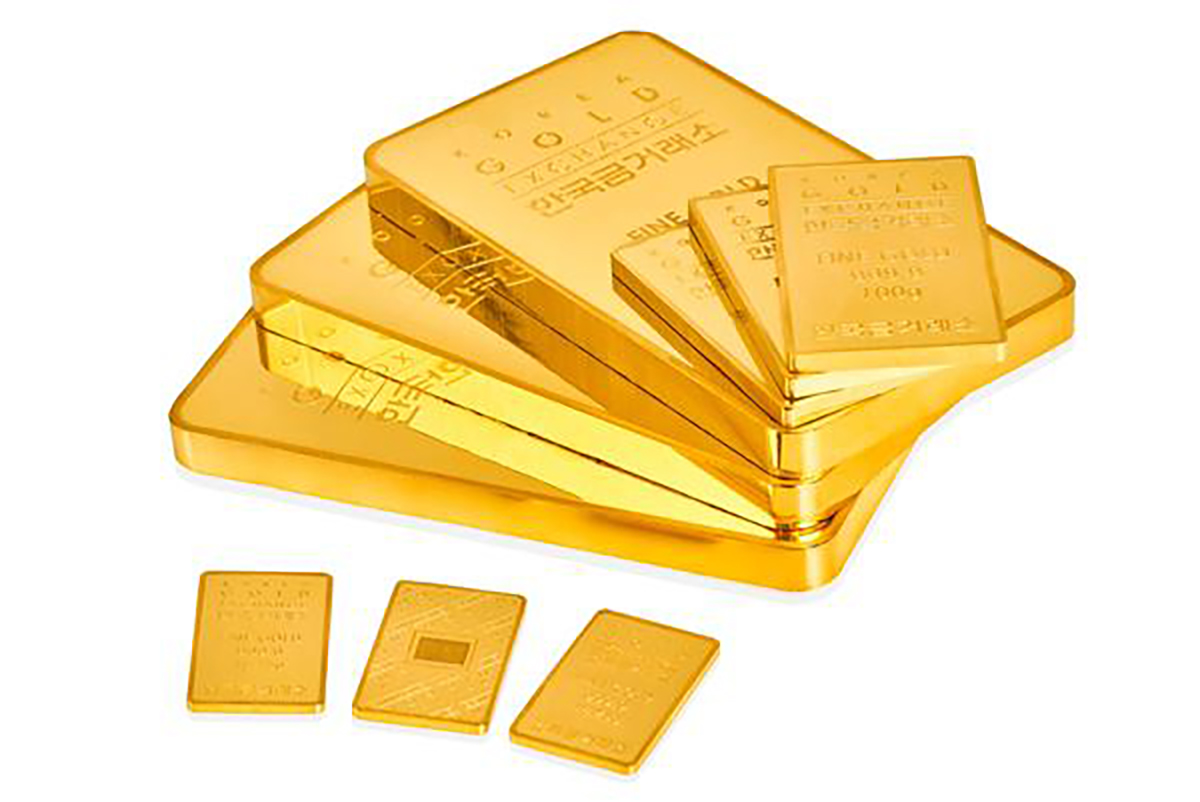
-오늘의 금시세(KRX 0.09%↑, 한국금거래소 0.23%↑)
-KRX g당 19만6천650원…전 거래일보다 170원↑
-한국금거래소 순금 살 때 87만1천원…2천원↑
-순금 팔 때 72만9천원…전일보다 1천원↓
-국제 금가격 4,433달러…8월19일 이후 최저치 기록
-美 12월물 금 선물 1.1%↓…4,481.50달러 마감
-유가 2%대 급등…인플레이션·금리 인상 우려 확대
-9월 美 금리 인상 가능성 36%→64%
-지정학적 긴장 안전자산 수요는 금 하단 지지
-Kitco, 4,396달러 단기 지지선 주목
-TD증권 “단기 추가 조정 가능”…2027년 5,350달러 전망
-이번 주 美 고용지표가 금시세 방향 가를 변수
9월 첫 거래일 국내 금시세(금값)가 뚜렷한 방향을 잡지 못하고 있다.
한국거래소(KRX) 금가격은 전 거래일 3% 넘게 급락한 뒤 소폭 반등했다. 한국금거래소의 순금 가격은 살 때 가격이 올랐지만 팔 때는 낮아졌다.
국제 금시장에서는 하방 압력이 이어지고 있다.
케빈 워시 미국 연방준비제도(Fed·연준) 의장의 매파적 발언에 이어 국제유가까지 급등하면서 인플레이션과 추가 금리 인상에 대한 경계감이 커졌다.
1일 오전 한국거래소 KRX 금시장에서 금은 g당 19만6천650원을 나타내고 있다.
전 거래일인 지난달 31일 종가 19만6천480원보다 170원(0.09%) 올랐다.
이날 19만7천40원으로 출발했다. 장중 고가는 19만7천390원, 저가는 19만6천510원이다.
거래량은 2만7천78g, 거래대금은 약 53억2천800만원이다.
KRX 금가격은 전날 큰 폭으로 떨어졌다.
지난달 31일 종가는 g당 19만6천480원으로 전 거래일보다 6천530원(3.22%) 하락했다.
주말 사이 국제시장에서 발생한 급락이 국내 시장에 뒤늦게 반영됐다.
지난달 28일 국내 금시장이 거래를 마친 이후 미국 시장에서 워시 의장의 잭슨홀 연설을 계기로 금값이 큰 폭으로 떨어졌다.
1일에는 전날 급락세가 일단 진정되는 모습이다. 다만 상승률이 0.1%에도 미치지 못해 뚜렷한 반등으로 보기는 이르다.
한국금거래소의 순금 시세도 제한적인 움직임을 나타내고 있다.
이날 오전 9시50분 기준 순금 1돈(24K·3.75g)은 살 때 87만1천원으로 고시됐다.
전날 최종 고시가격 86만9천원보다 2천원(0.23%) 올랐다.
반면 순금을 팔 때 가격은 72만9천원이다. 전날 최종 고시가격 73만원보다 1천원(0.14%) 낮아졌다.
18K는 팔 때 53만5천900원으로 전날 53만6천600원보다 700원 내렸다.
14K도 41만5천600원으로 전날 41만6천100원보다 500원 낮아졌다.
국내 금값시세가 제한적인 움직임을 보이고 있는 가운데 국제 금가격은 2주 만의 최저 수준까지 밀렸다.
로이터에 따르면 지난달 31일 현물 금은 미국 동부시간 오후 1시39분 기준 온스당 4,433.19달러로 0.4% 하락했다.
장중에는 지난달 19일 이후 가장 낮은 수준까지 떨어졌다.
12월 인도분 미국 금 선물은 1.1% 내린 온스당 4,481.50달러에 거래를 마쳤다.
국제 금값은 직전 거래일인 지난달 28일에도 3% 넘게 급락했다. 6월10일 이후 가장 큰 하루 하락폭이다.
워시 의장의 잭슨홀 연설이 국제 금시장의 분위기를 바꿨다.
워시 의장은 인플레이션이 연준의 목표인 2%로 돌아오지 않는다면 정책 당국이 추가 조치에 나설 필요가 있다는 입장을 밝혔다.
시장은 이를 연준이 추가 금리 인상에 나설 가능성을 열어둔 매파적 메시지로 받아들였다.
금리 전망도 빠르게 바뀌었다.
CME 페드워치에 반영된 9월 미국 기준금리 인상 가능성은 워시 의장의 발언 전 약 36%에서 지난달 31일 약 64%까지 뛰었다.
금리 인상에 대한 경계감이 채 가라앉기도 전에 국제유가가 새로운 변수로 등장했다.
미국과 이란의 군사적 충돌이 다시 격화되면서 지난달 31일 국제유가는 2% 넘게 상승했다.
브렌트유는 2.71% 오른 배럴당 90.49달러, 서부텍사스산원유(WTI)는 2.83% 상승한 85.76달러에 거래를 마쳤다.
미국이 호르무즈 해협에 위치한 이란 라라크섬을 공격하고 이란이 이에 대응하면서 원유 공급 차질에 대한 우려가 다시 커졌다.
국제유가 상승은 금에 서로 다른 방향의 영향을 주고 있다.
미국과 이란의 군사적 긴장이 높아지는 것은 대표적인 안전자산인 금에는 상승 요인이다.
반면 원유 가격 상승이 미국의 물가를 다시 끌어올릴 경우 연준이 높은 금리를 더 오래 유지하거나 추가 인상에 나설 가능성도 커진다.
현재 국제 금시장에서는 후자의 영향이 더 강하게 나타나고 있다.
스톤엑스의 수석 시장 전략가 다니엘 파빌로니스는 에너지 가격 상승과 원유 재고 감소에 따른 인플레이션 기대, 높은 금리와 미국 국채 수익률, 달러 강세를 금을 압박하는 주요 요인으로 꼽았다.
미국 채권시장도 금시세에 부담을 주고 있다.
미국 국채 수익률은 지난달 31일 상승했다. 시장에서는 워시 의장의 발언 이후 연준의 추가 긴축 가능성을 다시 가격에 반영하는 움직임이 나타났다.
여기에 유가 상승까지 겹치면서 인플레이션이 쉽게 꺾이지 않을 수 있다는 우려가 채권시장에 반영됐다.
미국 10년 만기 국채 수익률은 4.758%로 올라섰다. 장중에는 4.768%까지 상승하며 2025년 1월15일 이후 가장 높은 수준을 나타냈다.
미국 증시도 이러한 부담을 피해 가지 못했다.
다우존스 산업평균지수는 0.70%, S&P500지수는 0.33%, 나스닥지수는 0.12% 각각 하락했다.
달러도 약 2주 만의 높은 수준에 머물렀다.
금은 이자를 지급하지 않는 자산이다. 국채 수익률이 상승하면 이자를 받을 수 있는 채권과 비교해 상대적인 투자 매력이 낮아질 수 있다.
달러 강세 역시 다른 통화를 사용하는 투자자들의 금 매입 부담을 높이는 요인이다.
다만 국제 금가격이 일방적으로 밀린 것은 아니다.
Kitco에 따르면 현물 금은 미국 거래에서 한때 온스당 4,395.80달러까지 떨어졌다가 이후 4,440달러대로 올라섰다.
심리적 지지선으로 여겨졌던 4,400달러가 한때 무너졌지만 다시 회복한 셈이다.
지정학적 위험이 커진 상황에서 안전자산 수요가 추가 하락을 일정 부분 제한한 것으로 풀이된다.
기술적으로도 4,400달러 부근의 움직임이 중요해졌다.
Kitco는 단기적으로 온스당 4,396달러를 첫 번째 지지선으로 제시했다.
이 가격대가 무너지면 4,341달러가 다음 지지선이다. 이후에는 4,319.60달러까지 하락 가능성이 열릴 수 있다고 분석했다.
반대로 금시세가 반등하려면 먼저 4,452달러를 넘어야 한다.
이후에는 4,487달러가 다음 저항선으로 꼽힌다. 이 가격대를 돌파할 경우 4,515달러와 4,543달러가 차례로 다음 목표 구간이 될 수 있다.
최근 급락에도 중장기 전망까지 약세로 돌아선 것은 아니다.
TD증권은 단기적으로는 금가격이 추가 조정을 받을 가능성을 열어두고 있다.
TD증권의 상품 연구 책임자인 바트 멜렉은 워시 의장의 잭슨홀 발언 이후 시장이 9월뿐 아니라 12월 금리 인상 가능성까지 반영하기 시작한 점에 주목했다.
금리 전망이 매파적으로 이동하면서 단기 금리가 상승하고 달러가 강세를 보인 것이 금에 부담을 주고 있다는 분석이다.
멜렉은 최근 금의 주요 거래 범위를 온스당 4,200~4,700달러로 봤다.
연준의 물가 안정 의지가 시장에 계속 반영될 경우 최근 상승분을 일부 반납하면서 이 범위의 하단에 가까워질 가능성이 있다고 예상했다.
미국 재무부의 장기 국채 매입 확대가 장기 국채 수익률을 낮추는 요인이 될 수 있지만 단기 금리 상승이 이 효과를 상쇄할 수 있다는 것이다.
그러나 TD증권은 중장기적으로는 금에 대한 긍정적인 시각을 유지하고 있다.
유가가 안정되고 높은 금리로 총수요가 약화되면서 인플레이션 압력이 낮아질 경우 연준이 이후 긴축 강도를 낮출 수 있기 때문이다.
멜렉은 이 같은 환경이 만들어질 경우 금시세가 다시 상승할 것으로 전망했다.
TD증권이 제시한 2027년 3분기 금 목표치는 온스당 5,350달러다.
중앙은행과 기관투자자, 개인투자자가 금을 포트폴리오 다각화 수단으로 계속 인식하고 있다는 점도 중장기 수요를 뒷받침할 것으로 내다봤다.
또 다른 장기 지지 요인은 미국 재무부의 국채 매입 확대다.
스위스 사모은행 줄리어스 베어는 미국 재무부가 9월부터 장기 국채 매입 규모를 최소 두 배로 확대하기로 한 점에 주목했다.
재무부가 장기 국채를 더 많이 사들이면 채권 가격에는 상승 압력이, 수익률에는 하락 압력이 가해질 수 있다.
줄리어스 베어는 이 같은 조치가 장기 국채 수익률의 상승을 제한하면서 달러의 상대적인 매력을 떨어뜨릴 가능성이 있다고 분석했다.
이른바 '달러 가치 절하 거래'가 다시 주목받을 수 있다는 것이다.
미국의 정부 부채가 계속 늘어나고 달러의 구매력이 장기적으로 약해질 수 있다는 우려가 커지면 투자자들이 가치저장 수단으로 금과 은을 다시 찾을 수 있다는 논리다.
다만 재무부의 이번 조치를 본격적인 수익률 곡선 통제의 시작으로 단정하기는 이르다는 게 줄리어스 베어의 판단이다.
최근 금가격 하락과 중장기 강세 전망이 공존하는 이유도 여기에 있다.
단기 시장은 워시 의장의 매파적 기조와 유가 상승, 금리 인상 가능성 확대에 반응하고 있다.
반면 장기적으로는 미국의 막대한 정부 부채와 재정 불균형, 중앙은행의 금 매입, 달러 가치에 대한 우려 등이 금을 지지하는 구조적인 요인으로 남아 있다.
실제로 최근 며칠간 금시세가 큰 폭으로 조정받았지만 8월 전체 흐름은 여전히 강했다.
로이터에 따르면 현물 금은 8월 한 달 동안 9.7% 상승했다. 1월 이후 가장 강한 월간 상승률이다.
따라서 최근 급락만으로 지난달 전체 상승 흐름까지 약세로 전환됐다고 단정하기는 어렵다.
이제 시장의 관심은 미국 고용지표로 이동하고 있다.
이번 주에는 JOLTS 구인건수와 ISM 제조업지수를 시작으로 ADP 민간고용, 연준 베이지북, 주간 신규 실업수당 청구건수와 ISM 서비스업지수가 차례로 발표된다.
가장 큰 관심은 주 후반 발표되는 미국의 8월 비농업 고용보고서에 쏠린다.
고용시장이 예상보다 강한 모습을 보이면 최근 높아진 금리 인상 전망에 더욱 힘이 실릴 수 있다.
이 경우 미국 국채 수익률과 달러가 강세를 이어가면서 국제 금가격에는 추가 하락 압력이 가해질 가능성이 있다.
반대로 고용 증가세가 크게 둔화하고 노동시장 냉각이 확인되면 상황은 달라진다.
워시 의장의 발언 이후 급격하게 높아진 금리 인상 기대가 낮아지고 국채 수익률과 달러가 약세로 돌아설 경우 금시세도 반등할 여지가 생긴다. 로이터 역시 이번 주 고용지표를 향후 경제와 금리 전망을 판단할 주요 변수로 꼽았다.
당장은 온스당 4,400달러 부근에서 현물 금이 지지력을 확보할 수 있는지가 관건이다.
4,396달러선이 무너지면 추가 조정 가능성이 커질 수 있다. 반대로 4,452달러를 회복하고 4,487달러를 넘어선다면 지난주 급락 이후 반등의 발판을 마련할 수 있다.
결국 단기적으로는 미국 금리 인상 전망과 4,400달러선의 지지 여부, 중기적으로는 미국 고용지표와 연준의 통화정책, 장기적으로는 미국 재정과 부채, 달러 가치와 중앙은행의 금 수요가 향후 금시세(금값)의 방향을 가를 것으로 보인다.
실시간 금값시세는 한국금거래소와 한국거래소(KRX) 금시장에서 확인할 수 있다.
/박상진 기자 jhc@kjdaily.com
다음은 위 기사를 번역한 전문이다. 번역에 오류가 있을 수 있다.
<1st Precious Metals Market Trends>
- Today's Gold Price (KRX 0.09%↑, Korea Gold Exchange 0.23%↑)
- KRX 196,650 KRW per gram… 170 KRW higher than previous trading day
- Korea Gold Exchange Pure Gold Buying Price 871,000 KRW… 2,000 KRW higher
- Pure Gold Selling Price 729,000 KRW… 1,000 KRW lower than previous day
- International Gold Price $4,433… Recording lowest level since August 19
- US December Gold Futures 1.1%↓… Close at $4,481.50
- Oil Prices Surge to Over 2%… Concerns Over Inflation and Interest Rate Hikes Intensify
- Probability of US Interest Rate Hike in September Rises from 36% to 64%
- Geopolitical Tensions Drive Demand for Safe-Hand Assets to Support Gold Downward
- Kitco Focuses on $4,396 Short-Term Support Level
- TD Securities: “Further Short-Term Correction Possible”… $5,350 Forecast for 2027
- This Week's US Employment Data to Determine Gold Market Direction
On the first trading day of September, domestic gold prices are failing to establish a clear direction.
The Korea Exchange (KRX) gold price rebounded slightly after plunging more than 3% on the previous trading day. At the Korea Gold Exchange, the price of pure gold rose when buying but fell when selling.
Downward pressure continues in the international gold market.
Caution regarding inflation and further interest rate hikes has intensified following hawkish remarks by U.S. Federal Reserve Chair Kevin Warsh and a surge in international oil prices.
On the morning of the 1st, gold is trading at 196,650 won per gram in the KRX gold market.
This is an increase of 170 won (0.09%) from the closing price of 196,480 won on the previous trading day, August 31. The market opened at 197,040 won on this day. The intraday high was 197,390 won, and the low was 196,510 won.
The trading volume was 27,078g, and the trading value was approximately 5.328 billion won.
The KRX gold price fell sharply the previous day.
The closing price on the 31st of last month was 196,480 won per gram, a decrease of 6,530 won (3.22%) from the previous trading day.
The sharp decline that occurred in the international market over the weekend was reflected belatedly in the domestic market.
After the domestic gold market closed for trading on the 28th of last month, gold prices in the US market fell sharply following Chairman Walsh's Jackson Hole speech.
On the 1st, the sharp decline from the previous day appears to be stabilizing for now. However, as the rate of increase fell short of even 0.1%, it is too early to view this as a clear rebound.
The pure gold price at the Korea Gold Exchange is also showing limited movement.
As of 9:50 AM on this day, the buy price for one don (24K, 3.75g) of pure gold was quoted at 871,000 won.
This is 2,000 won (0.23%) higher than the previous day's final quoted price of 869,000 won.
Conversely, the sell price for pure gold is 729,000 won. This is 1,000 won (0.14%) lower than the previous day's final quoted price of 730,000 won.
The sell price for 18K gold was 535,900 won, down 700 won from the previous day's 536,600 won.
The sell price for 14K gold also fell by 500 won to 415,600 won from the previous day's 416,100 won.
While domestic gold prices are showing limited movement, international gold prices have fallen to their lowest level in two weeks. According to Reuters, spot gold fell 0.4% on the 31st to $4,433.19 per ounce as of 1:39 p.m. Eastern Time.
During trading, it dropped to its lowest level since the 19th of last month.
U.S. gold futures for December delivery closed at $4,481.50 per ounce, down 1.1%.
International gold prices also plummeted more than 3% on the previous trading day, the 28th of last month. This was the largest single-day drop since June 10.
Chairman Warsh's Jackson Hole speech changed the atmosphere in the international gold market.
Chairman Warsh stated that if inflation does not return to the Fed's target of 2%, policymakers will need to take additional measures.
The market interpreted this as a hawkish message leaving open the possibility that the Fed will proceed with further interest rate hikes.
Interest rate outlooks also changed rapidly.
The probability of a U.S. benchmark interest rate hike in September, as reflected in CME FedWatch, jumped from approximately 36% prior to Chair Wash's remarks to about 64% on the 31st of last month.
Before caution regarding the rate hike could even subside, international oil prices emerged as a new variable.
As military tensions between the U.S. and Iran escalated again, international oil prices rose by more than 2% on the 31st.
Brent crude closed at $90.49 per barrel, up 2.71%, while West Texas Intermediate (WTI) rose 2.83% to close at $85.76.
Concerns over disruptions to crude oil supply have grown again as the U.S. attacked Iran's Larak Island in the Strait of Hormuz and Iran responded.
The rise in international oil prices is having a different impact on gold.
Rising military tensions between the U.S. and Iran are a positive factor for gold, a representative safe-haven asset. On the other hand, if rising crude oil prices drive U.S. inflation back up, the likelihood increases that the Federal Reserve will maintain high interest rates for a longer period or proceed with further hikes.
Currently, the impact of the latter is more pronounced in the international gold market.
Daniel Pavilonis, Chief Market Strategist at StoneX, cited rising energy prices, inflation expectations driven by declining crude oil inventories, high interest rates, U.S. Treasury yields, and a strong dollar as the main factors pressuring gold.
The U.S. bond market is also weighing on gold prices.
U.S. Treasury yields rose on the 31st of last month. Following Chair Wash's remarks, the market began to price in the possibility of further tightening by the Fed.
With the added pressure of rising oil prices, concerns that inflation may not easily subside were reflected in the bond market.
The yield on U.S. 10-year Treasuries rose to 4.758%. During the trading session, it climbed to 4.768%, marking its highest level since January 15, 2025.
The U.S. stock market could not escape this pressure either.
The Dow Jones Industrial Average fell 0.70%, the S&P 500 fell 0.33%, and the Nasdaq fell 0.12%.
The dollar also remained at its highest level in about two weeks.
Gold is an asset that does not pay interest. If government bond yields rise, its relative investment attractiveness may decrease compared to interest-bearing bonds.
The strong dollar is also a factor that increases the burden of purchasing gold for investors using other currencies.
However, international gold prices did not fall unilaterally.
According to Kitco, spot gold in U.S. trading briefly dropped to $4,395.80 per ounce before rising back to the $4,440 range.
This means that while the $4,400 level, considered a psychological support line, was breached at one point, it has since recovered.
It is interpreted that demand for safe-haven assets limited further declines to some extent amidst heightened geopolitical risks. Technically, movement around the $4,400 level has also become critical.
Kitco identified $4,396 per ounce as the first support level in the short term.
If this price level is breached, $4,341 is the next support level. Analysis suggests that a decline to $4,319.60 could follow.
Conversely, for gold prices to rebound, they must first surpass $4,452.
After that, $4,487 is identified as the next resistance level. If this level is broken, $4,515 and $4,543 could become the next target zones in succession.
Despite the recent sharp decline, the mid-to-long-term outlook has not yet turned bearish.
TD Securities is keeping open the possibility that gold prices may undergo further corrections in the short term. Bart Melek, Head of Commodities Research at TD Securities, noted that following Chair Walsh’s remarks at Jackson Hole, the market has begun to factor in the possibility of a rate hike in December as well as September.
The analysis suggests that the shift toward a hawkish interest rate outlook, coupled with rising short-term rates and a strengthening dollar, is putting pressure on gold.
Melek recently identified gold’s key trading range as $4,200 to $4,700 per ounce.
He predicted that if the market continues to reflect the Fed’s commitment to price stability, gold could give back some of its recent gains and move closer to the lower end of this range.
This implies that while the U.S. Treasury’s expanded purchases of long-term bonds could lower long-term yields, rising short-term rates could offset this effect.
However, TD Securities maintains a positive outlook on gold in the medium to long term.
This is because if oil prices stabilize and inflationary pressures decrease as aggregate demand weakens due to high interest rates, the Fed could subsequently reduce the intensity of its tightening. Melek predicted that gold prices would rise again if such an environment were created.
TD Securities has set a target of $5,350 per ounce for gold in the third quarter of 2027.
It also predicted that the continued recognition of gold as a means of portfolio diversification by central banks, institutional investors, and retail investors will underpin mid-to-long-term demand.
Another long-term support factor is the U.S. Treasury’s expanded purchases of government bonds.
Swiss private equity firm Julius Baer noted that the U.S. Treasury has decided to at least double its purchases of long-term government bonds starting in September.
If the Treasury buys more long-term bonds, it could exert upward pressure on bond prices and downward pressure on yields.
Julius Baer analyzed that such measures could limit the rise in long-term bond yields and potentially diminish the relative attractiveness of the dollar.
This suggests that so-called "dollar devaluation trading" could regain attention.
The logic is that if concerns grow that U.S. government debt will continue to rise and the dollar's purchasing power may weaken in the long term, investors may once again turn to gold and silver as stores of value. However, Julius Baer assesses that it is premature to conclude that the Treasury Department's recent measure marks the beginning of full-scale yield curve control.
This is also the reason why the recent decline in gold prices coexists with a medium-to-long-term bullish outlook.
The short-term market is reacting to Chair Wash's hawkish stance, rising oil prices, and the increasing possibility of interest rate hikes.
On the other hand, in the long term, structural factors supporting gold include massive U.S. government debt, fiscal imbalances, central bank gold purchases, and concerns regarding the value of the dollar.
In fact, although gold prices have undergone a significant correction in recent days, the overall trend for August remained strong.
According to Reuters, spot gold rose 9.7% during the month of August. This is the strongest monthly increase since January.
Therefore, it is difficult to conclude that the overall upward trend of last month has turned bearish based solely on the recent sharp decline.
Market attention is now shifting to U.S. employment indicators. This week, data will be released in succession, starting with the JOLTS Job Openings and ISM Manufacturing Index, followed by ADP Private Employment, the Fed Beige Book, Weekly Initial Jobless Claims, and the ISM Services Index.
The greatest interest is focused on the U.S. August Non-Farm Employment Report, which will be released later in the week.
If the labor market shows stronger-than-expected performance, it could further bolster the recently heightened outlook for interest rate hikes.
In this scenario, as U.S. Treasury yields and the dollar continue to strengthen, there is a possibility that additional downward pressure will be placed on international gold prices.
Conversely, the situation changes if employment growth slows significantly and a cooling of the labor market is confirmed.
If expectations for interest rate hikes—which surged following Chair Warsh's remarks—decline, and Treasury yields and the dollar weaken, there is room for gold prices to rebound. Reuters also cited this week's employment indicators as a key variable for assessing future economic and interest rate outlooks.
For now, the key question is whether spot gold can secure support around $4,400 per ounce.
If the $4,396 level is breached, the possibility of further correction could increase. Conversely, if it recovers to $4,452 and surpasses $4,487, it could lay the groundwork for a rebound following last week's sharp decline.
Ultimately, the future direction of gold prices is expected to be determined by the outlook for U.S. interest rate hikes and support at the $4,400 level in the short term; U.S. employment indicators and the Federal Reserve's monetary policy in the medium term; and U.S. fiscal and debt conditions, the value of the dollar, and central bank demand for gold in the long term.
Real-time gold prices can be checked on the Korea Gold Exchange and the Korea Exchange (KRX) gold market.
/Reporter Park Sang-jin jhc@kjdaily.com
박상진 기자 jhc@kjdaily.com
▶ 디지털 뉴스 콘텐츠 이용규칙보기


